
When a Brisbane teenager went fossicking for plant fossils in a quarry in 1958, he had no way of knowing the rock he picked up would help rewrite Australia’s dinosaur history nearly 70 years later.
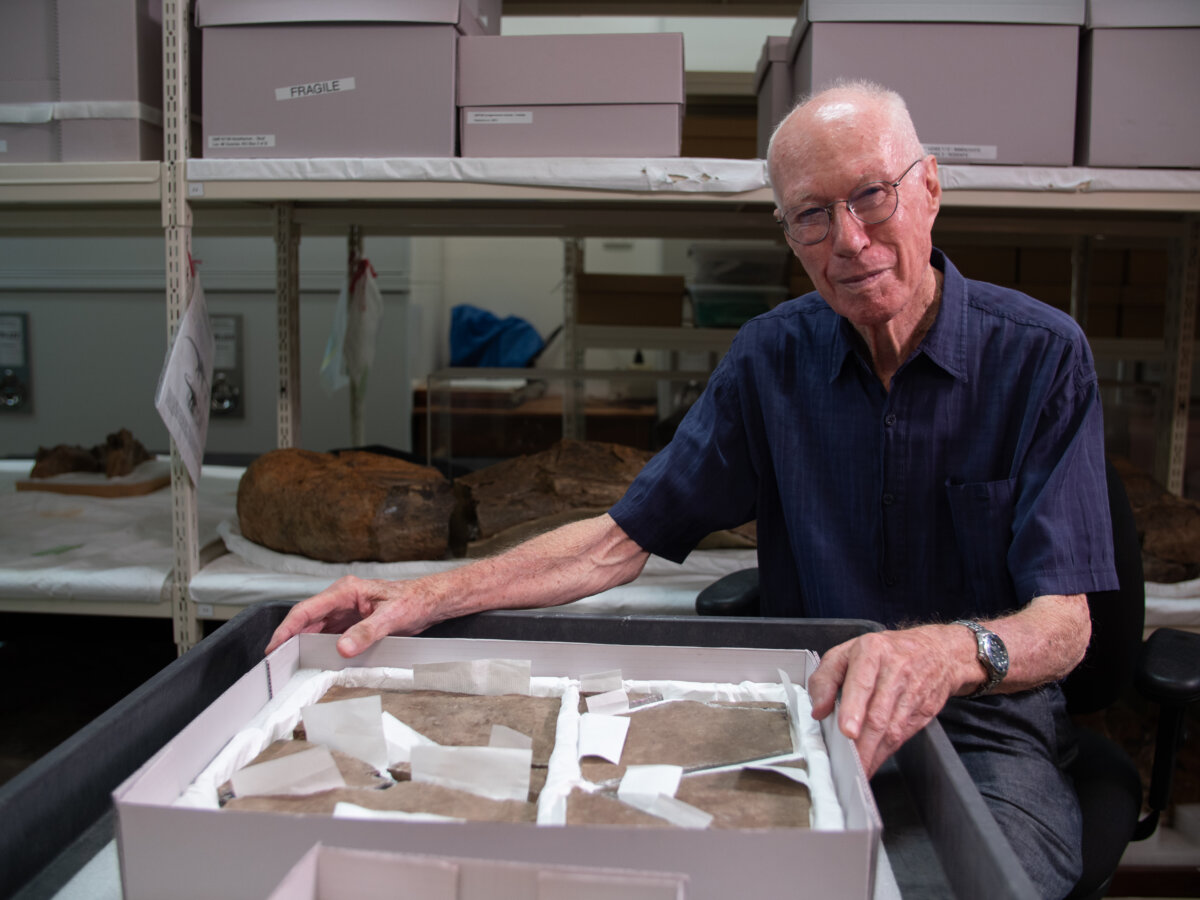
The sandstone, marked by an 18.5 centimetre fossilised footprint, is now confirmed as Australia’s oldest known dinosaur fossil, dating back 230 million years to the earliest part of the Late Triassic period.
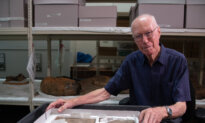
Bruce Runnegar, then a teenager, had suspected the marks could have been dinosaur tracks, but the find was unstudied for 68 years.
Runnegar went on to study a Bachelor of Science and a PhD at The University of Queensland. He later went to teach palaeontology at the University of New England at Armidale and University of California in Los Angeles, showing the fossil to his students.
“It was a great example of a special kind of trace fossil because the footprint was made in sediment by a heavy animal,” he said.
“More than 60 years after we found it, it’s extraordinary to see it recognised as Australia’s oldest dinosaur fossil.”
Dinosaur History Preserved
Anthony Romilio, a palaeontologist and researcher at UQ’s Dinosaur Lab, said the footprint proved dinosaurs were present in Australia far earlier than previously thought.
“This is the only dinosaur fossil to be found in an Australian capital city and shows how globally significant discoveries can remain hidden in plain sight,” Romilio said.
“Subsequent urban development has made the original site inaccessible, leaving this footprint as the only surviving dinosaur evidence from the area.”
The footprint is suspected to have be made by a sauropodomorph—a small, two-legged dinosaur, which was an ancestral form of the later long-neck dinosaurs.
Romilio estimated the dinosaur stood around 80 centimetres tall and weighed about 140 kilograms.
“It’s likely the dinosaur was walking through or alongside a waterway when it left the footprint before it was then preserved in sandstone,” he said.
“Without the foresight to preserve this material, Brisbane’s dinosaur history would still be completely unknown.”
The fossil is now at the Queensland Museum and is available for ongoing research. The research findings are published in Alcheringa.
 Friends Read Free
Copy
Facebook
Tweet
Friends Read Free
Copy
Facebook
Tweet