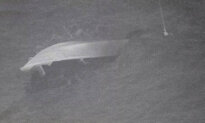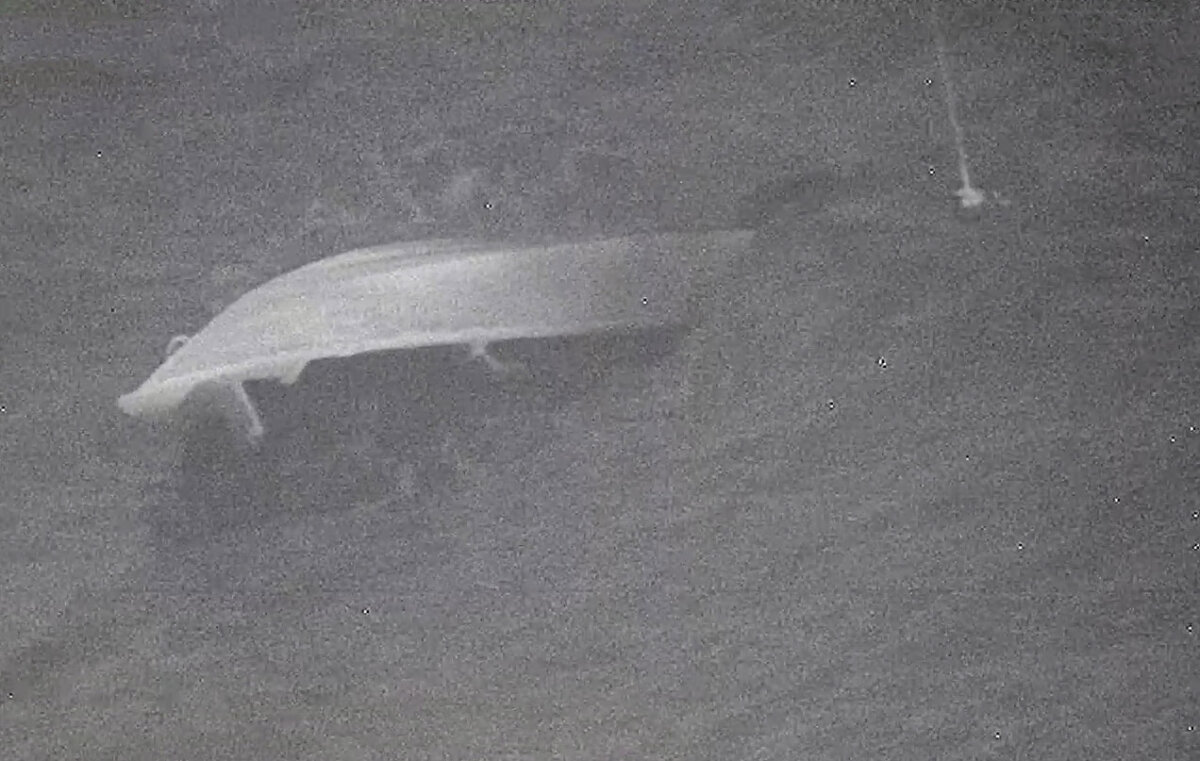

Three smugglers were detained in a joint operation carried out by U.S. and foreign agencies after their vessel overturned in the Pacific Ocean, the Joint Interagency Task Force South (JIATFS) said on Aug. 21.
The task force led the intelligence-driven operation to track a suspicious Go-Fast vessel that was “so overloaded with drugs it capsized in rough seas,” JIATFS said in a post on X. The Colombian navy rescued three individuals and detained them. In total, roughly 5,209 pounds of cocaine were recovered from the water.
The JIATFS operation involved the Drug Enforcement Administration, U.S. Southern Command, and the Colombian navy.
“This seamless Colombia–U.S. cooperation directly supports @DeptofWar-directed and @Southcom-led missions to disrupt narco-terrorist networks, reinforce the Americas Counter Cartel Coalition, and protect our homeland. We are stronger together,” JIATFS said.
JIATFS, based in Key West, Florida, is an international alliance that monitors and facilitates the interdiction of drug traffickers in the maritime and air domains. It involves the cooperation of 20 international and 13 domestic partners. Operating over a 42-million-square-mile area, JIATFS seeks to disrupt the flow of narcotics and dismantle transnational criminal organizations.
The Americas Counter Cartel Coalition, established by U.S. Secretary of War Pete Hegseth, includes 19 nations from the Western Hemisphere committed to operationalizing their hard power to counter transnational gangs and cartels in the region.
In another recent operation supporting the Americas Counter Cartel Coalition, JIATFS, Homeland Security Investigations, Panama, and Colombia successfully teamed up to disrupt a “massive flow” of narcotics in the Eastern Pacific, the task force said in an Aug. 19 post on X.
A Southern Command maritime patrol aircraft identified a suspicious 35-foot vessel 114 nautical miles south of Punta Burica, Panama, which was traveling to Costa Rica. Panama’s National Aeronaval Service intercepted the vessel, seizing around 5,352 pounds of cocaine, 619 pounds of marijuana, and detaining three individuals.
The Americas Counter Cartel Coalition, sometimes referred to as the Shield of the Americas, has faced criticism.
A March 28 analysis published by the Atlas Institute for International Affairs warned that the coalition’s focus on a hard-power crackdown may backfire. Military pressures can force dominant cartels to splinter into small, more violent factions, researcher Dario P. Vlaar Maldonado wrote. This could pose even greater problems for law enforcement agencies.
In mid-August, member states of the coalition met in Panama for a discussion, according to an Aug. 12 statement from the Department of War.
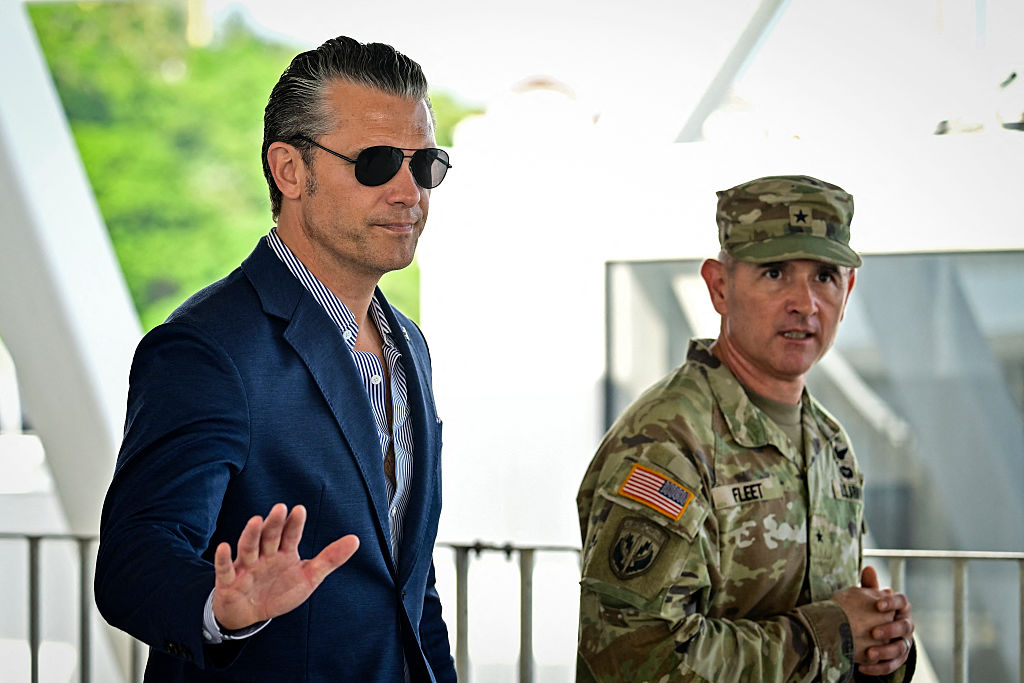 U.S. Secretary of War Pete Hegseth (L) arrives for the closing ceremony of the multinational Panamax 2026 military exercises in Panama City, on August 13, 2026. (Martin Bernetti/AFP via Getty Images)
“When we say we will dismantle the cartels, we mean it, and I know the nations of this coalition feel the exact same way … and will take concrete steps—sometimes risky steps, courageous steps—in partnership,” Hegseth said.
Last week, the Department of the Treasury took steps to crack down on a major cocaine network from Ecuador linked to Mexican cartels and violent gangs, according to an Aug. 20 statement from the department.
The Treasury’s Office of Foreign Assets Control (OFAC) designated 15 Ecuador-based targets and deemed 10 vessels allegedly used to traffic narcotics as blocked property.
The vessels were allegedly used to transport thousands of kilograms of cocaine every month from South America to Mexico, eventually to be distributed to the United States.
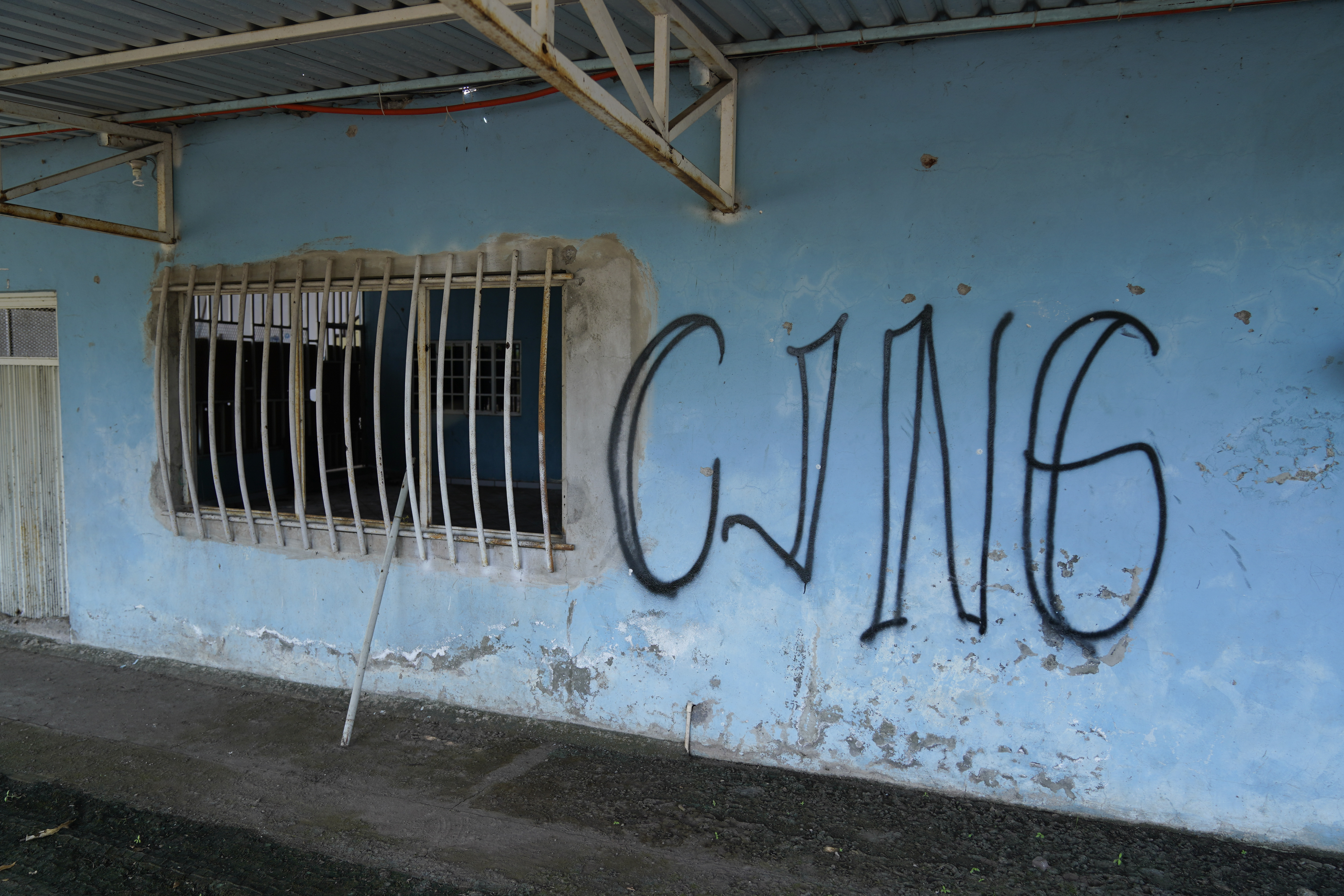 The letters “CJNG” for the cartel’s formal name, Jalisco New Generation Cartel, cover the facade of an abandoned home in El Limoncito, in the Michoacan state of Mexico, on Oct. 30, 2021. (Eduardo Verdugo/AP Photo)
“Under President Trump’s leadership, Treasury is relentlessly targeting the narcoterrorist networks that profit from poisoning Americans,” U.S. Treasury Secretary Scott Bessent said in the statement.
“Working alongside our law enforcement partners, we will continue to disrupt the cartels’ drug trafficking operations and protect our borders.”
 Friends Read Free
Copy
Facebook
Tweet
Friends Read Free
Copy
Facebook
Tweet