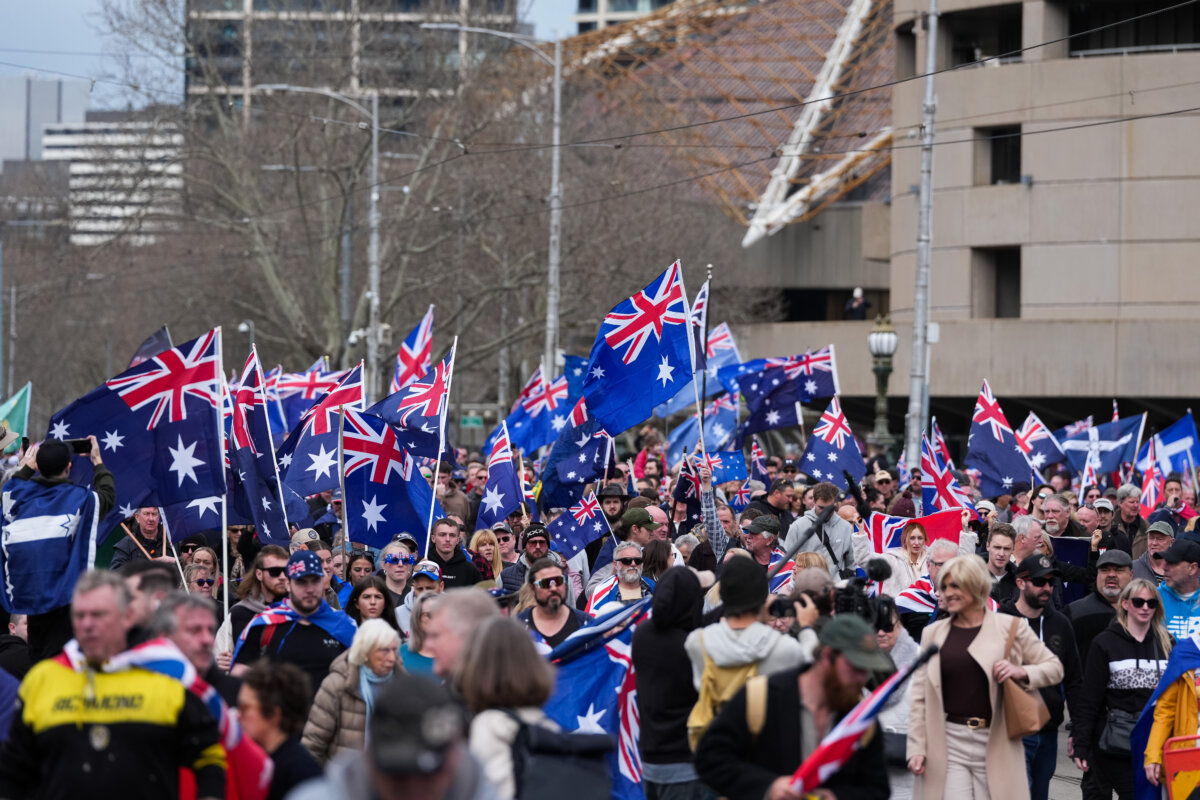

To some, the March for Australia rallies seemed to come like a bolt out of the blue.
But for others, the widespread show of solidarity was a long overdue rebuttal sparked by years of frustration with high immigration numbers that have contributed to strain on the country’s infrastructure.
It’s no secret Australia’s hospitals, schools, public transport systems, rental accommodation, and housing have all been under tremendous stress amid an inflation crisis that has continued since the pandemic.
Here’s a summary of the Aug. 31 nationwide rallies.
Why Did They March?
Many said they marched to stand up for the rights of their children and grandchildren amid concerns loose migration volumes were not being dealt with.
Numerous attendees said they were not entirely against migration, but that the floodgates had been opened despite state governments being unable to catch-up in terms of creating jobs and providing housing (for rent and purchase).
Others expressed concern about social cohesion and whether stricter vetting processes are needed for migrants from countries with vastly different values systems to Australia.
According to the March for Australia website, the event was about upholding Australian values.
“For years, Australia’s unity and shared values have been eroded by policies and movements that divide us,” the organisers said online.
“Our streets have seen growing displays of anti-Australian hatred, foreign conflicts, and disintegrating trust, whilst mass migration has torn at the bonds that held our communities together.”
How Many Showed Up And Where?
Numbers of attendees at the marches vary, but even the modest estimates revealed a strong turn-out.
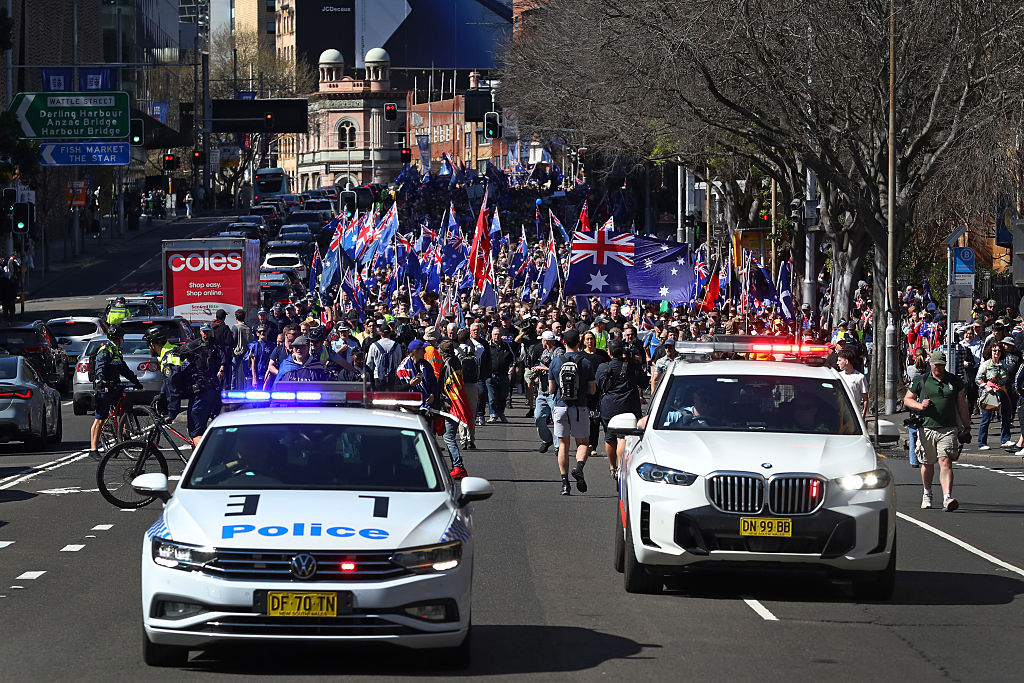
Reports are that at least 5,000 people marched in Sydney.
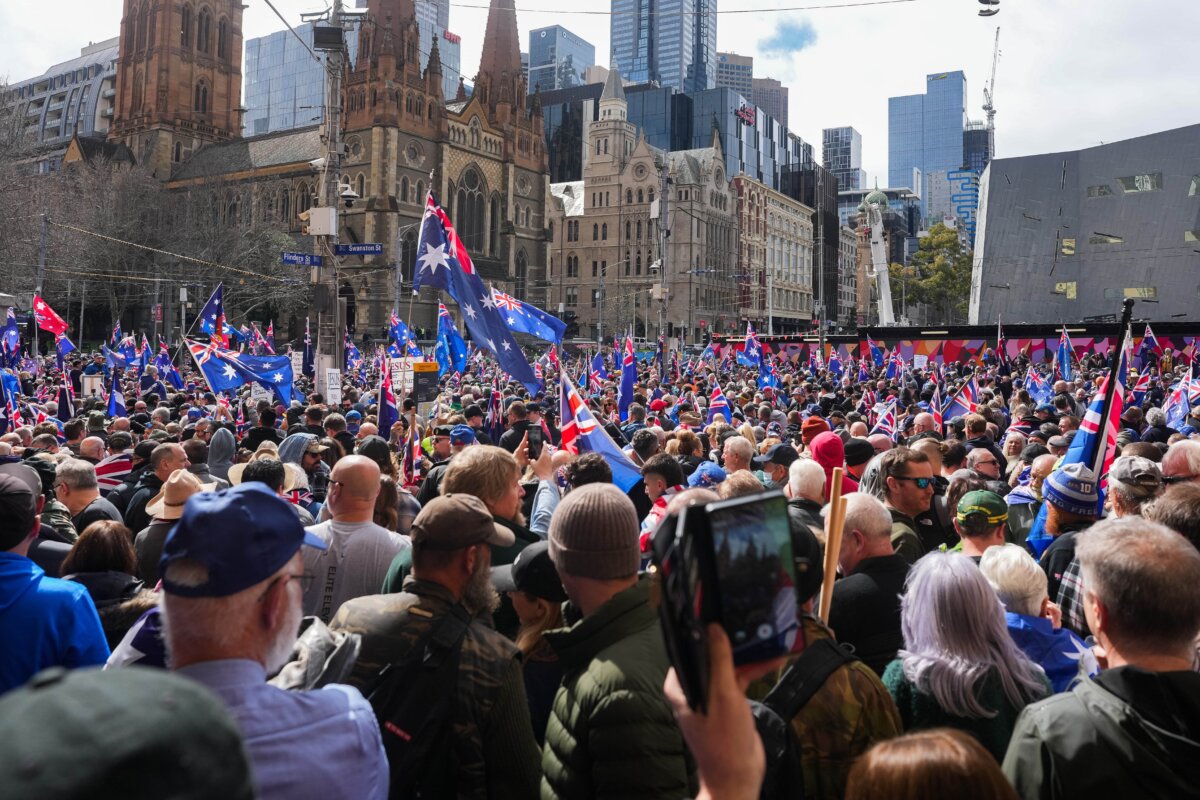
Melbourne’s estimated range was 5,000 at the lower end, with Adelaide sitting at around 15,000 attendees, according to local police.
Brisbane’s numbers sit around 6,000, with around 1,000 in Canberra, 3,000 in Hobart, 4,000 in Townsville and reports of up to 10,000 in Perth.
Regional areas also saw Australians join in solidarity.
In Bundaberg in central Queensland, around 1,000 people assembled calling for changes to migration laws. One lone protester opposed the march, standing for some time on the main street with a sign that read “solutions, not scapegoats.”
Who Attended And What Did They Say?
Some well-known attendees include Katter’s Australian Party’s (KAP) Bob Katter, who turned up at the Townsville rally.
Katter called for the names of those who burned the Australian flag and anyone who shouted “gas the Jews,” in reference to pro-Palestine protests in front of the Sydney Opera House.
He led the crowd in chants spelling out the word “Australia.”
Former federal MP and now-conservative online commentator George Christensen also showed up, saying his attendance was in response to what he felt was poor policy from the Australian government.
He also criticised any extremist elements that attended.
“They can show up,” he said.
“But they should be drowned out by normal day-to-day Aussies that are simply fed up with how their country is being run right now.”
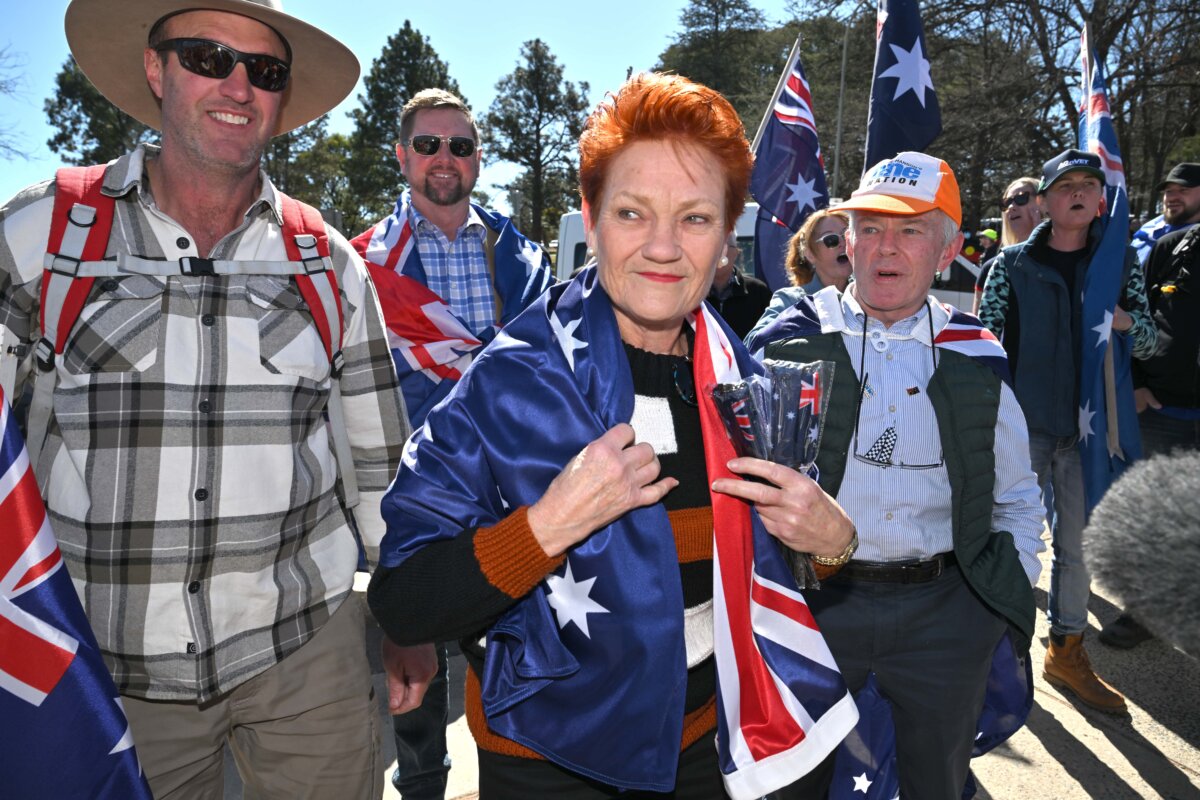
One Nation leader Pauline Hanson also attended in Canberra.
“We’re fed up with the mass migration … and the impacts it’s having on them, their life with housing, health, infrastructure,” she said.
The marches have also attracted attention globally, with commentary still being made 24 hours after the event.
One of the most prominent voices to comment was tech billionaire Elon Musk, who wrote on his platform X, “X is the media now, because you are the media now.”
In his post, Musk shared a video of the marches, where a blogger praised the platform for its openness in allowing content to flow.
𝕏 is the media now
because
You are the media now https://t.co/D3dDmYUKeE
— Elon Musk (@elonmusk) August 31, 2025
Some Controversial Incidents
Prior to the event, quite a few political leaders were harsh in their commentary.
Victoria’s Labor Police Minister Anthony Carbines called rallygoers “absolute grubs” due to the involvement of a small band of self-proclaimed neo-Nazis.
“We know what they’re there for. They’re there to promote hate in the community, to blame people for their gripes and their complaints and their whinges, and they’re just unhinged grubs,” Carbines said.
Prominent Australian self-proclaimed neo-Nazi Thomas Sewell also attended the Melbourne rally.

At one stage, Sewell spoke to attendees with some of them walking off, showing their objection to his extreme views.
Sewell was later filmed attempting to lead a march and also destroying an Aboriginal protest camp where men supporting him stomped on an Aboriginal flag—Sewell would later be charged for this.
Also in Melbourne, a man was assaulted by the crowed after he attempted to interrupt the burning of a Palestinian flag.
After the parade political rhetoric was toned down with political leaders distinguishing between the involvement of extreme elements and those with legitimate concerns.
“It’s very clear from the conduct that was observed at these marches, that these marches were a con by the far right neo-Nazis to prey on some legitimate concerns around housing and around cost of living in order to propagate their anti-immigration, racist agenda,” said Multicultural Minister Anne Aly a day later.
What is the Migration Situation?
According to the Australian Bureau of Statistics, net overseas migration into the country numbered at about 446,000 in 2023-24, a dip from the 536,000 a year before.
Foreign students comprise about 207,000 individuals.
Tech CEO Matt Barrie expressed concerns last year about these high volumes, saying it has a major impact on basic government service delivery.
“Does anyone wonder why the cost of living crisis is happening when Australia has 12 percent of the entire global international student population?” he said.
He noted the government’s low standard for international student entry, only requiring proof they can afford their daily necessities.
“Surprisingly, the government only requires you to provide proof you’ve had $29,710 (US$20,181) and only once, regardless of how many years you’ll be studying for, and regardless of how much you really need to live.”
Australia’s population is mostly concentrated in the country’s coastline—due to the large uninhabitable centre—meaning any marked increase in residents can have an impact on daily life in the few population centres.
Capital cities like Sydney, Melbourne, and Brisbane are already grappling with ambulance delays, traffic congestion, high rental prices, housing shortages, and some of the most expensive real estate markets in the world.
High migration has traditionally been supported because it can have some broad economic benefits like boosting GDP figures due to the increased volume of consumer spending by new migrants needing products and services, while also filling skills gaps in the workforce.
 Friends Read Free
Copy
Facebook
Tweet
Friends Read Free
Copy
Facebook
Tweet