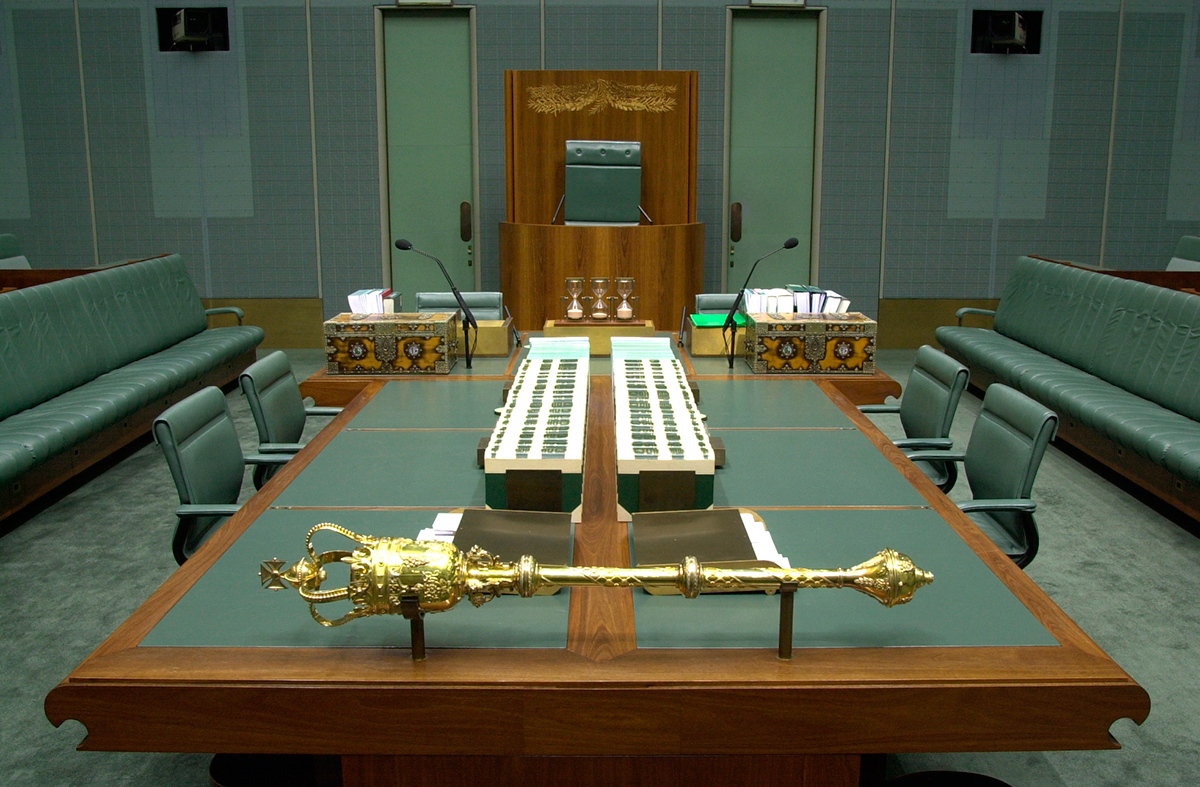
Once a medieval weapon of authority, the parliamentary mace is now being reimagined as a teaching tool to help schoolchildren connect with democracy.
A number of replica parliamentary maces are making their way across federal Australian electorates in an effort to help educate young individuals about Australian democracy.
Civics understanding among students has plummeted to record lows, according to figures from the Australian Curriculum, Assessment and Reporting Authority (ACARA) in February.
Students were tested on a wide range of topics, including Australia’s political and legal systems, the federal system of government, liberal democratic values, and the nature of citizenship.
According to the ACARA report, less than 3 in 10 (28 percent) Year 10 students achieved a proficient standard, down from 38 percent in 2019 and 2016.
The implications are stark. A weak understanding of politics and how a democracy works means less informed voters, as well as poorer choices at federal elections.
All About That Mace
A long-time British parliamentary tradition, Australia’s mace was gifted to the nation in 1951 by King George VI in celebration of the 50th anniversary of Australia’s federation.
Now, a new initiative by parliamentary Speaker Milton Dick means many Australians will get the chance to learn its story without ever having to visit Canberra.
On Aug. 12, one of the first replica maces was officially presented by Dick to central Queensland’s federal MP for Hinkler David Batt.
Batt, who has served in local, state, and now federal government, said he was thrilled to be handed one of the first four replicas.
“It will travel the electorate of Hinkler with me and is part of improving civics education in schools,” he told The Epoch Times.
“I am very keen to help educate youngsters about the importance of our democracy and how parliament works.
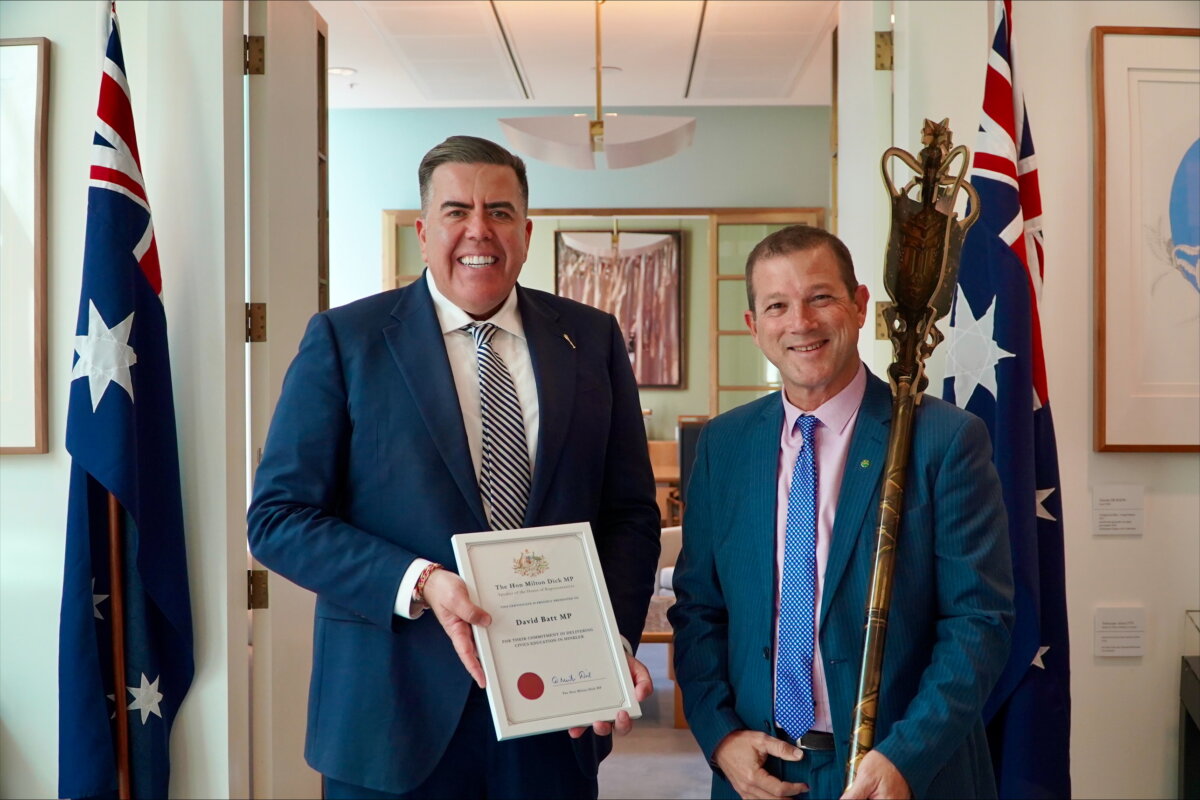
“It’s a great privilege to speak with our future leaders and education in civics will be a priority of mine in my first term as the Federal Member for Hinkler.”
The real mace, Batt says, is made of silver and gold and weighs a hefty 8 kilograms.
To make handling it a little easier, replicas are constructed of dowel and plywood, making them lightweight, easily disassembled, and easy to transport.
The mace has already travelled to many schools in Batt’s electorate.
“Since returning from my first sitting of the 48th Parliament of Australia, I’ve been busy presenting flags and sharing civics education with local school students,” Batt said.
“The replica mace has been a popular talking point. The replica really stands out and is a great conversation starter.”
So far, other symbols have been handed to federal MPs Tom Venning, David Moncrieff, and Mary Aldred.
Speaker Dick thanked the MPs for taking the maces to share with schools in their districts.
“I know these will be well received,” he said.
From Martial to Symbol
The story of the mace goes back to medieval Britain, when the royal Serjeants-at-Arms—or a senior parliamentarian, as we may commonly know them today—carried a mace stamped with the royal arms.
At that time, the mace was a weapon used to assert the authority of the monarch, but by 1415, the House of Commons had appointed its very own Serjeants-at-Arms—and their trusty mace—to serve the members of the house.
At the start of every sitting day in Australia’s House of Representatives, the mace is carried in and placed on a central table.
The crown of the mace always points to the government side of the chamber and the Australian Coat of Arms faces up.