In just a few minutes and clicks, artificial intelligence can create any image, graphic art, or the latest sleek marketing logos.
But it’s this proliferation and convenience of mass-produced artwork that has spurred one author and illustrator to go against the current grain.
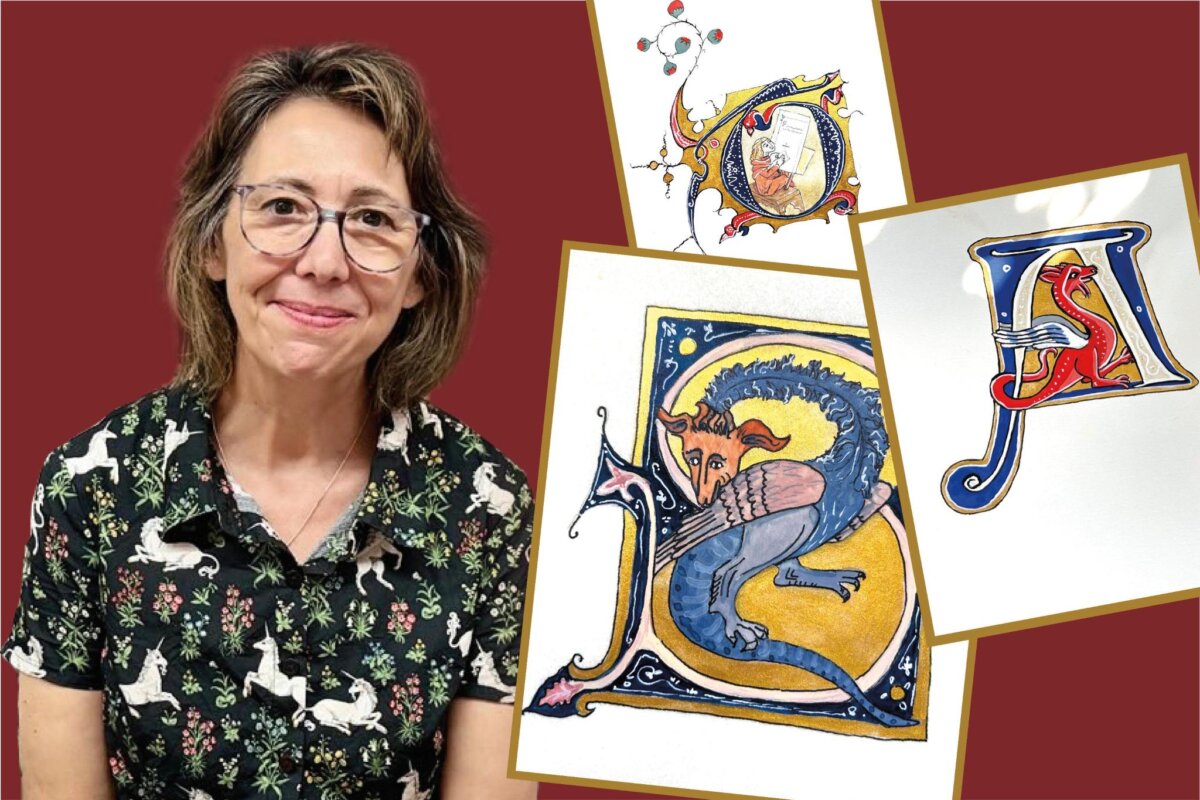
Alison Stegert is putting pen to paper in the name of “illumination,” a 1,500-year-old art form many people would recognise, but likely don’t give a second thought to.
Illumination has been documented in Europe since about the year 500, and involves embellishing or decorating books or manuscripts with gold or silver to make them appear as if they are glowing.
One of the most common forms is to decorate the first letter of a page of text, but a variety of other methods are also used.
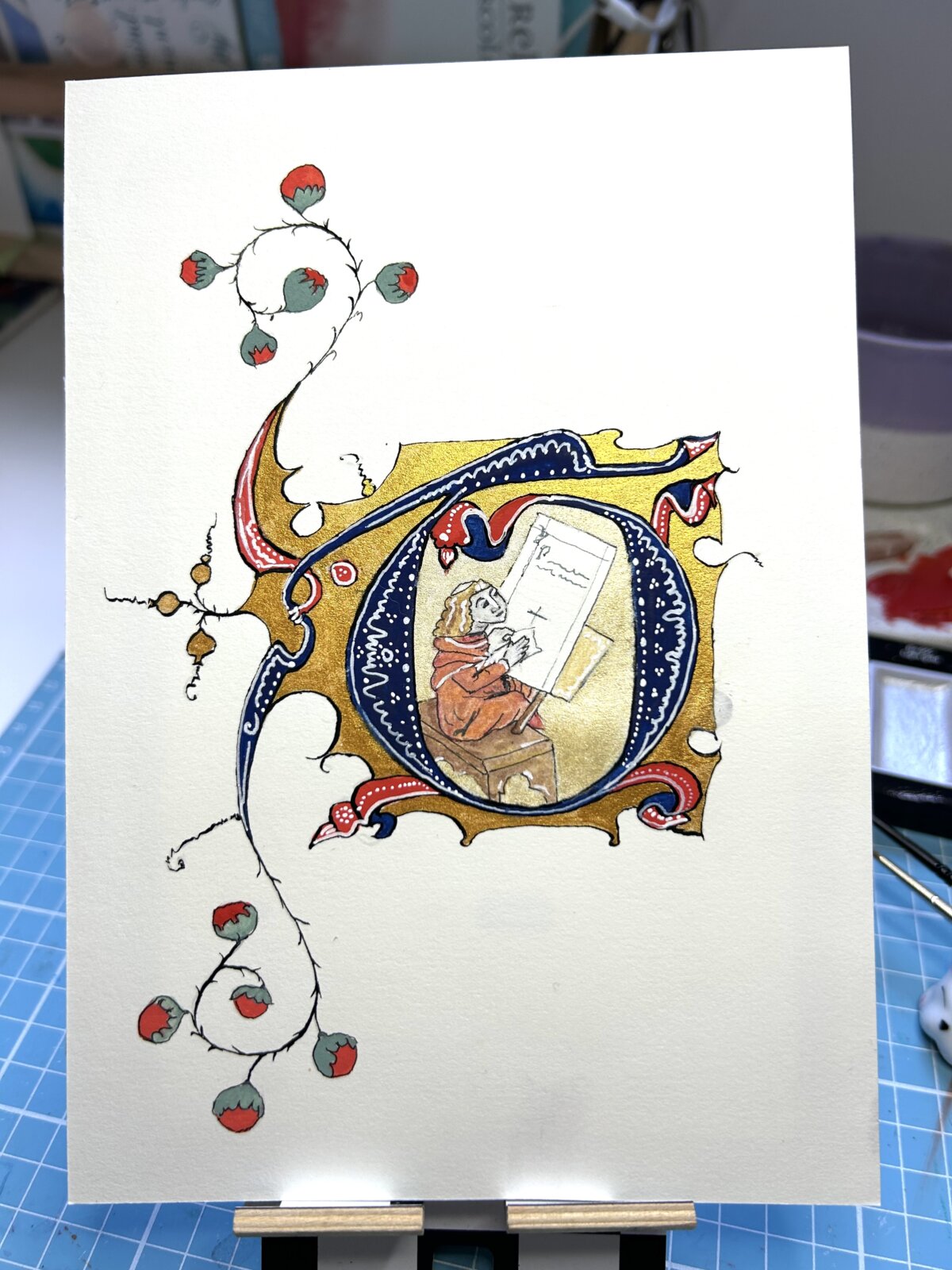
In a modern twist, the art form is now undergoing a revival with communities online—on platforms like Instagram—showcasing their works to hundreds of thousands of followers.
“Personally, this is my little pushback on AI … if I got onto Photoshop, I could make these look really excellent, but I don’t want to,” Stegert told The Epoch Times.
“We’re so used to perfect graphics and everything being so schmick—smooth and slick—that it’s almost lost its humanity. And this type of art, especially when you look at the originals, it has errors in it.
“The lines are wobbly in some places, they’re not perfectly centred. And yet they’re beautiful and amazing, and so they have this kind of feel to them that says a person created this, not a machine.”
Stegert is a published children’s book writer who is passionate about bringing the antique art form back to life.
The author won several awards for her 2023 debut novel, “Her Majesty’s League of Remarkable Young Ladies,” but her love of illustrating has grown.
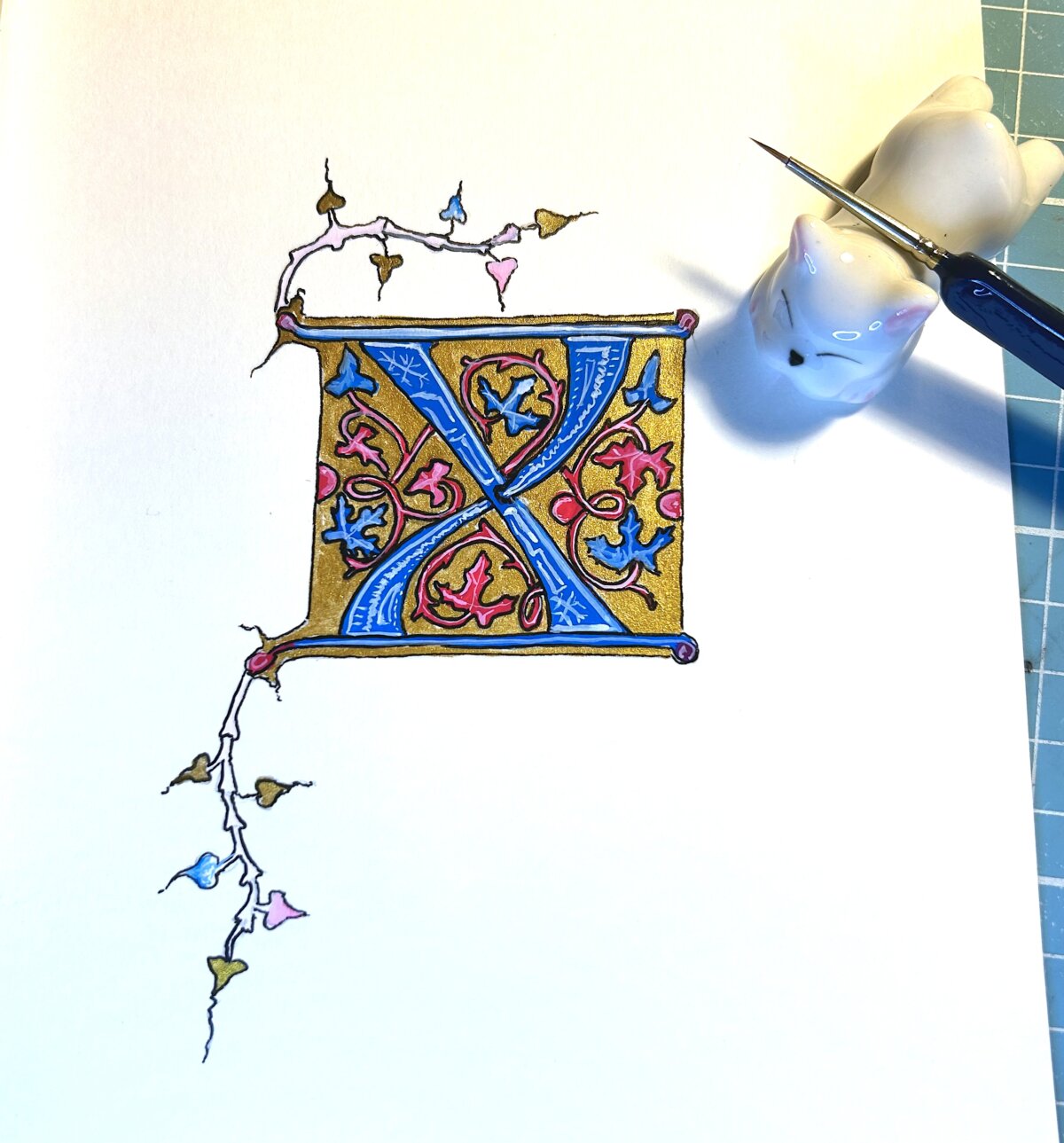
“I have more things on the go. But as a sideline to rest my brain from writing, I do art,” Stegert said.
In the times of old, books didn’t have tabs, so sections or chapters were marked by beautiful golden letters.
“They had specialised people, educated people, who did the scribe work, the transcribing,” Stegert said.
“And then they had artists who did the illustration. So to me, illumination is the mother of illustration.”
To practice this ancient art, Stegert started off by tracing designs, but after more than a year, she began to draw her own designs.
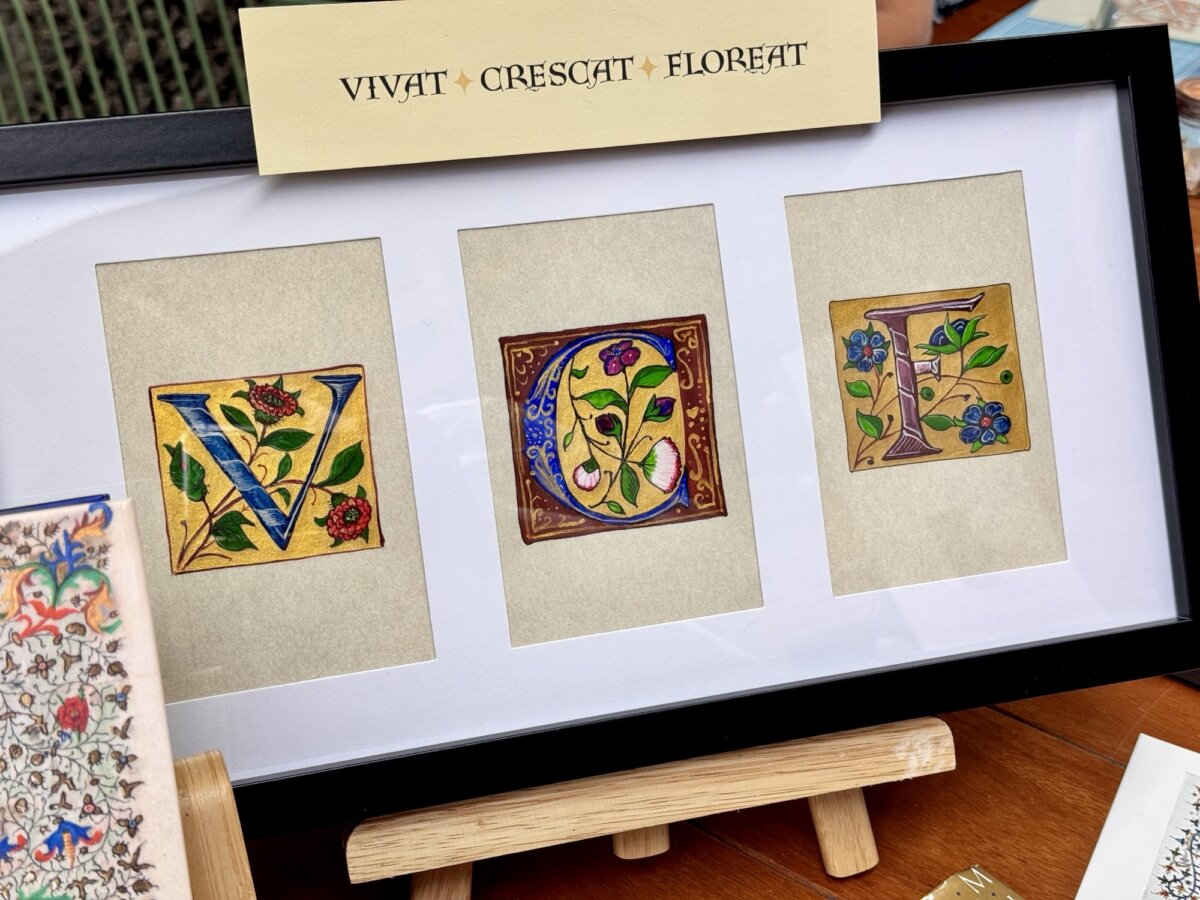
“I think there are a few people in Queensland, and I do not count myself among them, who are professional calligraphers, who do this and will do like, proper documents and official documents and things,” Stegert said.
One of those official calligraphers is Peter Taylor, who helped set Stegert up on her artistic journey.
“I was having trouble getting a regular art habit established in my life, so I set up a challenge, and I called it the hashtag, ‘Illuminated lettering challenge.’
“And the idea was to do a letter a fortnight to complete the English alphabet in a year. But instead of beginning from the letter “A,” she started from the simplest letter to illustrate: “I.”
“I stuck with it, and it was really brilliant, because it helped me establish a regular art practice. I got to envelop myself in this beautiful art form.”
Stegert’s endeavour comes as resistance builds towards 24-7 connectivity to social media and technology.
“From social media addiction to YouTube rabbit holes to the Tetris effect to cellphones that seem permanently lodged in our palms, technology is a sticky thing to detach yourself from, and it has a way of slowly taking over your life, like a spider’s web in an abandoned house,” wrote Walker Larson, an English literature expert, in The Epoch Times.
Larson says there’s a growing push to rethink how people use technology.
“That means placing concrete limits on its use to prioritise true human flourishing through presence, wholeness, focus, contemplation, and in-person connection. This is ‘tech resistance.'”