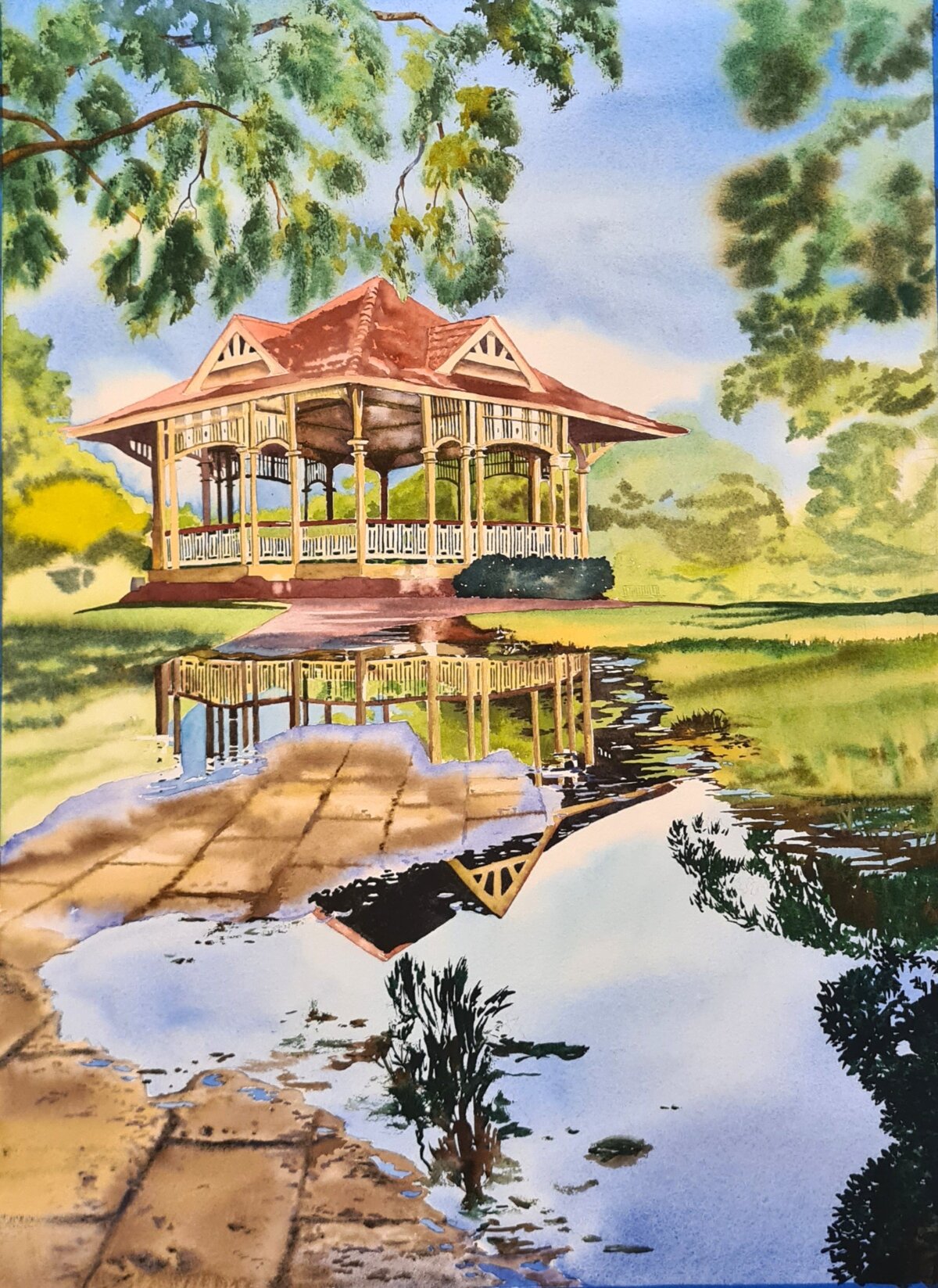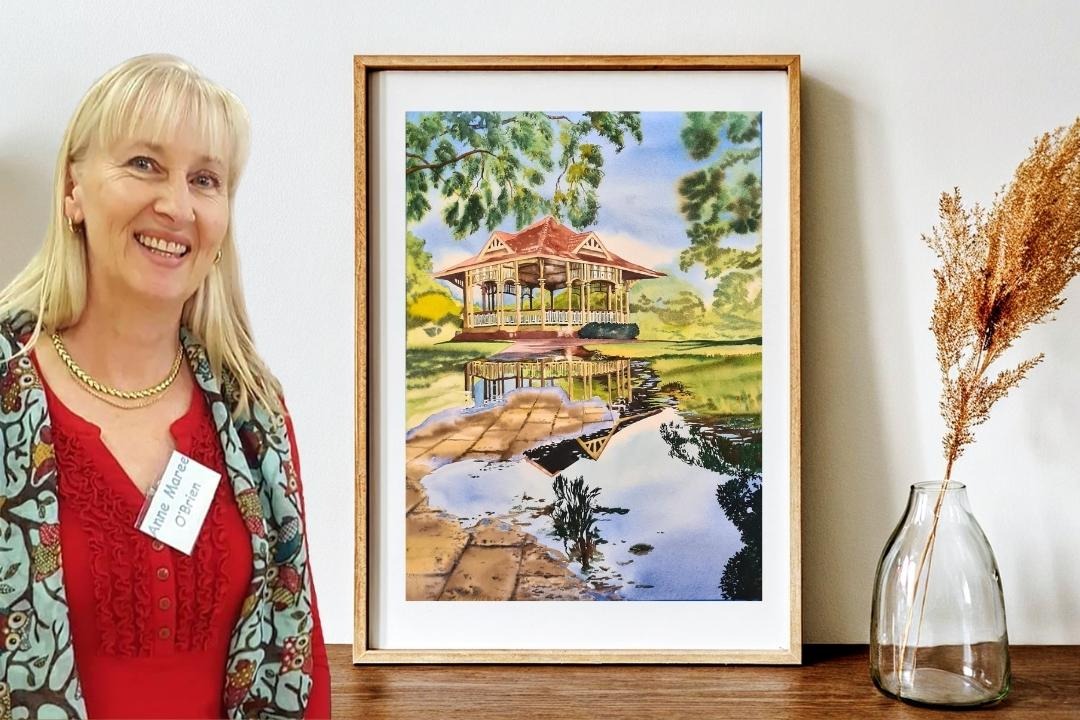
Anne Maree O’Brien has tried to loosen her brush and let emotion and chance take over.
But the watercolourist says classical, realist painting is “in her blood,” and that she prefers to capture her city’s landmarks—particularly Queenslander homes—one precise stroke at a time.
“It’s funny, you know, I’ve tried to be loose … but it’s in the DNA,” she told The Epoch Times.
“Every time, I have to be real. I can’t help myself. I’ve tried abstract, dibbled around a bit, and it’s okay. But when you go to draw, it has to be what comes out,” O’Brien adds.
“It’s in my blood, realism.”
Traditional art that aims to depict a truthful representation of a scene or situation has largely fallen by the wayside since the development of Impressionism, and later post-modern and avant-garde forms that take centre stage in today’s galleries.
O’Brien, however, says she enjoys the challenge of trying to be accurate.
“If I’m sitting in front of a scene, it’s a challenge, and it’s almost mathematical to get that roof line exact, that distance between the veranda posts in line with where the chimney sits on the roof.”
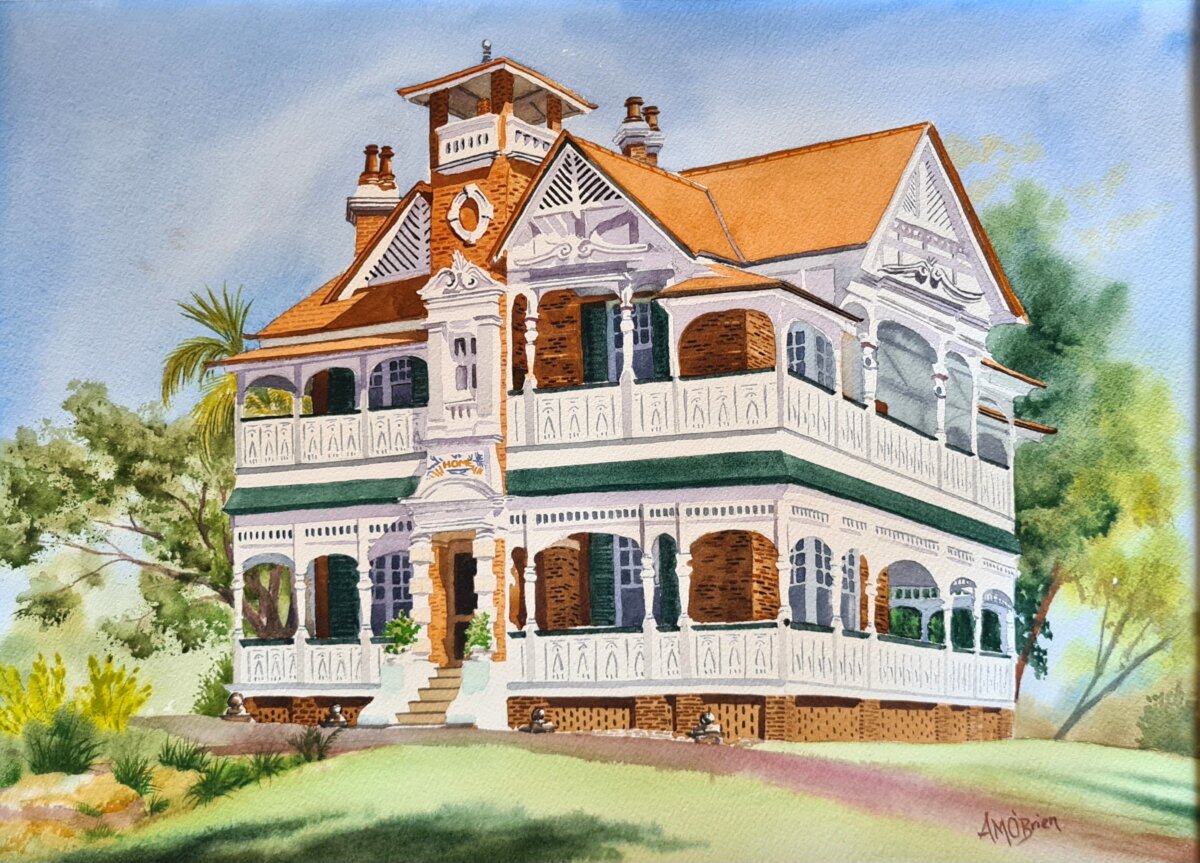
“And that makes you really focus on perspective, on architecture, on being perfect … we represent what is in front of us,” O’Brien said.
“The other thing about painting and drawing on site is you are taken away from the rest of your life. You just concentrate on what is in front of you. So for two hours, everything else goes away, you just are so focused. Someone only yesterday at our sketch meet said that it is so good for the brain. It is so good it’s almost a meditation.”
O’Brien only started on her 40th birthday—having received a set of watercolour paints on her birthday—and has continued her journey for the last 20 years every weekend with 25-30 fellow artists who gather to immortalise landmarks in Brisbane.
Concentration, Patience, and Self-Improvement
Jackie Williams is president of the Watercolour Society of Queensland, she shares a similar view about concentration, and says painters can also experience self-improvement via the process.
“Throughout the whole process, there’s thinking about what you’re doing and what you’re going to do,” she told The Epoch Times. “Watercolour is different because you don’t have [white paint], so you have to preserve white on your paper.”
“You’ve got a completely white, blank piece of paper in front of you, and you have to envision where your colours are going to go.”
Williams says the process is not dissimilar to doing exercises like Tai Chi or lifting weights.
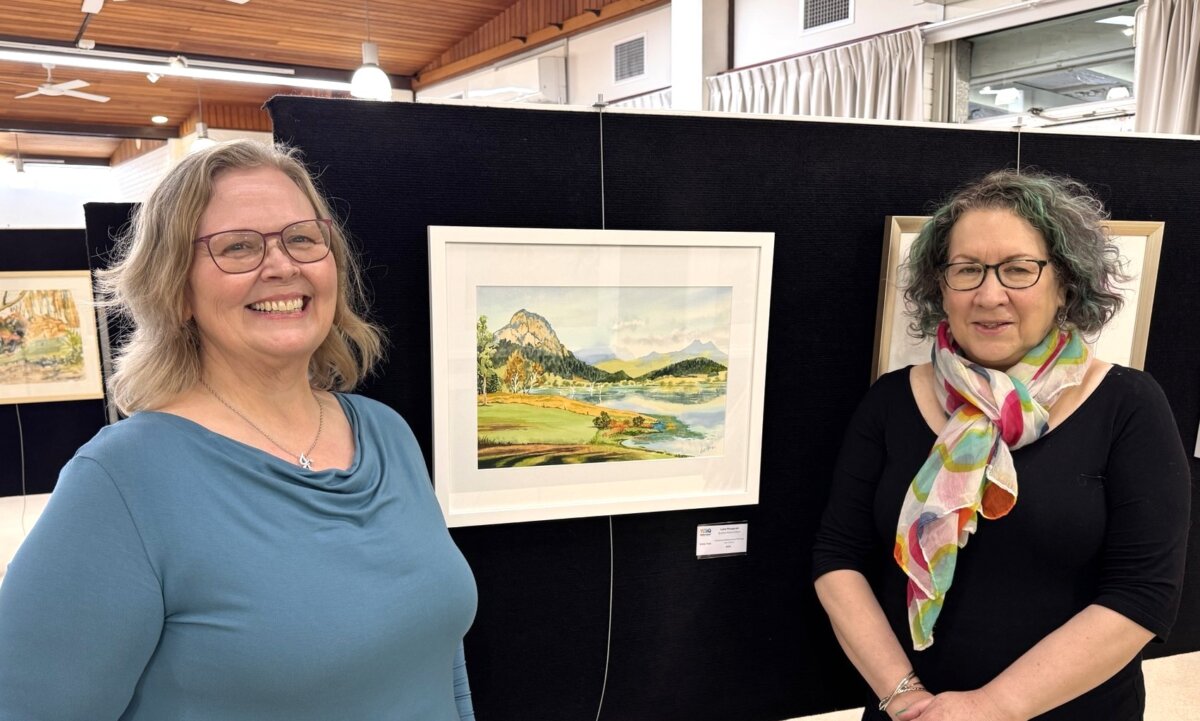
“You’re trying to improve your performance. Every time you practice, you’re developing new muscle memory.”
Williams, a former data specialist and native of Cleveland, Ohio, says painting also means working with the flow of the paint, instead of trying to assert rigid control.
“I can control so many aspects of my professional life. I’ve been able to control the environment that I work in … I’m a sort of process-centric person,” she says.
“But I don’t have that control with watercolour, I just have to say, ‘Okay, I’ve done what I can with it, but it’s going to do what it does, and you learn to love it.”
What Makes Painting in Australia Different?
And while hard work, quality paper, and paints are all imperative to the creative process, O’Brien says there’s one special ingredient that sets Australian-based paintings apart—good old sunshine.
“It’s the light in Australia,” O’Brien says. “I’ve done a lot of sketching overseas as well [in Europe]. And [in Australia] it’s the clear, vivid light and also the colours of the soil, and the heat, I think, that radiates through the painting at times,” she said.
“I’ve painted in New South Wales and Victoria, and the colours of their trees are … muted more. They’re a blue, grey tree, whereas up here [in Queensland] you’ve got the vibrant, tropical lime greens and all the jacarandas, of course.
“So putting that in a painting enlivens the scene and makes it look tropical.”