



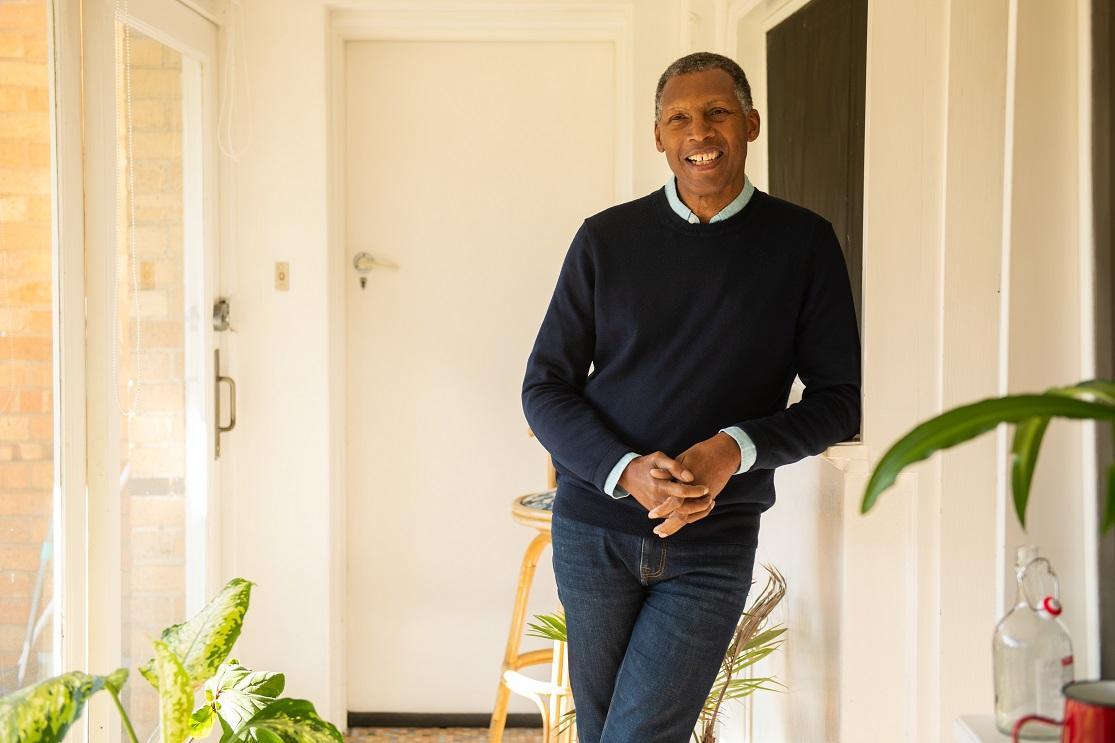
After developing an interest in literature at a young age, screenwriter Glenford Noble decided to open himself up to opportunities to develop his professional career.
Noble now looks back and says he was guided by a “higher power.”
“The meaning of life [for me] is connecting with this universal power, which can give you everything that you’ve been looking for—happiness, joy, serenity, peace,” Noble told The Epoch Times.
How Did It All Start?
Before working for mainstream media in both the UK and Australia—such as the BBC, South London Press, and TV series “Neighbours” and “Blue Healers”—Noble said he “just had a curious mind.”
Having parents of Afro-Caribbean background who migrated from Jamaica to London in the early 1950s to seek a better life post-World War II, Noble said his parents instilled the value of education and learning into their children.
“For them, education was the key to having a successful life as an immigrant,” he said.
“We didn’t have enough money to buy books in my house. But I loved comics. So, I had a library of comics; all were stacked neatly up in the cupboards, and I developed a real interest in writing and storytelling at a very early age,” he said.
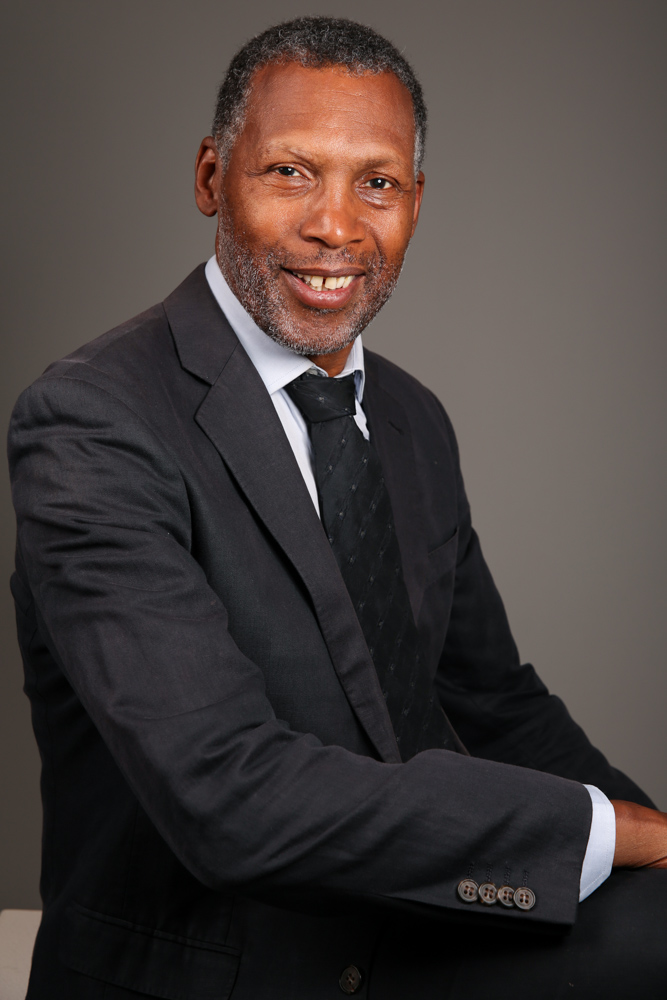
Noble was the oldest child, and grew up in a modest and happy family with five girls and two boys.
“We all grew up in a little place in South London called Tooting Broadway,” he said. However, he said that his family experienced discrimination due to the stereotypes prevalent back then.
Then at age 13, he joined a tennis group and met a young man who worked for an international computing company and who later became his mentor.
“[My mentor] devised computer codes for banks. He was also an athlete, played the violin, and was a photographer. He had a passion for literature, so he took me under his wing,” Noble recalled.
Through that mentor, Noble met other professionals who introduced him to a career in journalism.
“So, I started on the South London Press newspaper,” he said.
“What I liked about being a journalist is that it [teaches] you how to find out information, how to research, and how to talk to people and get them to open up to you.”
In the 1980s, his career took a different turn when the spreading of new show formats, private hybrid channels, and TV commercials changed the broadcasting industry.
“They were pushing the boundaries of TV, and they were looking for people to join: producers, researchers, and creative people. A lot of small production companies were set up and started making these shows for Channel 4.”
One show in particular caught Noble’s attention.
“It was a show specifically for the Afro-Caribbean audience in the UK, which had never been done before; it was called ‘Black on Black,’ and it was made in London. Because I had a journalistic background, I was able to get on to ‘Black on Black’ and be one of the researchers. And that’s when I started doing investigative research, trying to expose organisations.”
Noble’s skills in journalism, research, and broadcasting kept evolving, and in the 1980s, he landed a job at the BBC, producing documentaries.
Traversing the Terrain: From Journalism to Movies
At the BBC, Noble said he developed an attention to movies and found motivation in some young emerging filmmakers.
“I always loved films, and about that time, there were quite a few young Black filmmakers coming through in Hollywood,” he said.
“I wanted to start writing drama, but I had no experience, so I started buying lots of books on screenwriting and reading screenplays, and I had this fantastic idea for a movie.”
While working on “Black on Black,” Noble had met some intriguing characters and heard their stories. He decided to write the play for a movie based on true crime stories, which he entitled “Scarlett.”
“I’d always been fascinated by Raymond Chandler, who was a writer and created Philip Marlowe, who was a private detective in America in the 1940s. During my time on ‘Black on Black,’ I found a private investigator from Grenada, an island in the Caribbean.”
“[The private investigator] was about six foot four, very charming, very charismatic, and we became quite good friends. And we started putting together an idea for a movie based on some of his stories.”
Unfortunately, the outcome wasn’t what the writer had hoped for. “I got feedback from this group about the script: ‘Great idea, but a terrible script.’ So, I went back to London and spent the next year rewriting the screenplay.”
Noble was not deterred. He was then employed as a script editor by the BBC’s drama department for a soap opera called “EastEnders.”
“That was my breakthrough into drama, and I’ve been doing drama ever since then.”
Other Successes
Around 2000, he met Eve, a woman from New Zealand. They fell in love, had a child, and moved to Melbourne, where he worked for the TV series “Neighbours’ and ‘Blue Heelers. “I was so impressed by the lifestyle, the quality of life [in Melbourne],” he said.
He later worked for Channel 31, where he started making his own shows, such as a drama series titled “One Night Stand.”
Following that experience, he co-produced a series of documentaries around architecture called Sacred Spaces.
“There were a lot of shows about architecture and buildings and brand design, and I found a format that worked well. I would approach an architecture studio and charge them a production fee. We ended up doing about 120 shows over 10 years. I really enjoyed it.”
After 11 years, a new idea formed in his mind, when he heard about a female black composer. “I discovered that she was from America. It was in the 1930s in Chicago. She had a fascinating story, and the more I discovered about her, the more I thought ‘this would make a great movie.’”
Noble says he is currently working on this screenplay with the working title, “Florence.”
‘Love’ is the Answer
Noble also describes himself as an artist and says despite his achievements, he credits his success to a higher power or God.
It is a belief shared by many others in show business, including actor Denzel Washington, who has spoken about his faith and of how he can use his career and “platform” for good.
Mark Wahlberg went from prison to becoming a successful actor and attributed the change to finding his faith. He prays daily and his faith is his source of inspiration.
“Everything revolves around my faith, right? So I just get up, express my gratitude … [it’s] a constant reminder of all the things that I need to do to continue to grow and evolve and do my part,” he previously told Today.
For Noble, it’s as though every step of his life is following a pre-arranged plan, whether that’s finding the right people or opportunities.
“And we have a connection with this source, this power, which is about love. It’s all about love, and we can connect with that power through prayer and meditation … it’s like a guiding force.
“In the West, we call it God, while others call it something else, but it’s the spirit, it’s a higher power, and it comes from the universe.
“It gives us knowledge, and it gives us peace.”
