
A simple social media trend earlier this year prompted millions of people to ask the same question: what were you like in the 1990s?
Beneath the nostalgic photos, grainy home videos, and soundtrack of a bygone era lies a deeper yearning for a time before smartphones, 24-7 connectivity, and political correctness, suggests one academic.
If you’ve seen the videos, it’s set to the Goo Goo Dolls’ 1990s hit, Iris, and shows the viewer snapshots from over two decades ago.
The format has gained popularity and has been imitated by celebrities to governments and local councils.
But it’s also part of a broader trend.
Globally, Google searches for nostalgia are up, with interest in 1990s movies and vinyl players surging, while Facebook pages dedicated to the topic attract huge followings.
In Sydney, Australia, the popular restaurant chain Sizzler is set to make a comeback.
An Era of ‘Happy Accidents’
Panizza Ruth Allmark, professor of cultural studies at Edith Cowan University, outlines several factors behind this trend.
One is the 1990s represent the last decade before smartphones became ubiquitous.
“In the 90s, there was a lack of dependence on mobile phones,” she told The Epoch Times, meaning simple tasks like meeting friends, partners, or finding information took longer.
“No applications existed that offered immediate access to encounters, entertainment or education opportunities,” Allmark says.
It was the era of “happy accidents.”
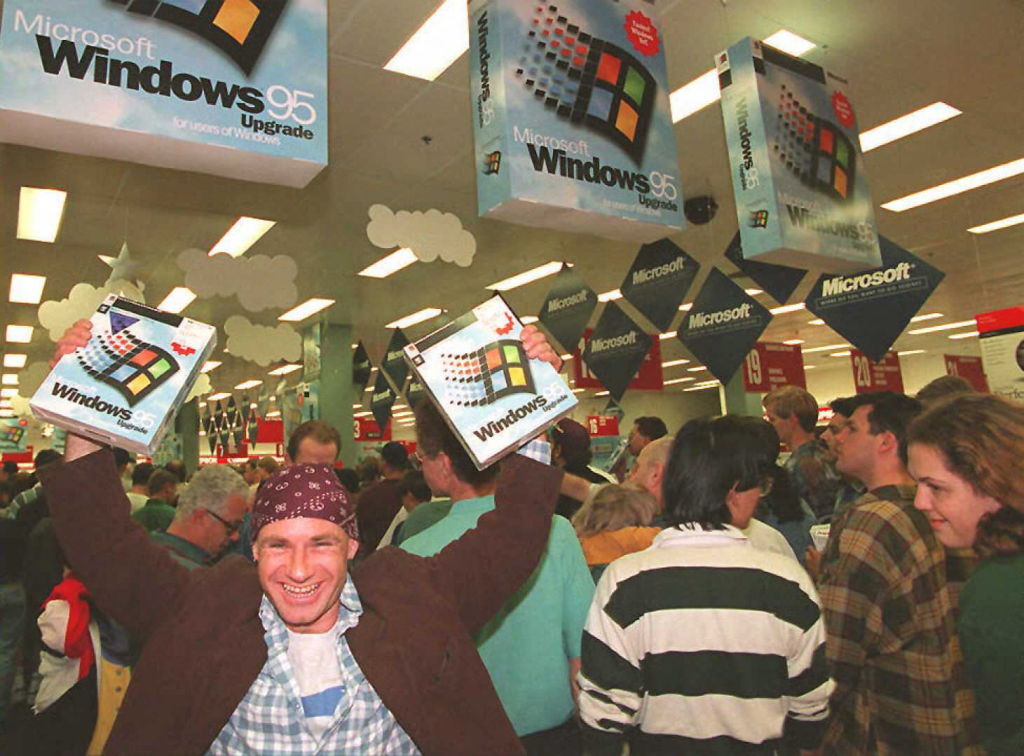
“There was much more planning involved …” Allmark says.
“Serendipity—finding friends or a potential romance partner in crowded locations were more common.
“The inspirational saying, ‘Life is a journey not a destination,’ seems to fit a nostalgic view of the 1990s.”
For Generation Xers overwhelmed by adulthood—or those born during and after the 1990s who may be a bit curious—it may be a form of emotional “time travel” back to an era that seemed less stressful and more colourful.
Allmark also points to another major distinction: political correctness.
“Political correctness was not a concept used in the 90s,” the academic says.
Comedic devices used in popular shows like Friends, The Simpsons, The Nanny, and Absolutely Fabulous, could not be featured today.
“Like in Friends, their narcissistic self-prioritisation was framed as a source of humour, yet also an aspirational ideal—we see this trope in shows in the late 1990s like Sex and the City,” Allmark said.
“It is uncommon, now, to have on-screen characters that don’t evolve into becoming more well-rounded, politically correct, civic-minded individuals.”
Further, the ideal woman was portrayed as extremely slender, white and youthful, while modern television programs now focus on diversity along ethnic and physical lines.
Is Nostalgia Good for Us?
UK psychologists Erica G. Hepper and Amelia Dennis say engaging in nostalgia can be a “boost in various psychological states.”
In their research, published in 2023, one group of respondents reported a drop in negative emotion when they engaged in nostalgia—effectively, nostalgia cheered them up in hard times.
On the other hand, another group felt nostalgia also resulted in an increase in loneliness and low moods—presumably feeling sad when looking back.
“Nostalgic reverie is not pure pleasure, but includes a secondary tone of loss and longing,” the authors noted.
“Hence, nostalgia might promote some aspects of hedonic wellbeing and not others.”
For nostalgia to trend on social media also represents a juxtaposition of sorts.
The 2026 World Happiness Report (pdf) found that globally, the more young people use social media, the less happy they become.
Those experiencing satisfaction with life were using social media the least, while Internet activities—including gaming—also contributed to lower rates of satisfaction.
The trend hasn’t gone unnoticed by Big Tech firms either.
Academics Jenny Kidd and Eva Niero McAvoy employ the phrase “algorithmic nostalgia,” which refers to the content generated off nostalgic feelings.
Their research (pdf) is based on the popularity of a function to animate old family photos using artificial intelligence and genealogy service MyHeritage.
The authors argue algorithmic nostalgia involves the generation of “particular memories that are aimed at eliciting nostalgic effects and affects in users of these technologies, including for exploitative purposes.”
“No doubt a marketing ploy to attract new users to its services, a technology like Deep Nostalgia also provokes searching questions about our interactions with our own and others’ pasts, and the uses we make of our increasingly complex personal archival apparatuses, not least within social networks.”