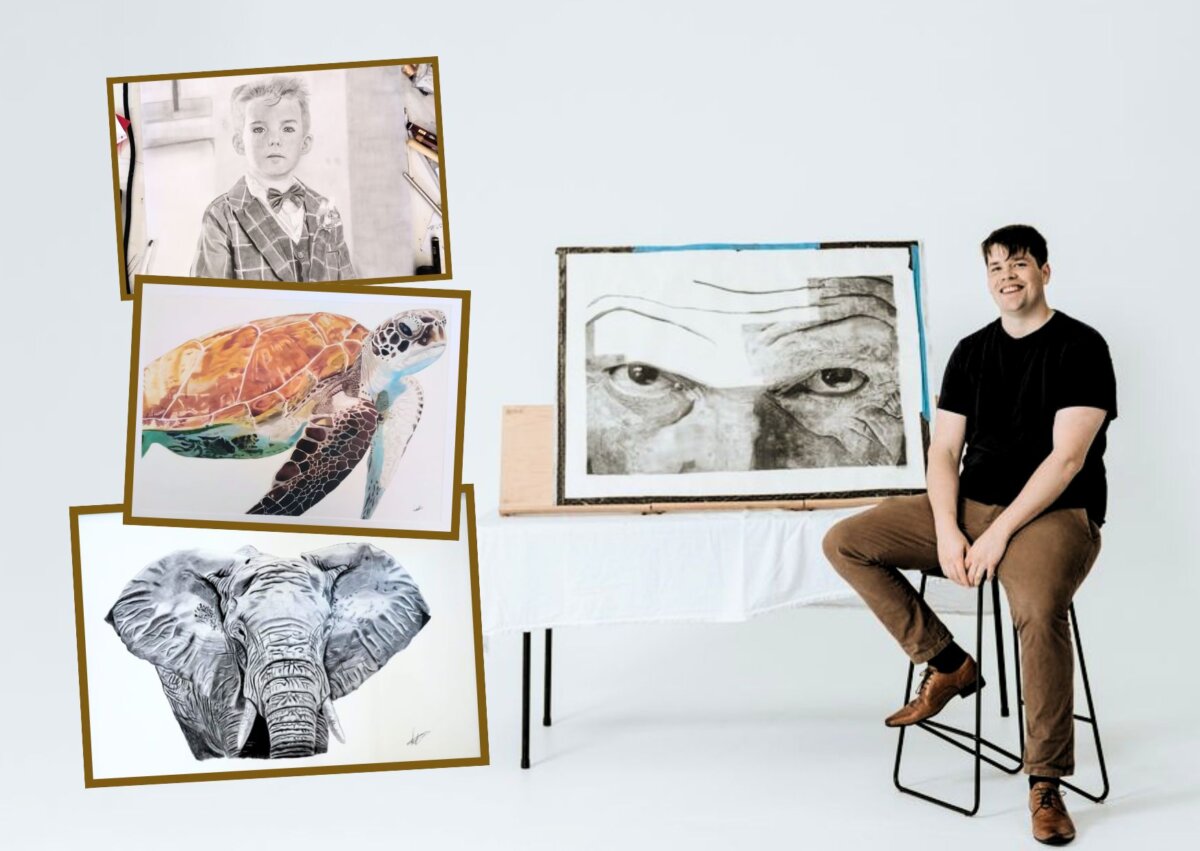
“Is it just skills or is it insanity?”
That’s a question Luke Lewis sometimes contends with when people learn about the hundreds of hours he and his students devote to their craft.
But for Lewis, the time spent creating works of realism—art that seeks to reproduce a subject with a high degree of accuracy and detail—is worth it, particularly in an era of quick artificial intelligence tools, social media, and instant gratification.
“It doesn’t matter if you can create a piece of artwork from AI in a second. It really doesn’t matter because people will value being able to put in 100 hours or 200 hours into something, and seeing you’ve made it with your hand,” the artist told The Epoch Times.
From the Pandemic Came a New Life Direction
What started as a hobby to pass time during the COVID pandemic has become a full-blown celebration of art for a nurse who now also teaches his skills to others.
Lewis always had a love for art, but it was during the pandemic when the 25-year-old had a chance to really hone his skills.
“I had a lot more time on my hands, and I wanted to have some sort of creative output, and so that’s when I began to draw,” Lewis said. “It gave me a way to not only escape but to connect with myself during that time.”
 The Epoch Times interviews realist artist Luke Lewis. (Courtesy of Alex Ang)
Inspired by East and West
The young Perth man’s inspiration stems from a visit to the Sistine Chapel in Italy, remembering being “bathed in so many artists’ creativity.” Another time, he went to a temple in Singapore and observed wax sculptures.
“And the precision and patience it would have taken to to create all that … just sort of hit me. And in that particular temple on the very top floor, they had a sculpture made of gold. It just blew me away. I couldn’t couldn’t believe the amount of detail,” Lewis said.
“Like, if that’s possible, then, what can we do now?” he said. “And then I get to be a small piece in this huge puzzle, and also help other people create as well.”
What Makes Realism so Unique?
Compared to other artforms, which emphasise an emotional expression, Lewis says realist art requires planning, patience, and trial and error.
“You need to learn a bunch of technical skills in order to create what you’re looking for,” he said.
“It doesn’t make it like the best form or like superior form or anything like that, but there’s just the simple fact that you need to be able to learn those techniques in order to do that.
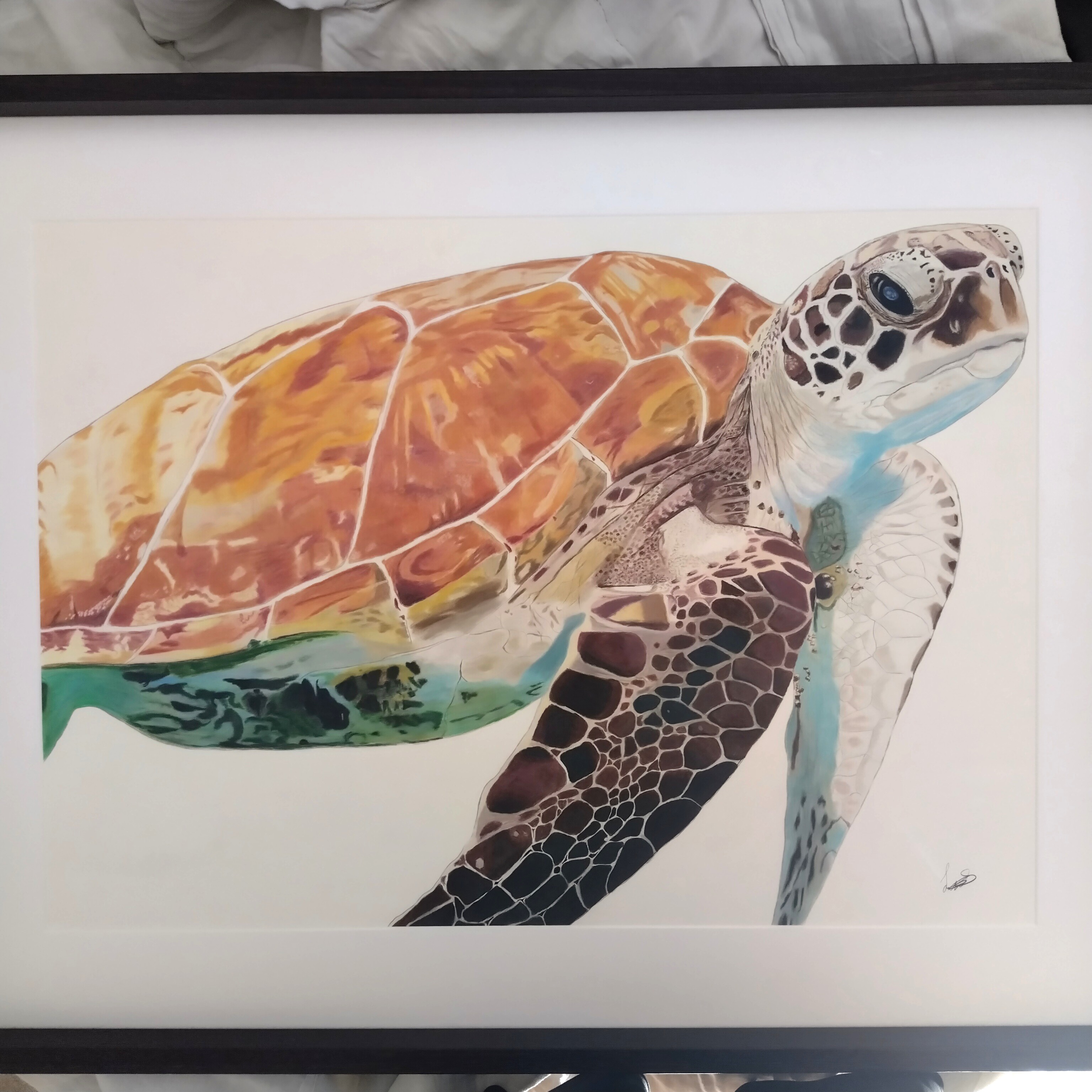 A painting by Luke Lewis. (Courtesy of Luke Lewis)
Lewis says one challenge of realism lies in overcoming the “ugly phase,” when artists hit road bumps in their work.
“We’re trying to build you up to maybe work 10 hours on a piece or 20 hours on a piece,” Lewis said.
“That piece I’ve got out there,” Lewis says motioning to his drawing of a pair of eyes, “I’ve worked on it for seven months now—about one or two hours a day with some breaks in the middle.”
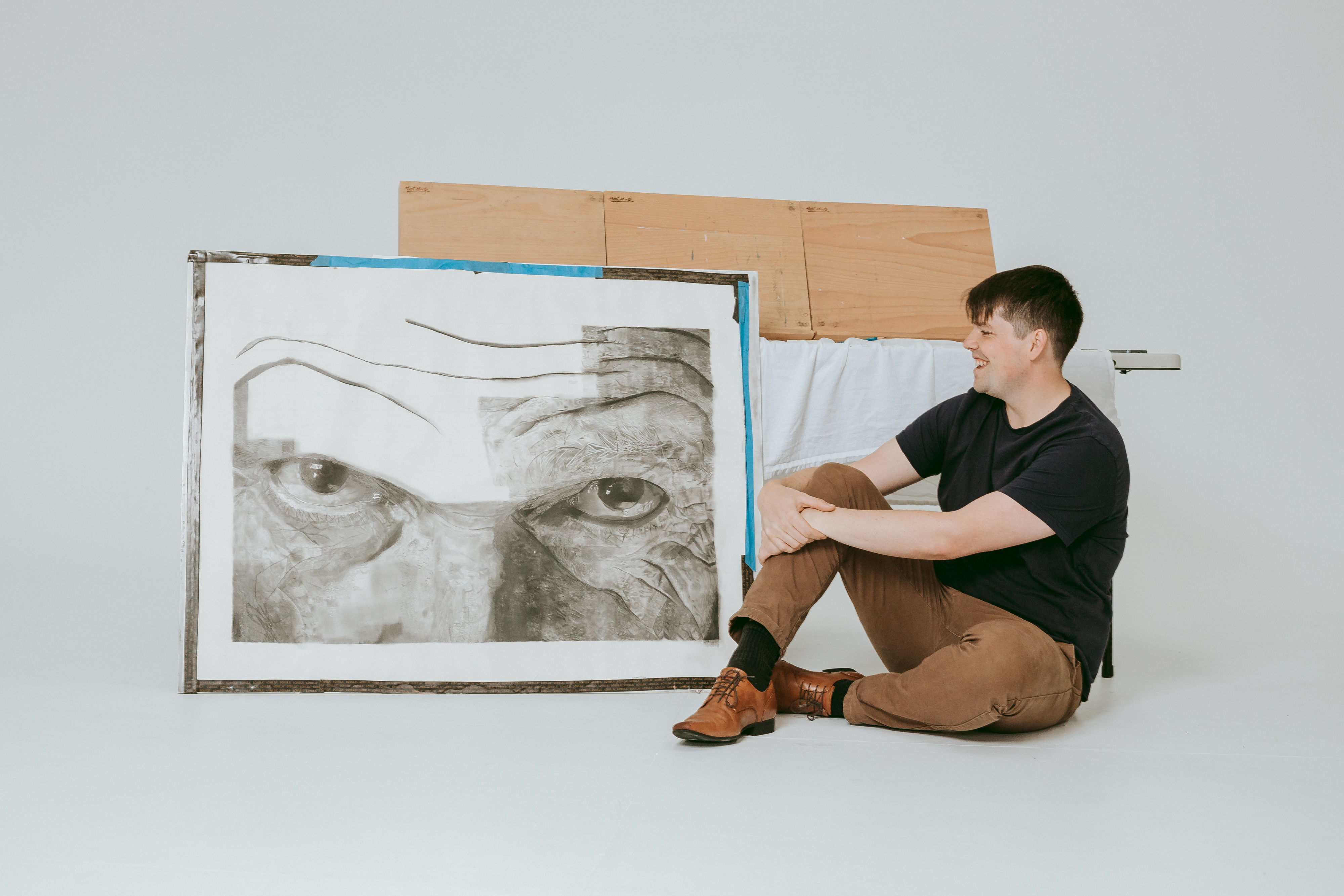 (Courtesy of Alex Ang)
He says some people on social media ask whether, “Is it just skills or is it insanity?”
But the artist stands by the belief that “never ending effort” is worth it and there’s always ways to rebuild and gain news skills to make something look realistic.
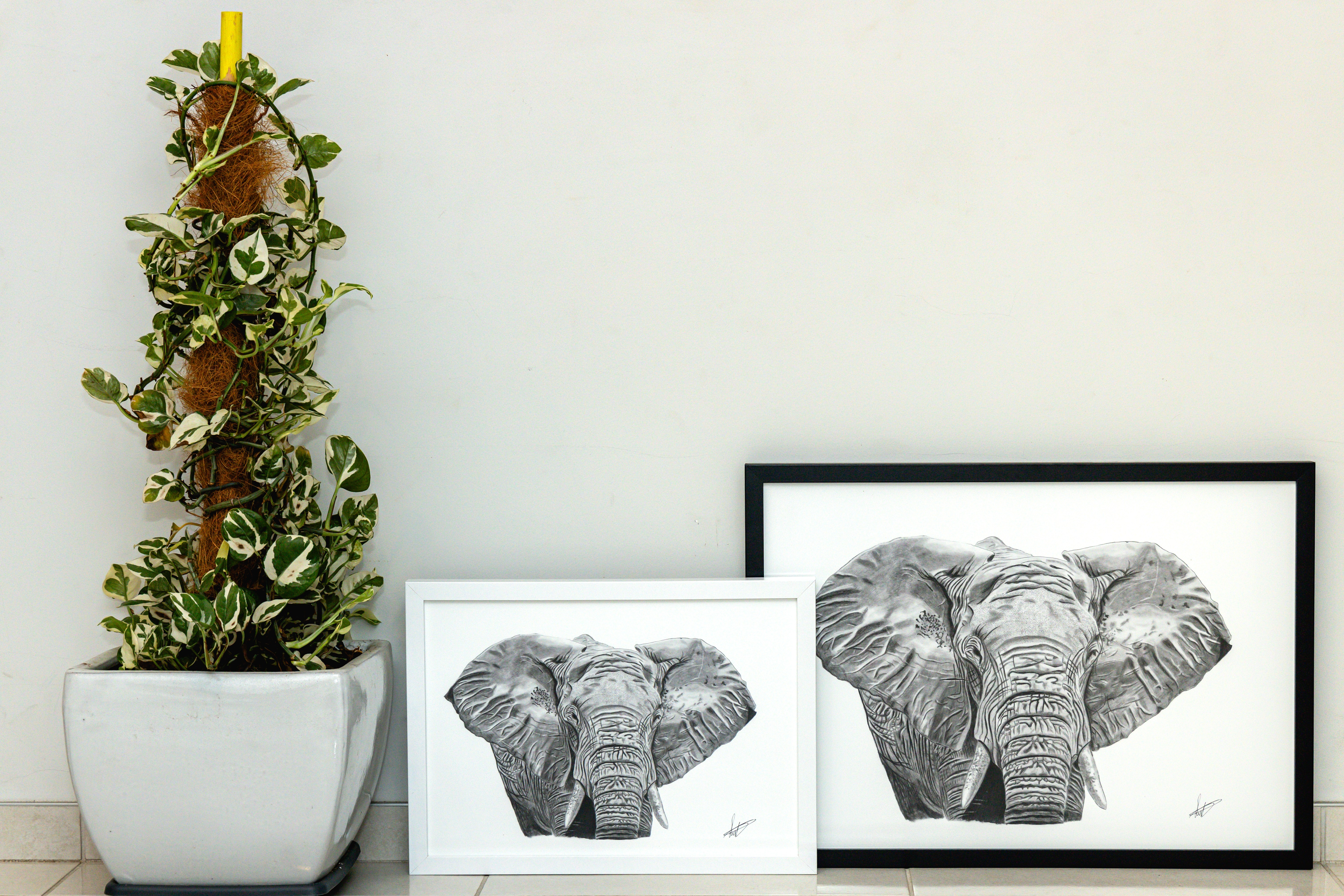 (Courtesy of Luke Lewis)
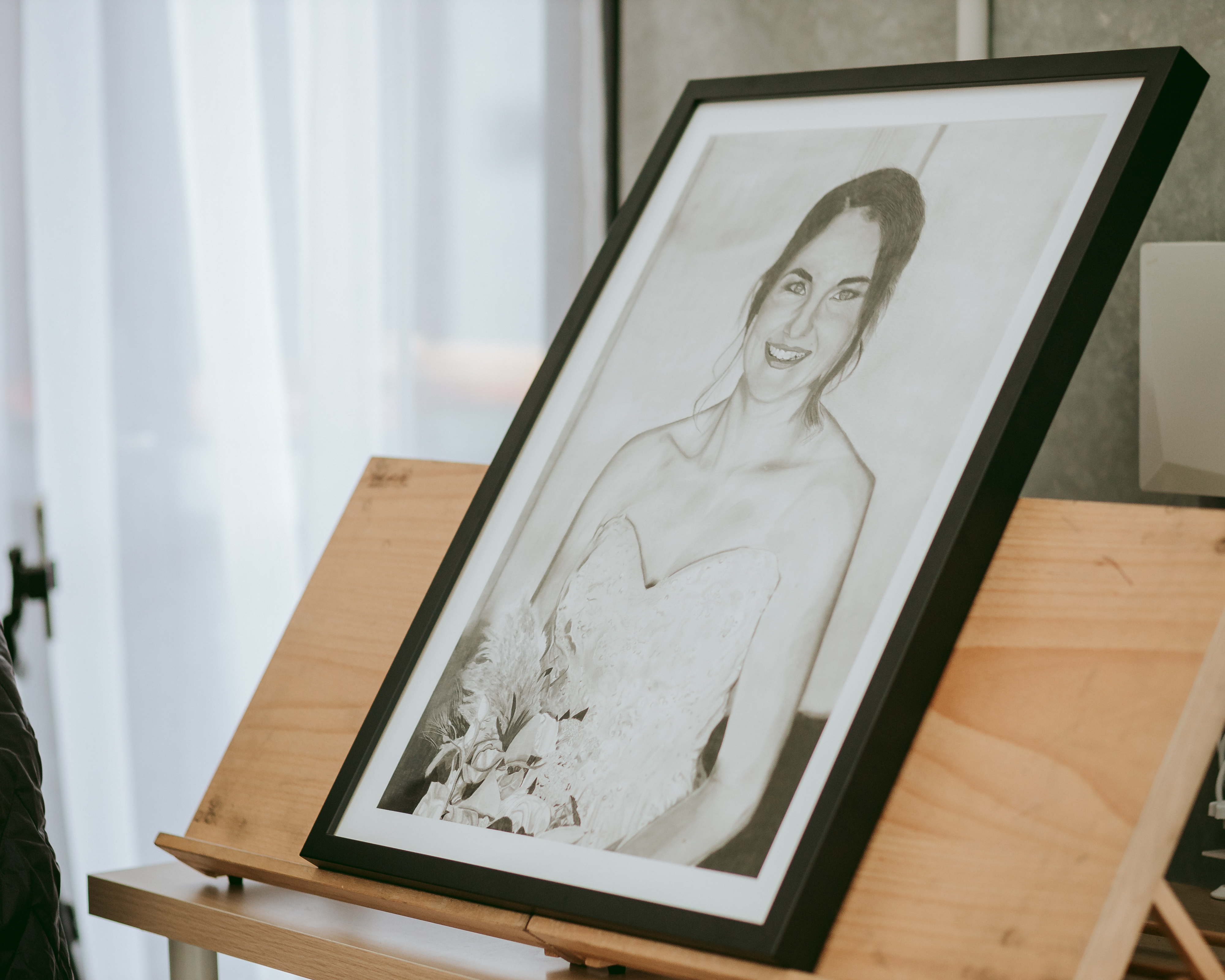 Luke Lewis created a stunning portrait of his wife, after a trial and error process. (Courtesy of Alex Ang)
In fact, many propagators of avant-garde or modernist movements—like Pablo Picasso—were sympathetic to Marxist or communist theories, which pushes for the overthrow of traditional forms and beliefs.
“The term ‘avant-garde’ was first used by socialist scholars to describe artistic movements that matched their own political aspirations,” states chapter 11 of The Epoch Times’ series, The Spectre of Communism.
“In the late 19th century, these influences brought about impressionism. Since then, modern artists have abandoned the demands of traditional … painting, including precision, proportion, structure, perspective, and transitions between light and shade. Neoimpressionism (pointillism) and postimpressionism then emerged, centering their works on the exploration of the personal feelings of the artist.”
Later movements would continue this trend including expressionism, fauvism, dadaism, and Picasso’s cubism—the artist joined the French Communist Party in 1944.
Meanwhile, traditional painters and sculptors were edged out with the British John William Godward committing suicide and declaring, “The world is not big enough for myself and a Picasso.”
Yet if the young artist Lewis’ popularity is anything to go by, there’s a revival underway.
“Just like when the camera first came out, portraiture took a big hit. But nothing has ever stopped it, it’s always going to continue on. People are always going to value your ability to create something by hand with patience.”
Hanh Vu contributed to this article.