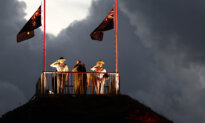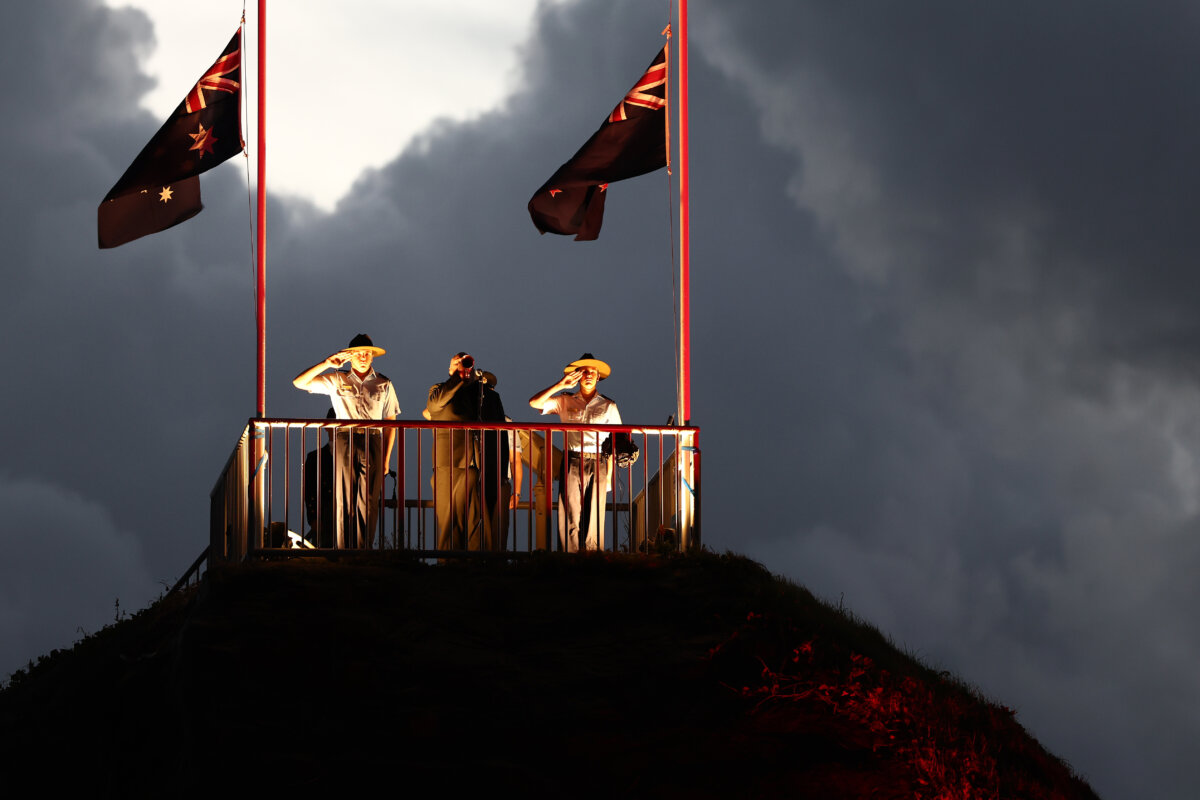

Commemorations like Anzac Day are necessarily times to reflect on the past and pay respects to those who have gone before.
But for many whose time in the military has ended, struggles in civilian life persist.
This Anzac Day, as thousands gathered on a mild morning at the Cenotaph in Sydney’s Martin Place, veterans assistance leaders called for attendees to spare a thought for those battling in the present as well as the past.
The sombre atmosphere in Sydney was broken by the interjection of booing during the Aboriginal Acknowledgement of Country by Pastor Ray Minniecon.
After the moment passed, a chorus of applause rang for Uncle Minniecon.
“We do have laws to try and deter people from this but it seems like these people still want to be lawless,” Uncle Minniecon said after the ceremony.
“They just need to realise their place in this country … and show their deepest respect.”
Police confirmed a 24-year-old man was arrested for “an alleged act of nuisance” during the service and said several others were moved on.
Returned and Services League of Australia New South Wales Branch (RSL NSW) acting president, retired brigadier Vince Williams had strong words for those who sought to disrupt the proceedings.
“I apologise unreservedly to Uncle Ray … his family has contributed enormously to our nation through from the First World War to the current day,” he told the ABC.
“I’m pretty convinced that none of the bunch of louts who were booing have ever done anything constructive for our nation.”
NSW Premier Chris Minns and his opposition counterpart Kellie Sloane were among those who paid their respects at the dawn service.
The thousands who filled several blocks on Martin Place were asked to think of all those who have served Australia in defence.
Williams, a fifth-generation member of a military family, now leads one organisation tasked with helping returning veterans find their feet in civilian life.
The heroism of those that fought is well remembered but the support for those whose military careers were cut short against their will should also be front of mind, he told AAP.
“When you’ve been in a career where life is organised for you … when you transition out, you may not be able to afford to live in the area which was your last posting location,” he said.
“Having a network is absolutely essential and that feeling of connectivity is what the RSL brings to the equation.”
Homelessness and suicide are two of the most pressing issues facing veterans who leave the defence force, but Williams believes processes are improving to care for struggling former soldiers.
A march will take place from Martin Place to the Anzac Memorial in Hyde Park later in the morning, followed by a sunset service back at the Cenotaph.
Lifeline 13 11 14
Open Arms 1800 011 046
By Tom Wark in Sydney
 Friends Read Free
Copy
Facebook
Tweet
Friends Read Free
Copy
Facebook
Tweet