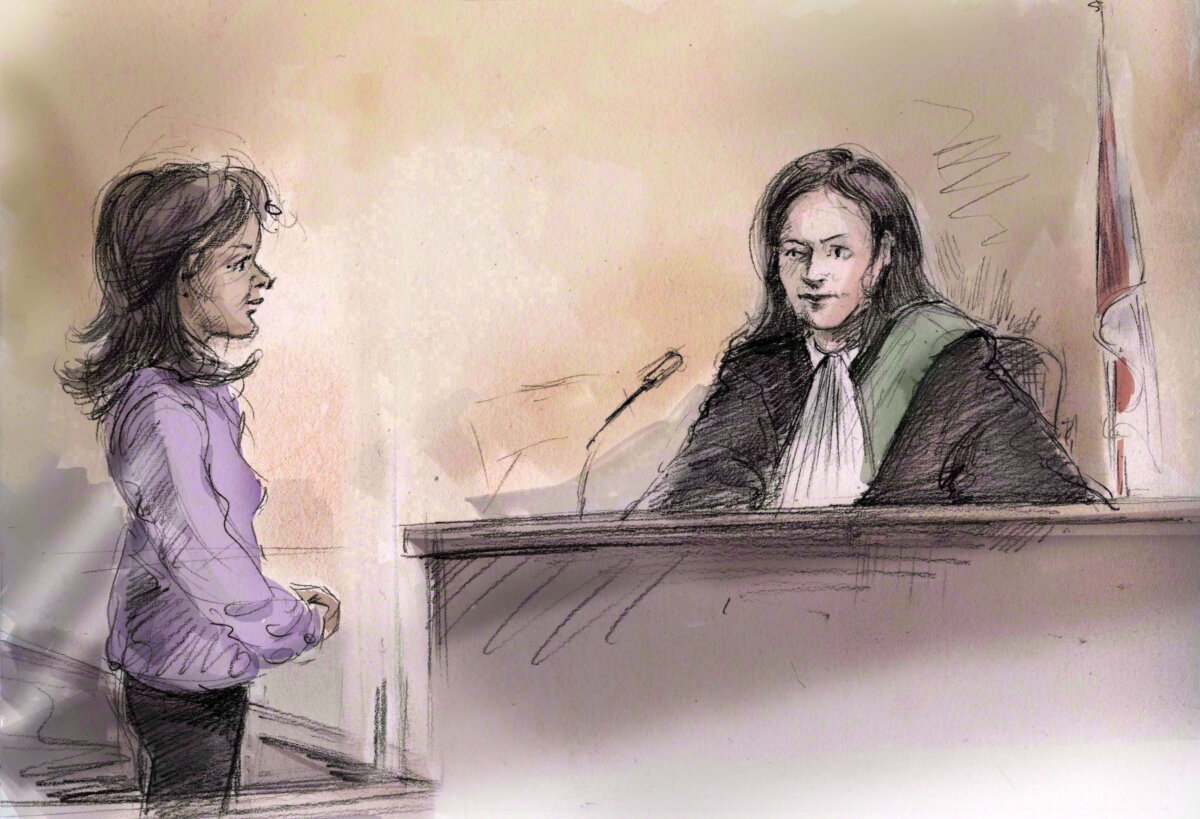
The Ontario Review Board has granted an absolute discharge from justice system oversight to a woman with schizophrenia who fatally stabbed a stranger in a Toronto drugstore in 2015.
The board’s June 3 decision follows more than a decade of psychiatric monitoring and legal proceedings involving Rohinie Bisesar, now 51, who killed 28-year-old Rosemarie Junor and said an “entity” instructed her to do it.
“While the tragedy cannot be undone and will always be on our minds, Ms. Bisesar no longer is a significant threat to the safety of the public, and the law requires that an absolute discharge must be imposed,” the board wrote.
“Ms. Bisesar’s commitment to her present health has substantially contributed to this result,” the board added.
The Ontario Review Board’s mandate is to balance protection of the public with the goal of putting people found not criminally responsible for their crimes back into the community.
Stabbing and Aftermath
According to the agreed statement of facts, Junor was looking at nail polish and talking on her cell phone at a Shoppers Drug Mart in downtown Toronto on Dec. 11, 2015, when Bisesar came up to her and stabbed her in the upper chest with a small kitchen knife.
The two had no interaction before the stabbing. Bisesar said the voice of an “entity” had commanded her to get a knife and harm someone.
Junor had recently married. She worked at a private medical clinic and had been browsing in the drug store on her work break. She was rushed to hospital after being stabbed but died five days later after the knife penetrated her heart.
Police arrested Bisesar on Dec. 15, 2015, after viewing surveillance footage from the scene, but she was initially found unfit to stand trial.
Bisesar then received treatment and was found fit to stand trial by 2018. However, both prosecutors and defence lawyers agreed she was not criminally responsible due to her schizophrenic psychosis at the time, and a judge entered a verdict of not criminally responsible.
After the verdict, Bisesar was detained at a secure forensic psychiatric facility at the Centre for Addiction and Mental Health (CAMH) in Toronto, where she received treatment, before being allowed to live independently by October 2021.
She has continued to receive treatment through a mental health program and attend regular checkups. She also takes two antipsychotic medications and an injectable drug.
The board said Bisesar has been “incident free” while under supervised independent living. Her treating psychiatrist, Treena Wilkie, testified that Bisesar remains actively engaged in treatment and has maintained stable mental health for years.
Review Board Decision
The review board’s June 3 decision noted that Bisesar had an extended history of mental illness before the fatal stabbing in 2015, including having been diagnosed with delusional disorder and chronic paranoid schizophrenia.
Bisesar had previously declined to take antipsychotic medications and had not told mental health officials about hearing violent auditory hallucinations until after the attack, according to the board.
“The death of an unsuspecting stranger in the centre of Toronto quietly going about some shopping strikes at all of society,” the board wrote. “Ms. Bisesar was then, however, floridly psychotic, untreated and desperately unwell at that time.”
The board further noted that Bisesar lives alone and receives benefits from the Ontario Disability Support Program.
Wilkie said Bisesar has firm family support and she is “knowledgeable and vigilant” in relation to signs that would indicate she is going into a relapse. The psychiatrist also said Bisesar has shown mental resilience over the past year in dealing with illness in the family, disappointments in her academic pursuits, and heightened media attention.
The board said this indicates Bisesar has “dealt commendably with the stigma associated with her index offence” and also credited her “unwavering commitment” to recovery.
“Through the impressive assistance of the psychiatrist and the entire forensic team, coupled with an unwavering commitment by the patient to do everything possible she could to get better, Ms. Bisesar is ready to be released from the jurisdiction of the Board,” said the decision.
CAMH also supported an absolute discharge for Bisesar, saying she no longer represented a significant danger to public safety.
The board had denied Bisesar an absolute discharge last year after finding that she still posed a considerable threat to public safety.
Bisesar is now part of CAMH’s Psychosis Coordinated Care service and the board said further treatments are being arranged with “no gaps in treatment.”
“The Board acknowledges the effort Ms. Bisesar has put into her recovery and wishes her well in her next chapter,” the ruling said.
 Friends Read Free
Copy
Facebook
Tweet
Friends Read Free
Copy
Facebook
Tweet