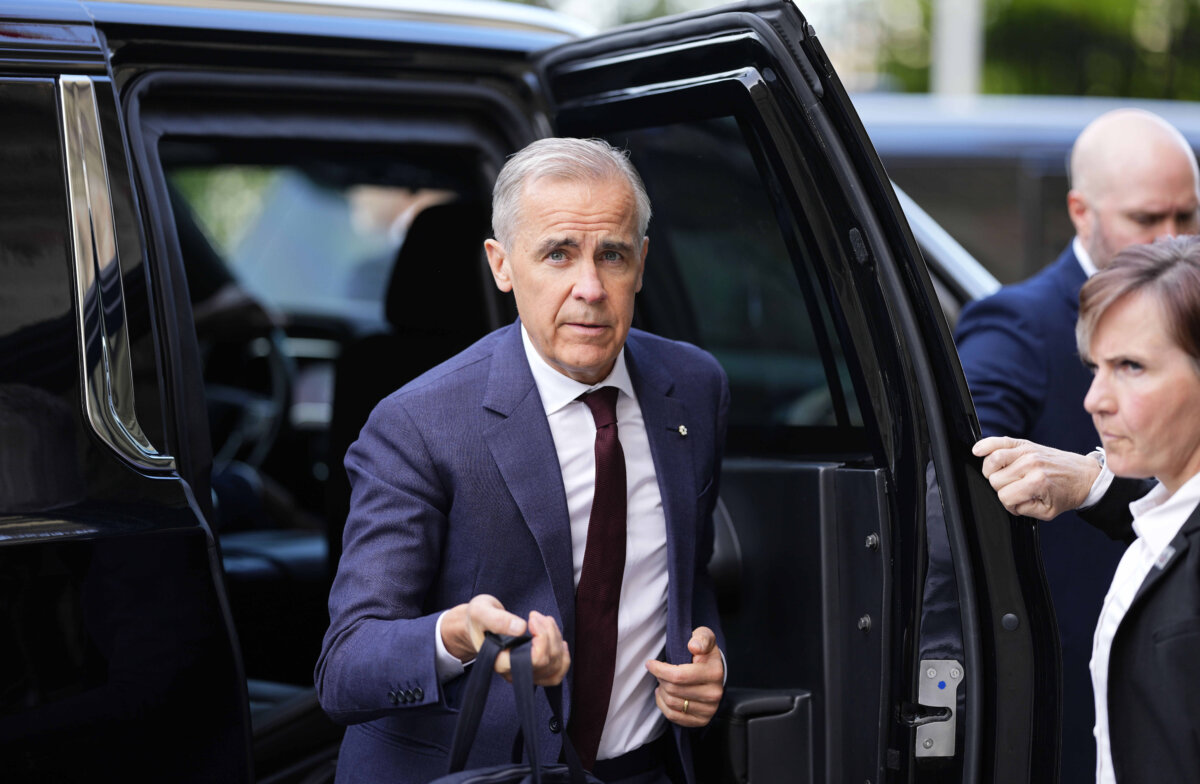

Prime Minister Mark Carney says Canada and the United States will work through issues related to the delayed opening of the Gordie Howe International Bridge between Ontario and Michigan, but would not say what those issues were.
“It was at the request of the U.S. administration. We’ll look to work through what issues they have. I don’t think it’s productive to work through those in public,” Carney told reporters in Paris on June 12.
The prime minister added that he had not yet been briefed on the status of the discussions, but that it was “important we get this right” and the bridge would be “an asset for both countries and our peoples.”
The Gordie Howe Bridge will be the second bridge, after the Ambassador Bridge, connecting the cities of Windsor, Ont., and Detroit, Mich. In 2012, then-Prime Minister Stephen Harper and then-Michigan Governor Rick Snyder reached an agreement on the project, and Washington approved it in 2013.
Carney told reporters on June 9 that the $6.4 billion project would open by the end of the week, then said the following day that the bridge would open later. Carney said it was “no big drama” if the bridge took longer to open, adding that it would “benefit Canadians, Americans, business, tourists, residents for decades and decades to come.”
On June 11, Carney told reporters that Ottawa had agreed to delay the opening of the bridge at the request of the United States, again saying that there was “no great drama” involved. Carney said the two countries would work through the issues that had arisen, but did not elaborate further.
U.S. President Donald Trump criticized the bridge in February, announcing on Truth Social that he would not allow it to open unless the United States was compensated for it. He said former U.S. President Barack Obama had signed a deal that did not benefit the United States, and that the country should “ own, perhaps, at least one half of this asset.”
Trump also said there should have been requirements to use American products, such as steel.
Carney told reporters a few days later that he had a phone call with Trump and explained that Canada had paid $4 billion to build the bridge, and the ownership is shared between Canada and Michigan. He said he also noted in the call that both Canadian and American workers and steel were used in the bridge’s construction.
Under the current agreement, tolls collected from bridge users will help reimburse the Canadian government for the funding it provided to build the bridge. Once those costs are fully recouped, half of the toll revenue will go to the state of Michigan.
Michigan House Speaker Matt Hall said on June 11 that he was pleased the opening of the bridge was being delayed, and would support an arrangement where the United States and Canada split toll revenues 50-50.
 Friends Read Free
Copy
Facebook
Tweet
Friends Read Free
Copy
Facebook
Tweet