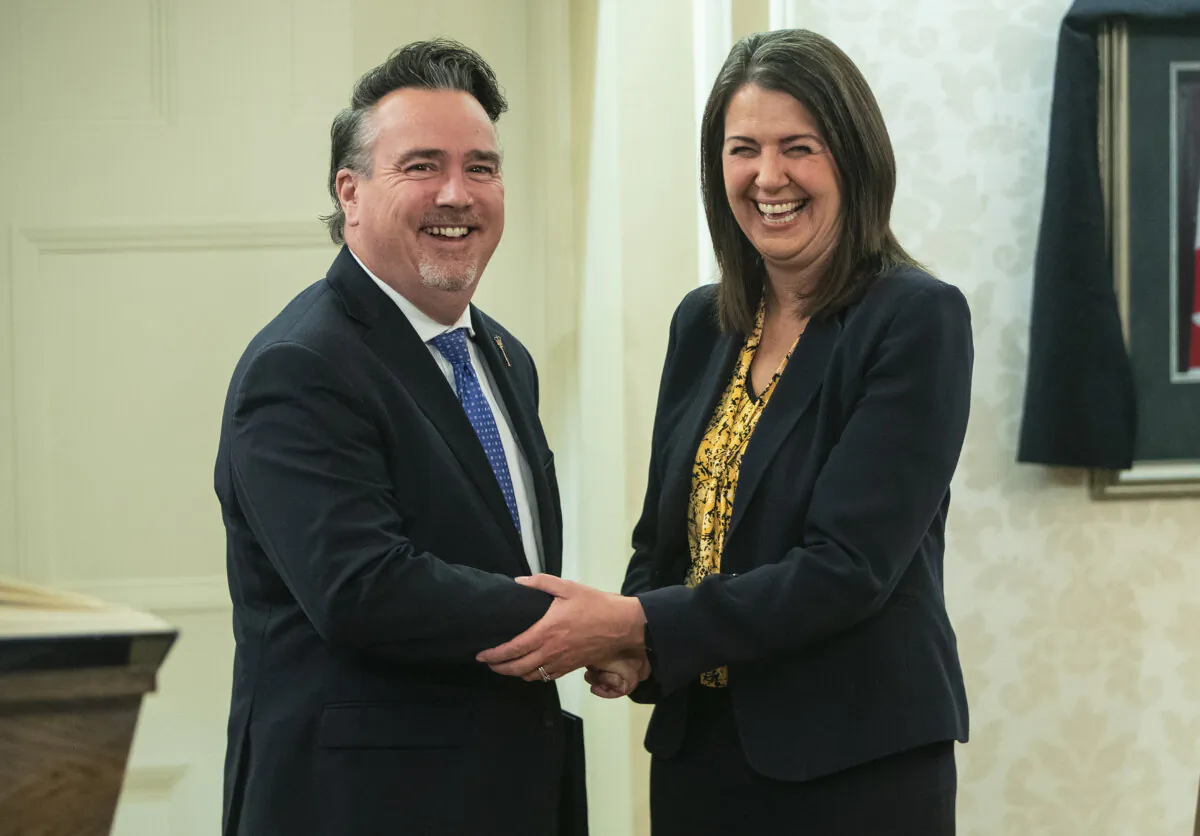

Alberta has tabled legislation to end the practice of clock changes to keep the province on daylight saving time permanently.
Service Alberta Minister Dale Nally said the legislation spells the end to decades of debate and votes on seasonal time shifting and will put the province on what he called “Alberta Time.”
“Albertans are tired of changing their clocks twice a year. It’s outdated. It’s inconvenient. And it doesn’t reflect how people live or work today,” Nally said during an April 23 press conference. “That’s why we’re proposing to put an end to seasonal time change and to move to a year-round time that will be known as Alberta Time. No more ‘spring forward,’ no more ‘fall back,’ no more having to reprogram your ovens twice a year. Just one consistent time all year.”
Alberta Premier Danielle Smith said only time will reveal if eliminating the biannual clock changes is the correct decision.
Many health and biology experts say standard time is better for the human body, Smith said but added that Albertans should try it out for at least a year before forming an opinion on the matter.
“People don’t really know what it’s going to be until they live it,” Smith told reporters at an unrelated press conference Wednesday. “No one’s shy of telling me what their opinion is, and so I’m sure we’ll get a gauge on whether or not people think that we’ve made a mistake.”
The proposal to do away with clock changes is part of Bill 31, the Red Tape Reduction Statutes Amendment Act, which suggests amendments to 18 pieces of legislation across eight ministries to streamline processes and improve services.
The bill must pass through several parliamentary stages in the Legislative Assembly, including three readings and a committee study, before it can become law. Albertans will no longer need to set their clocks back an hour on Nov. 1 if the bill passes.
Smith said she thinks Albertans will prefer to have later winter sunrises rather than the exceedingly early summer sunrises that would occur under permanent standard time.
“I think on balance they would probably agree with the majority that daylight savings is the way to go,” she said, adding that the province could put the decision to a vote in 2027 if Albertans don’t like it.
The adoption of permanent daylight time has been a highly debated issue in Alberta. It was narrowly defeated in a province-wide referendum five years ago, and the new bill is expected to rekindle the debate on whether permanent daylight saving time or standard time is better.
Albertans will vote on a series of referendum questions on Oct. 19, but Smith said time change will not be part of the ballot.
She said if citizens were to vote in favour of remaining on permanent daylight time in October, it would provide only two weeks for businesses and others to make necessary preparations.
The Northwest Territories is taking a cue from Alberta in implementing permanent daylight time, announcing this week its plan to stay in line with Alberta.
B.C. would be one hour behind Alberta throughout the year if the change is implemented, but Saskatchewan and Alberta would always be on the same time. Manitoba Premier Wab Kinew is also considering making the change and said he plans to seek public opinion on the potential elimination of clock changes.
The Canadian Press contributed to this report.
 Friends Read Free
Copy
Facebook
Tweet
Friends Read Free
Copy
Facebook
Tweet