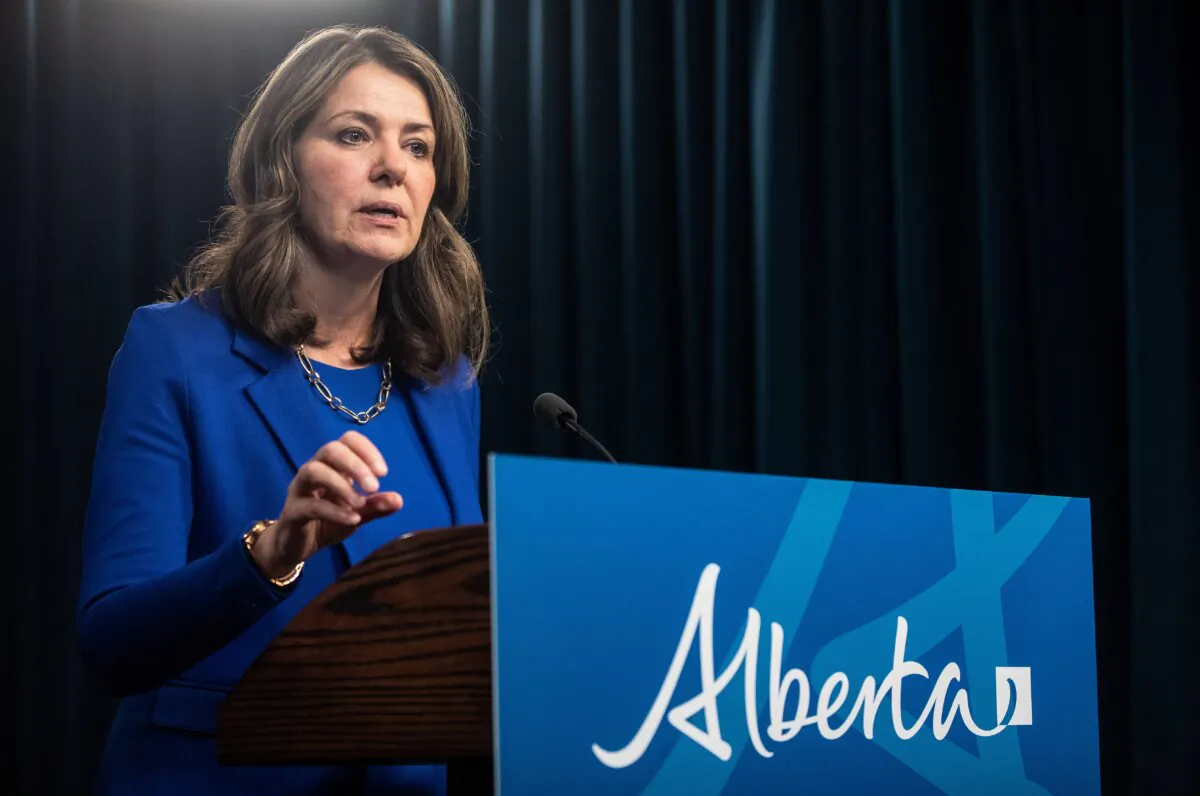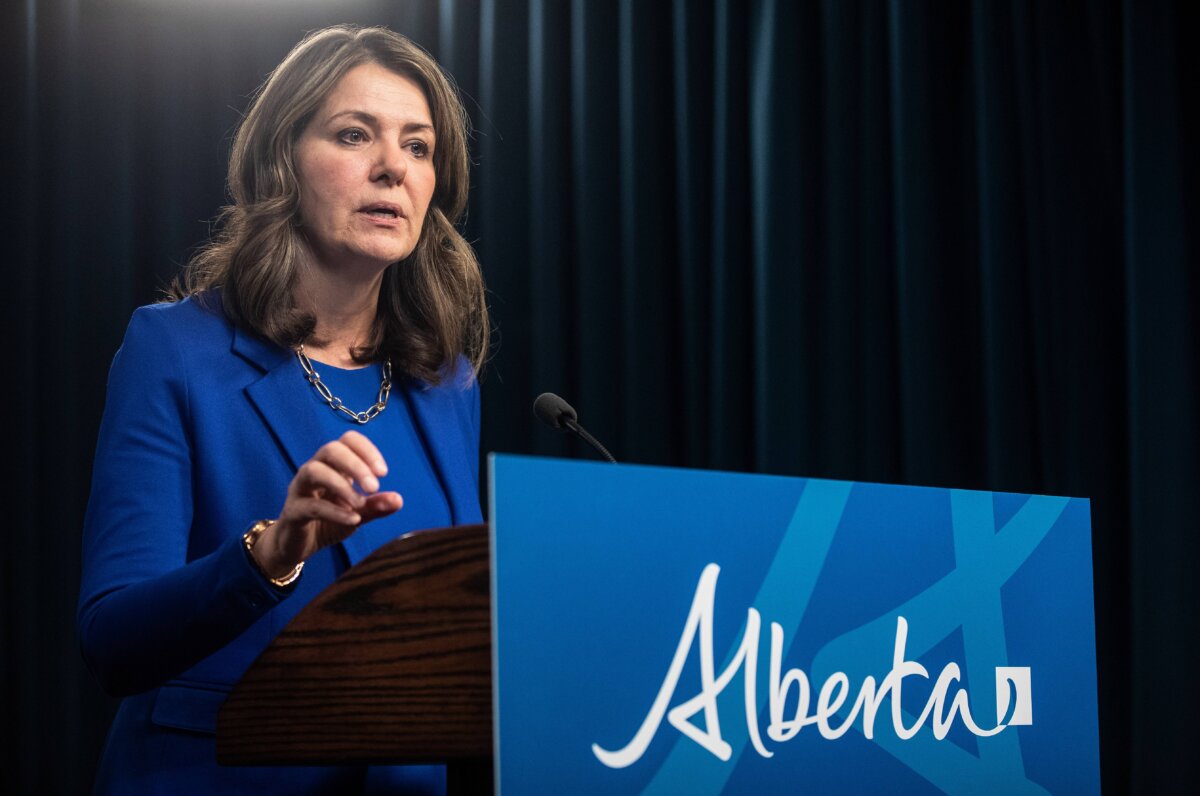

Alberta Premier Danielle Smith says it could be easier to bring Alberta oil to East Coast refineries via ships through Hudson Bay rather than go through Quebec.
Smith made the comments on June 2 ahead of the first ministers meeting in Saskatoon, where premiers were gathered to meet with Prime Minister Mark Carney to discuss which major projects to focus on.
Each province and territory has drawn up a list of priorities, and the idea of building a terminal in Churchill, Man., has garnered some cross-province support.
Asked by reporters about her message for Quebec, and whether she sees a pipeline going through the province, Smith said she would like to see that happen, “but I’ve got to work with where I think we’re going to have the most success.”
“And where I think we’ll have the most success right now is working on a corridor between Hudson Bay and a Port at Prince Rupert,” she said. Prince Rupert is a municipality in northern B.C. near the border of the U.S. state of Alaska.
“I think if we can do that and get icebreakers, then we would be able to bring ships up and over and be able to feed those East Coast refineries, and also be able to get on to Europe,” Smith said of a potential terminal in Churchill. Water around the port in the northeast Manitoba town is frozen for around half the year.
Manitoba Premier Wab Kinew has supported the idea of making Churchill a key shipping hub.
“We need to get our natural resources in Canada to tidewater, and I think in time, you’ll see that Hudson Bay is probably the most tenable course towards hitting international tidewaters,” he said on June 2.
Along with discussing this East-West corridor in Western provinces, Smith said building a new pipeline in northern B.C. would be a “good first step,” while saying the project won’t attract investment if the current policy environment doesn’t change.
Smith has criticized Ottawa over a number of its policies affecting the oil and gas sector, including its impact assessment process and emissions cap on the sector.
“If we’re going to continue building pipelines, we have to change the environment, and I’ve made that point very clear to the prime minister, and I’m looking forward to working with him and his energy minister to see how quickly we can address those underlying factors,” she said.
Carney said in recent weeks he’s willing to consider the building of new pipelines and is open to making legislative changes to speed up the approval of projects.
The B.C. government has not shut the door on a new pipeline but has also not shown support.
“We’re going to be focused on shovel-ready projects in B.C. that we can bring forward and we know will have a really solid impact on the economy,” B.C. deputy premier Niki Sharma said in Saskatoon.
Sharma was attending the first ministers’ meeting while Premier David Eby is in Asia. Eby said in late May he would consider the project if Smith is able to convince Ottawa to build another pipeline, but that his focus is decarbonizing his province’s economy.
Quebec Premier François Legault also touched on the pipeline issue before the leaders’ meeting. His province has not been favourable to new oil and gas projects in recent years, but has signalled more openness to the idea as public opinion on the matter has shifted during trade tensions with the United States. Most Quebecers now support building an East-West pipeline, according to a recent Léger poll.
Like Eby, Legault has not completely closed the door to pipelines, but is also treading carefully.
“I didn’t see the project, if there’s one,” said Legault. “So we need to see what’s the economic impact for Quebec, what is the impact on the environment. So what I say is that if there’s a project going through Quebec, we’ll study it.”
Eastern Canada receives its oil from the United States and other foreign countries, with no pipelines linking to Western Canada.
Oil is Canada’s most valuable export by a large margin and most of it is sent to the United States.
The Canadian Press contributed to this report.
 Friends Read Free
Copy
Facebook
Tweet
Friends Read Free
Copy
Facebook
Tweet