
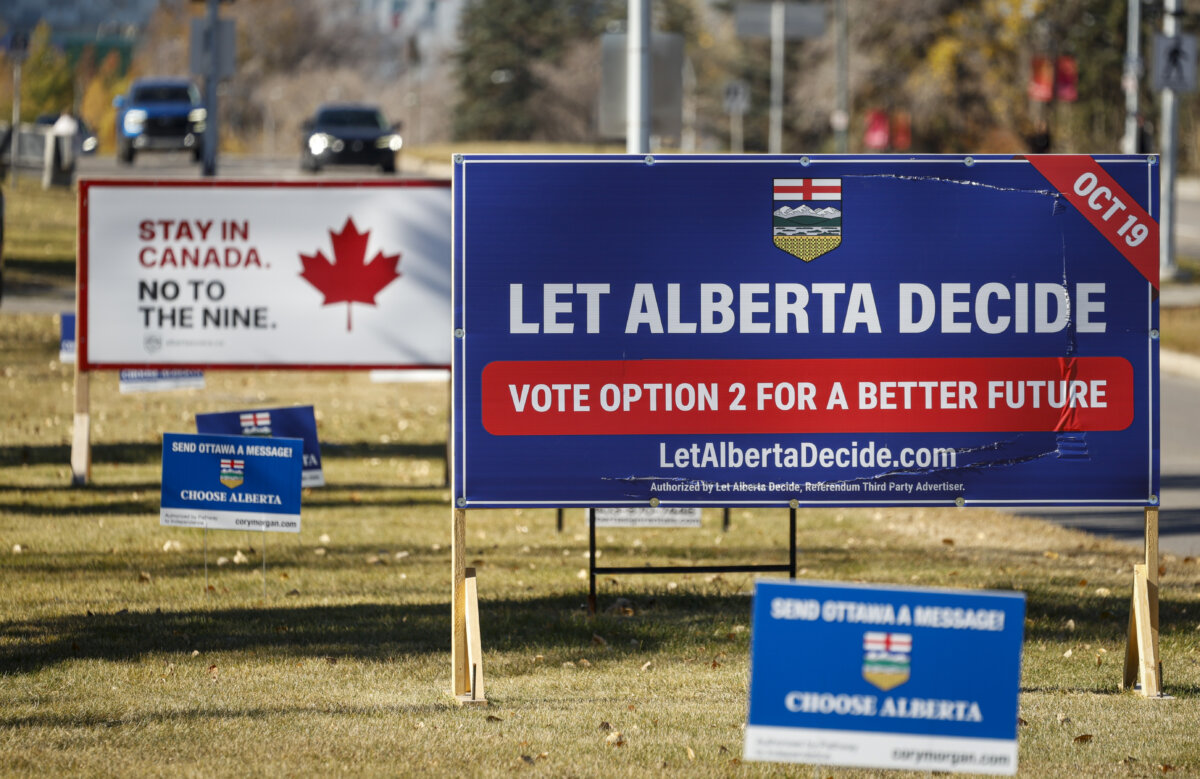
CALGARY—With Alberta’s referendum only days away, some Albertans who spoke to The Epoch Times appeared unfamiliar with the questions unrelated to separation, while others said the debate has been dominated by the issue of separation.
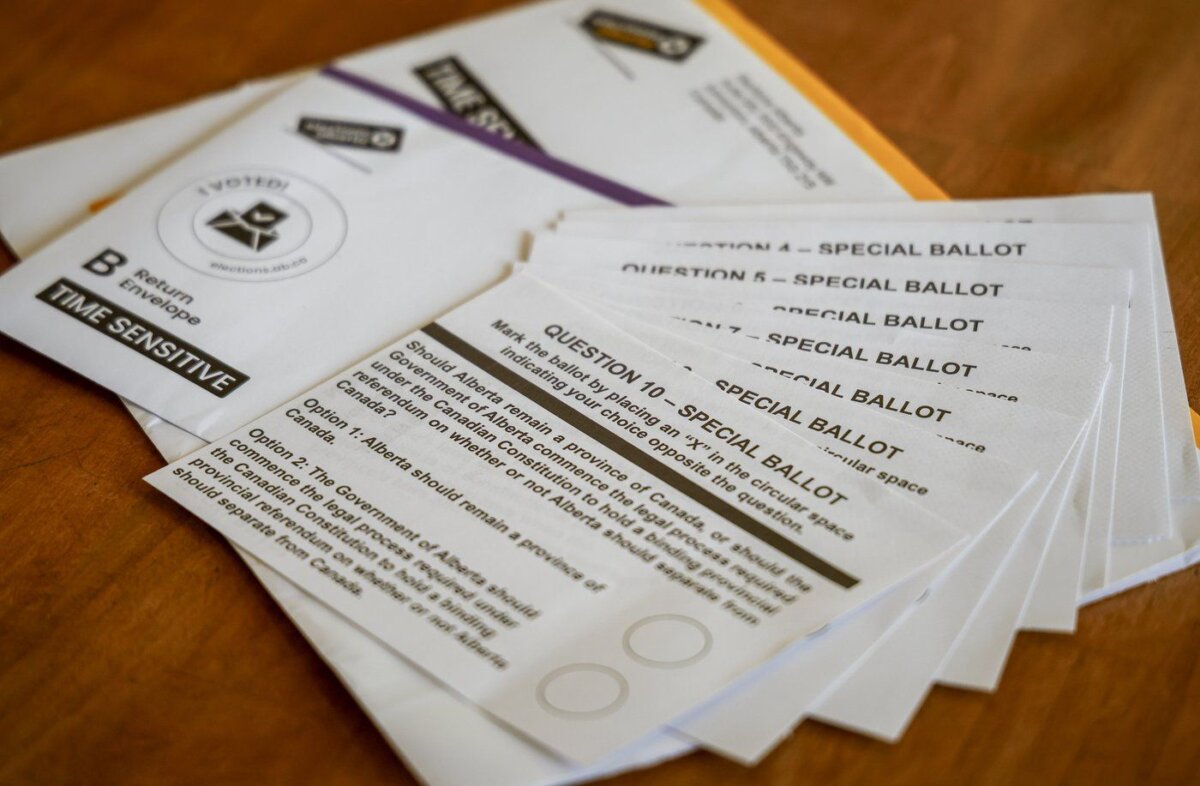
The 10-question, non-binding referendum is scheduled for Oct. 19, with one question on whether Alberta should remain in Canada or begin the process of holding a binding referendum on separation. The other nine questions are related to gaining greater provincial authority over immigration, judicial appointments, and constitutional changes, including abolishing the Senate, among other matters.
“I don’t even know what they are,” Calgary resident Jason Mills told The Epoch Times when asked about the non-separation-related questions.
Mills opposes separation, but fellow Calgary resident Teryn Allred, who supports an independent Alberta, also appeared unaware what the other questions are about, saying she’s focused on the separation issue.
Richard Renaud, an inventory manager who opposes separation, said he understands the nine questions but isn’t confident that most voters will grasp the consequences or full meaning of them all.
Calgary hairdresser Jo-Anne Dicken, who supports Alberta independence, questioned the purpose of the nine questions, saying they pertain to policy matters the Alberta government already has authority to address or constitutional matters that they won’t have the ability to change.
“I secretly wish I hadn’t voted on the other nine,” she told The Epoch Times, adding that she’s already voted in advance polls.
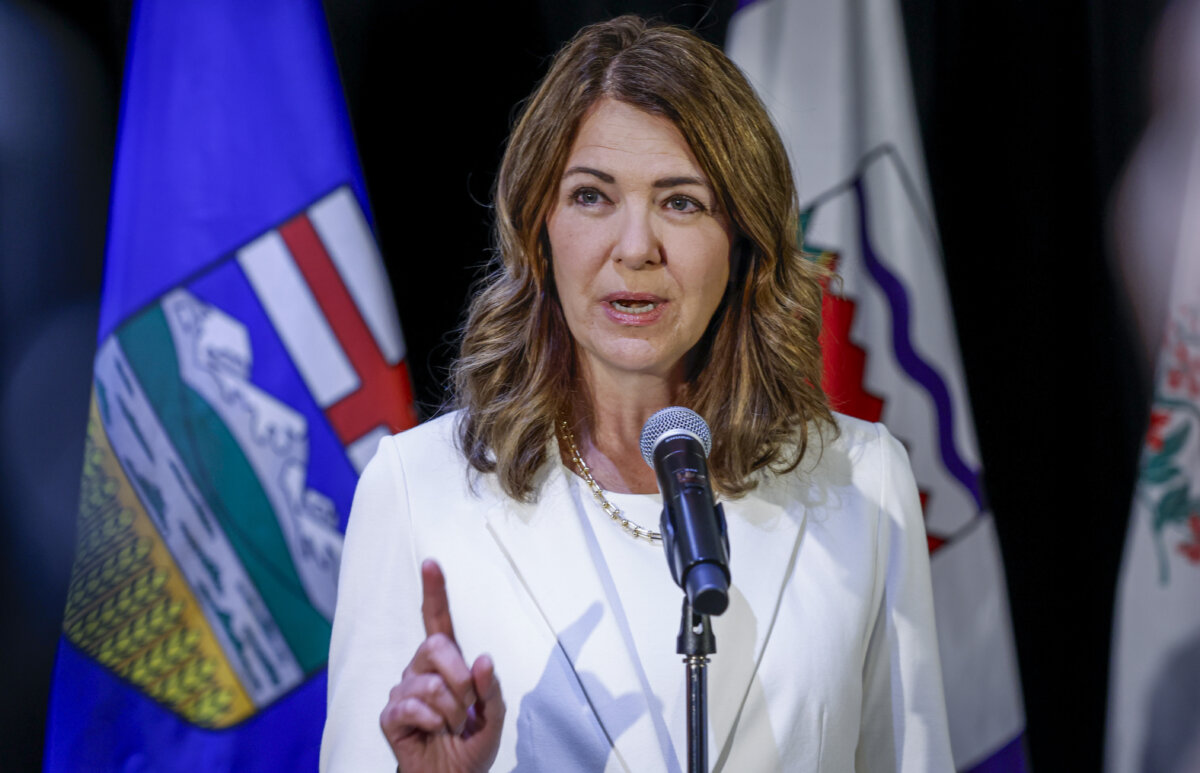
Alberta Premier Danielle Smith said she voted in advance on Oct. 14 for Alberta to stay in Canada, and has urged voters to make the same choice while also voting “yes” on the nine other questions.
“Many Albertans I speak with tell me they want to send Ottawa a message, and I would suggest the best way to do that is to give us a strong mandate on the other nine questions,” Smith said in an Oct. 14 video.
Prime Minister Mark Carney urged Albertans to vote “No” to the changes proposed in the nine questions during a visit to Calgary on Oct. 15.
What Are the Nine Questions?
The nine questions that don’t relate to the issue of separation call for a “yes” or “no” response on:
- Giving Alberta more control over setting immigration levels into the province and prioritizing economic migrants and Albertans in the workforce.
- Restricting provincially funded services to Canadians, permanent residents, or people with “Alberta-approved immigration status.”
- Requiring temporary residents to have lived in Alberta for at least 12 months before they can access social assistance programs provided by the province.
- Charging temporary residents fees for accessing publicly funded education and health-care services.
- Requiring people to provide proof of Canadian citizenship in order to vote in Alberta elections.
- Permitting provinces to choose and appoint judges to their superior courts instead of having them appointed by the federal government.
- Abolishing Canada’s Senate.
- Allowing provinces to opt out of federal programs involving health care, education, and social services, while retaining the federal funding to spend on their own versions of the programs.
- Giving priority to provincial laws over federal laws when they conflict in areas of provincial or shared responsibility.
All of the questions are non-binding and would require legislation or constitutional changes to take effect. Most Canadian constitutional amendments require federal parliamentary approval and support from at least seven Canadian provinces constituting 50 percent or more of Canada’s population. Abolishing the Senate would require federal parliamentary approval and consent from all provinces.
The last time the province held a referendum was in 2021, under former Premier Jason Kenney. The referendum asked whether Canada’s equalization program, which provides federal payments to provinces with below-average fiscal capacity, should be removed from the Constitution. It also asked whether the province should adopt year-round daylight saving time.
The referendum saw 61.7 percent of voters support removing the equalization principle from the Constitution, while 50.1 percent voted against adopting year-round daylight saving time. Following the result, Kenney introduced a motion in the Alberta legislature to recognize the vote and initiate the constitutional amendment process to abolish the equalization program, which Alberta has long been a contributor to. Despite Alberta’s request to abolish the federal program, it remains in place.
Effectiveness
University of Calgary political science professor Ian Brodie, a former chief of staff to former Prime Minister Stephen Harper, said Smith’s referendum questions are more likely to win support from other provinces than the previous equalization program question, because the equalization issue was essentially “Alberta against the rest of the provinces.”
“I think there’s certainly a viable coalition for a constitutional change,” Brodie told The Epoch Times. “Whether the federal government would agree or not—I doubt that they would—but I don’t think there’s any doubt we could get to seven provinces with 50 percent of the population on that, and it’ll be up to the premier to deliver that.”
He also said he doesn’t think Albertans will face a challenge in voting on the multiple-question referendum, saying Americans often decide on several issues on the same ballot in their elections.
“Americans vote on 10 ballot questions in an election without batting an eyelash, plus 20 local, municipal positions and three or four four federal positions all on the same ballot,” he said. “Sure, I mean we’re not used to it, but Albertans are just as smart as any American voter.”
Meanwhile, Lars Hallstrom, a University of Lethbridge political science professor, said he has spoken with a number of people who find the nine questions confusing.
“A colleague of mine (lawyer) made it quite clear—in the face of such potentially leading/confusing/poorly constructed questions, it is very difficult to answer ‘Yes,’” Hallstrom said in an email to The Epoch Times.
“What I have observed is both considerable demand for explanation and discussion of the questions, both in terms of their meaning, and their implications for Alberta.”
Alberta independence advocate Nadine Wellwood questioned whether the proposals could deliver meaningful changes.
“It doesn’t address the problem, and passing legislation is not the same thing as delivering results,” Wellwood said.
Alberta NDP MLA Irfan Sabir, whose party is opposed to the United Conservative Party government’s referendum, said the nine questions are “vague at best” and distract from other issues he says the government should be focused on, including education and health care.
“They should spend that money on access to health care, cutting down wait times, providing education,” Sabir told The Epoch Times, adding that if Smith wants to abolish the Senate “she should run federally.”
Alberta’s Minister of Advanced Education Myles McDougall outlined why he thinks the questions deal with important issues facing the province in a recent letter he issued to his Calgary-Fish Creek constituents.
He said Quebec currently enjoys a “unique arrangement” with the federal government when it comes to immigration control, and that he wants Alberta to have the same arrangement. He added that while he supports immigration and wants the province to remain a welcoming place, he wants Alberta to have a greater say on how provincial resources will be spent to ensure support programs remain sustainable.
He also said he supports the questions related to constitutional reform, including abolishing the unelected Senate and allowing the province to have more input in judicial appointments.
“Alberta should continue pursuing meaningful constitutional reforms that strengthen provincial autonomy while remaining part of a strong and united Canada,” he said.
 Friends Read Free
Copy
Facebook
Tweet
Friends Read Free
Copy
Facebook
Tweet