
The Alberta government has announced further details about its motion to defy Ottawa’s firearms buyback program, which the province says infringes on the rights of its citizens.
The federal buyback program for firearm businesses was launched to compensate businesses and individuals who hand in any of the more than 2,500 firearms that have been banned by Ottawa.
The federal government said it had collected 12,000 firearms from businesses by April 30, and paid more than $22 million in compensation.
Details of Alberta’s plans to oppose the federal program were released in an order paper on Dec. 2, with the provincial government saying firearms ownership falls under its jurisdiction through the Alberta Firearms Act, which “empowers the Government to control firearms seizure activities.” Under the proposed motion, provincial entities would be forbidden to take part in enforcing the federal program.
The motion says the position of the provincial government is that “it will not assist in any way with the Federal Firearms Seizure Initiative,” which it said “will unjustifiably interfere with the rights of law-abiding Alberta firearms owners, and violate the jurisdiction of the Alberta Legislature.”
The motion added that “all reasonable steps” would be taken to ensure neither the government nor “any provincial entity” participate in the implementation or enforcement of the program. It also says the buyback program identified unauthorized firearms based on “arbitrary criteria” and called the program “unconstitutional.”
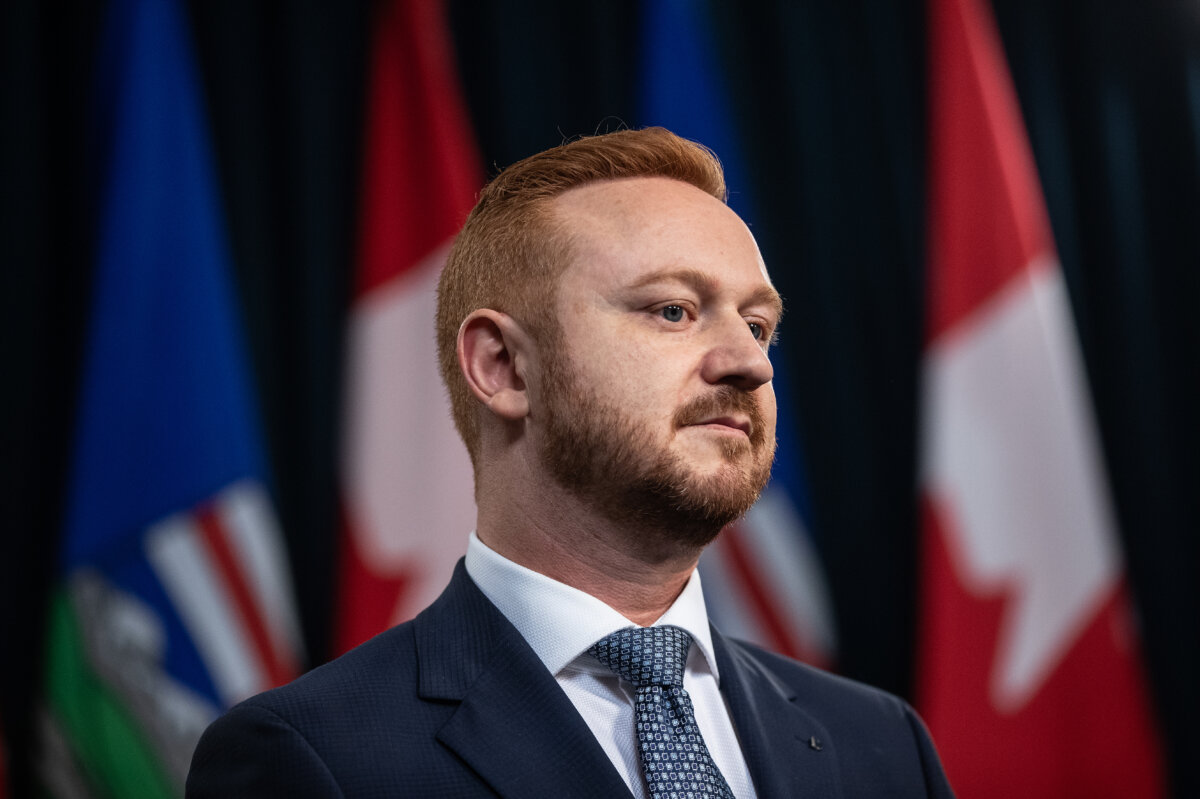
Minister of Justice Mickey Amery, who introduced the motion, told reporters the province thought the federal program unfairly targeted law-abiding gun owners.
“We believe that the folks that are committing the crimes are not purchasing, acquiring, or storing guns legally. They’re the ones that are getting the guns from, if you have illegal sources, and using them in serious and violent crimes,” he said during a Dec. 2 news conference.
The motion says the public safety minister would take “necessary steps” to prevent law enforcement agencies from participating or assisting with the program.
“They have much bigger priorities to deal with—serious criminals, the rampant bail problems that we’re having across this country, catch and release issues—those are the problems that we’re asking the federal government to dedicate their resources to,” Amery said.
A spokesperson for the office of the federal Minister of Public Safety told The Epoch Times that the prohibited firearms were selected because they were “designed to cause as much harm as possible in as little time as possible.”
Simon Lafortune said the national compensation program offered “fair compensation” to gun owners.
He added that Canadians expect governments to work collaboratively for safe communities.
“Any unwillingness to cooperate on this voluntary compensation program will make it more difficult for law-abiding gun owners to be compensated, leaving its own residents caught in the middle—still subject to federal law, but without the clear, federally supported pathway to compensation that will be available to Canadians in participating provinces,” he said.
He said that the Supreme Court of Canada was clear that Parliament had the “constitutional authority to legislate on firearms.”
Amery also said that the province will instruct prosecutors not to pursue cases in which people defend themselves against home intruders. He said it won’t be in public interest to prosecute homeowners who are “protecting their homes, their loved ones, and themselves from the threat of somebody coming into that home.”
Alberta Sovereignty
Amery said the federal program won’t fix the crime problem in Canada.
“It won’t provide a single dollar to prosecution agencies anywhere in the country, and we know that it won’t shore up our law enforcement. It won’t shore up border security. It does nothing to address the causes of violent crime in this country. So we think that our position is well-grounded.”
The motion noted that the premier, minister of justice, and Alberta chief firearms officer have “strenuously advocated against the Federal Firearms Seizure Initiative in all available venues.”
The motion is being introduced as part of the Alberta Sovereignty within a United Canada Act.
The government said that it was committed to ensuring residents continued to have the right to buy, own, and use firearms, and “are not unreasonably restricted in their ownership by any other government.” Amery said there were about 350,000 licensed firearms owners in the province.
The province also said it would use “all legal means necessary” to oppose the federal program in Alberta.
Buyback Program National Rollout
Ottawa has announced plans to roll out the program across the country, following a pilot program in Nova Scotia.
Saskatchewan has also raised concerns over the federal program. The province made amendments to its firearms act to ensure that its residents receive “fair market value” for their guns. The amendments say the Saskatchewan Firearms Commissioner should determine the value that gun owners receive.
The province has also advocated for alternatives to the federal program, and encouraged Ottawa to fund initiatives that will address firearms smuggling and the use of illegal firearms in criminal activities.
Meanwhile, the Ontario Provincial Police has said it will not participate in the enforcement of the buyback program.
The program was first introduced by former Prime Minister Justin Trudeau after a mass shooting in Nova Scotia in April 2020, which was carried out with illegally obtained weapons.
Trudeau later announced a ban on the use, sale, and importation of more than 1,500 types of firearms, which has been expanded to include more than 2,000 types.
The Liberal government also introduced a national freeze on the sale, purchase, or transfer of handguns on Oct. 21, 2022 through Bill C-21, which was given Royal Assent in December 2023.
An amnesty period for firearms owners was extended to Oct. 20, 2026. It was the third time Ottawa extended the deadline. The amnesty was originally put in place by the Liberal government in May 2020 and was set to expire on April 20, 2022, but was extended to Oct. 30, 2023. The amnesty period was later extended again to October 2025.
Matthew Horwood contributed to this report.
 Friends Read Free
Copy
Facebook
Tweet
Friends Read Free
Copy
Facebook
Tweet