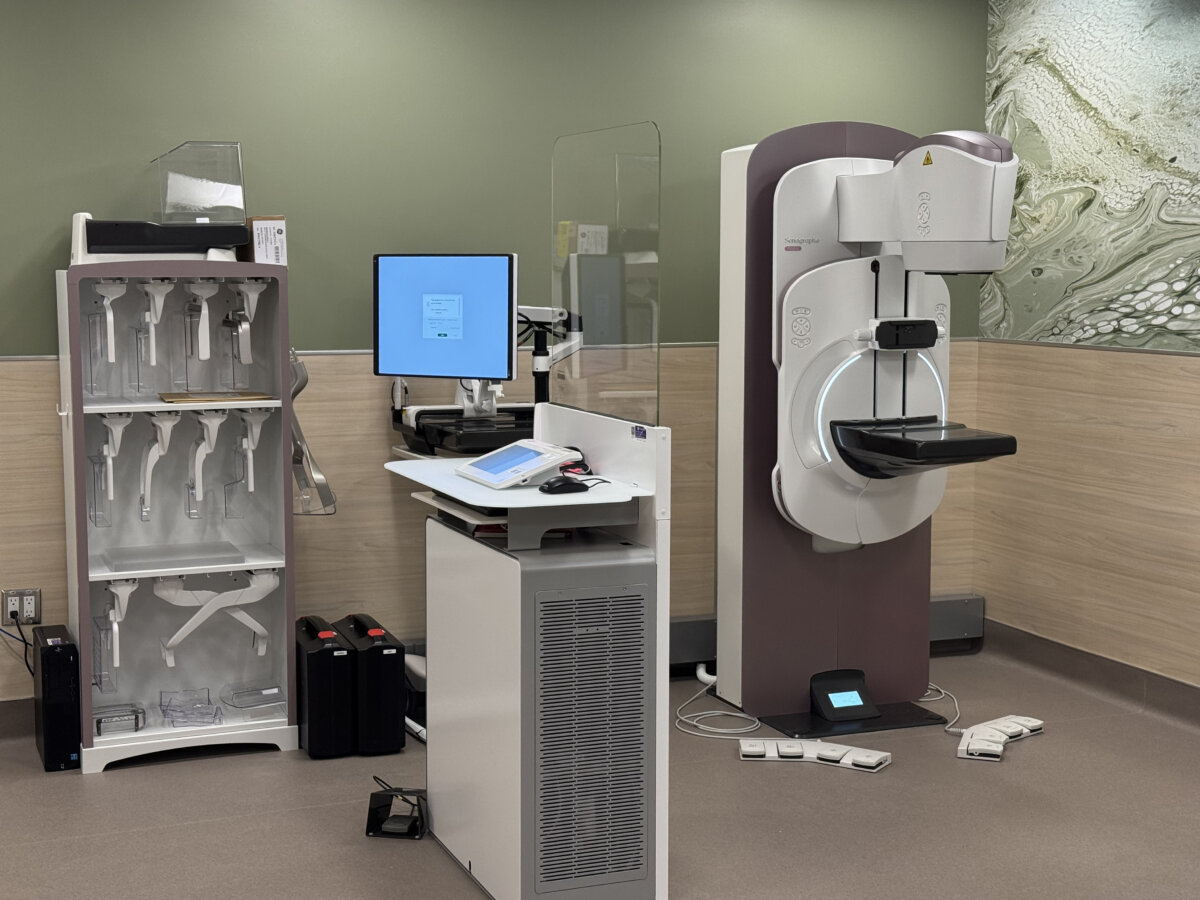

Alberta is lowering the age for routine breast cancer screening to 40, in a move the government says will increase access to cost-free self-referral for publicly funded mammograms.
The new policy is being rolled out over the coming year and is expected to be fully in place by next April, according to Preventative Health Minister Adriana LaGrange’s April 22 announcement. She added that the move is expected to improve health outcomes via earlier diagnosis and higher overall screening rates.
Until the new policy is fully in place, women between 40 and 44 will still need a referral from a doctor to receive a publicly funded mammogram.
Presently, women 45 and above can self-refer for a mammogram at no cost, while medically necessary mammograms ordered by a doctor are covered at any age.
The province says the change will add 193,000 Albertans to those who are eligible for cost-free, self-referred screening.
LaGrange said Alberta already ranks first in the country in terms of breast cancer screening participation, noting that roughly 84 percent of women in the province between 50 and 74 and approximately half of those between 40 and 49 have done a mammogram in the past three years. The province would like to see the screening rates get to 100 percent for those at the highest risk, according to LaGrange.
Risk factors for breast cancer include a family history, alcohol use, obesity, and genetic tendencies, according to Health Canada. The risk of breast cancer can be brought down by keeping a healthy weight, consistent exercise, and limiting alcohol.
An estimated 31,600 women and 290 men were diagnosed with breast cancer last year and 5,400 women and 55 men died from it, according to the Canadian Cancer Society. Men can also develop breast cancer due to a small amount of breast tissue in males.
Approximately one in eight Canadian women will develop breast cancer in their lifetime, with survival rates at roughly 89 percent for five years after diagnosis, with especially high chances of survival when detected early.
In addition to the rollout of expanded access to mammograms, LaGrange said Alberta is funding $2.25 million for a new oncofertility program that will help cancer patients preserve fertility before undergoing cancer treatment. The program is expected to roll out within the next year, according to LaGrange.
Oncofertility is a field of medicine centred on protecting a person’s ability to have children prior to them undergoing cancer treatment, as procedures such as chemotherapy and certain surgeries can harm reproductive organs and lessen fertility. This may involve freezing eggs and embryos, preserving ovarian tissue, or hormone treatments, as well as freezing sperm for men.
The Canadian Press contributed to this report.
 Friends Read Free
Copy
Facebook
Tweet
Friends Read Free
Copy
Facebook
Tweet