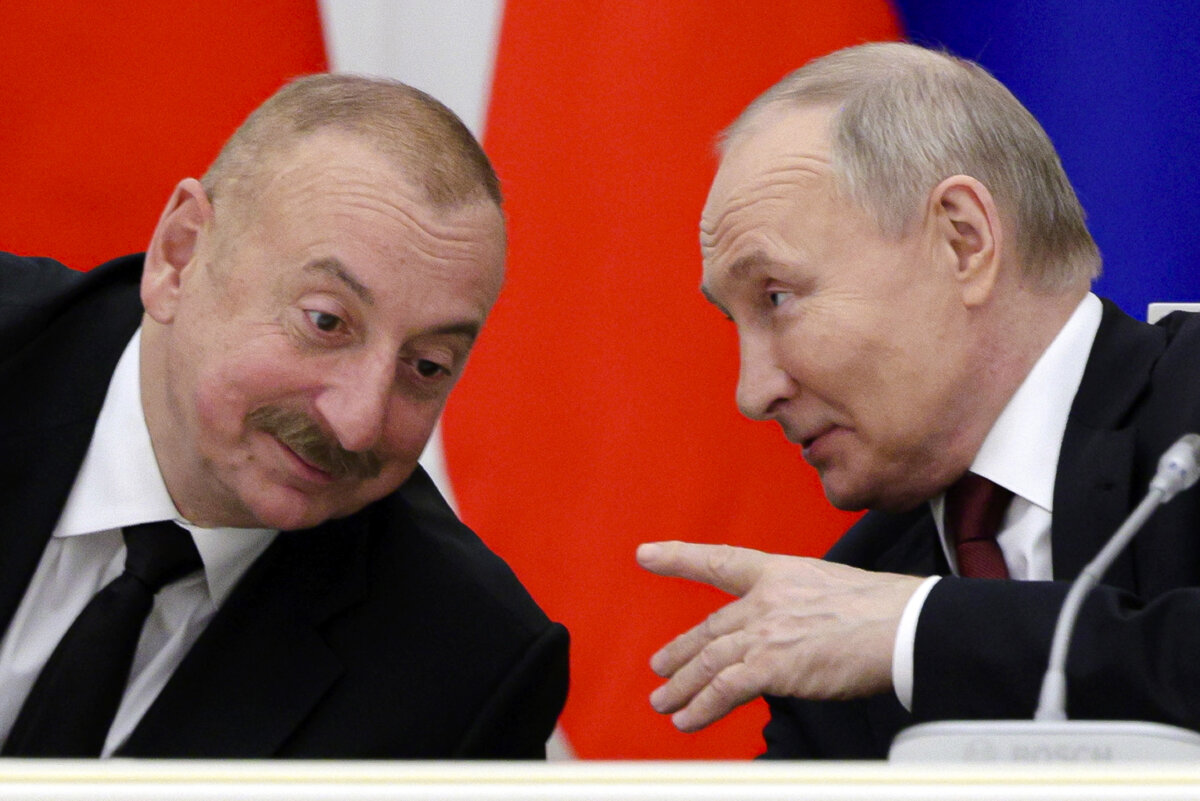

Simmering tensions between Moscow and Azerbaijan boiled over this week when authorities in Baku, Azerbaijan’s capital, arrested two journalists from Russia’s state news agency Sputnik, along with several other Russian nationals.
The Russian Foreign Ministry responded by summoning Azerbaijan’s ambassador to voice its displeasure with what it called Baku’s “unfriendly actions” and the “illegal detention of Russian journalists,” according to Russia’s news agency TASS.
The journalists have been charged with conspiracy to commit fraud and money laundering, both of which carry lengthy jail terms.
“Azerbaijan has closed down the Russian propaganda outlet Sputnik’s offices,” Ambassador Matthew Bryza, a former White House and senior State Department official, told The Epoch Times.
“It has also just been announced that Azerbaijan will, or is considering, closing all Russian-language schools in Azerbaijan,” added Bryza, who served as Washington’s ambassador to Azerbaijan from 2011 to 2012.
“That’s a very significant step, because Russians have historically pretended that they have a right to protect the rights of Russian speakers—whether it be in the Baltic States, where they did it through hybrid warfare, or in Ukraine, where they did it through kinetic warfare.”
In any event, Bryza added, tensions between Moscow and Baku “are really increasing.”
The spate of arrests in Baku came days after Russian authorities detained several ethnic Azerbaijanis in Yekaterinburg, an industrial city in south-central Russia.
On June 27, police in Yekaterinburg arrested at least six ethnic Azerbaijanis—all of whom hold Russian citizenship—for suspected involvement in organized crime activities, including murder.
Following the arrests, two of the suspects died in police custody.
According to the Russian authorities, one succumbed to “heart failure,” while the second suspect’s cause of death is still being investigated.
In a June 28 statement, Azerbaijan’s interior ministry condemned the arrests in Yekaterinburg, claiming they had led to “the deaths of our compatriots.”
The ministry also demanded that Russia “bring the perpetrators of this unacceptable violence to justice as soon as possible.”
The bodies of the two deceased suspects were later repatriated to Azerbaijan, where a state forensic examiner alleged that they had been beaten to death.
Moscow has yet to respond to the forensic examiner’s claims.
Along with the arrest of Russian nationals in Baku, Azerbaijan has taken other retaliatory steps against Moscow, including the cancellation of a planned visit to Moscow by an Azerbaijani parliamentary delegation.
On June 29, Azerbaijan’s culture ministry also announced the cancellation of all scheduled Russian cultural events in the country, “including concerts, festivals, performances, exhibitions,” according to an English translation of its post on social media platform X.
When asked about the retaliatory measures, a Kremlin spokesman said, “We sincerely regret such decisions.”
The recent arrests in Yekaterinburg, he added, pertained to “the work of law enforcement agencies” and “should not be a reason for such a reaction.”
According to Ferit Temur, a Turkish expert in Eurasian affairs, Russia–Azerbaijan relations have been rocky since late last year, “when an Azerbaijani civilian aircraft allegedly came under attack inside Russian airspace and crashed in Kazakhstan.”
“Now, both Russian and Azerbaijani security forces have launched a series of reciprocal operations targeting citizens and journalists of Russian and Azerbaijani origin within their respective countries,” Temur told The Epoch Times.
“Diplomatic protests and escalations have continued at the highest levels. Baku even took retaliatory measures against Russian journalists and media outlets operating in Azerbaijan, accusing them of espionage.”
Air Tragedy Roils Relations
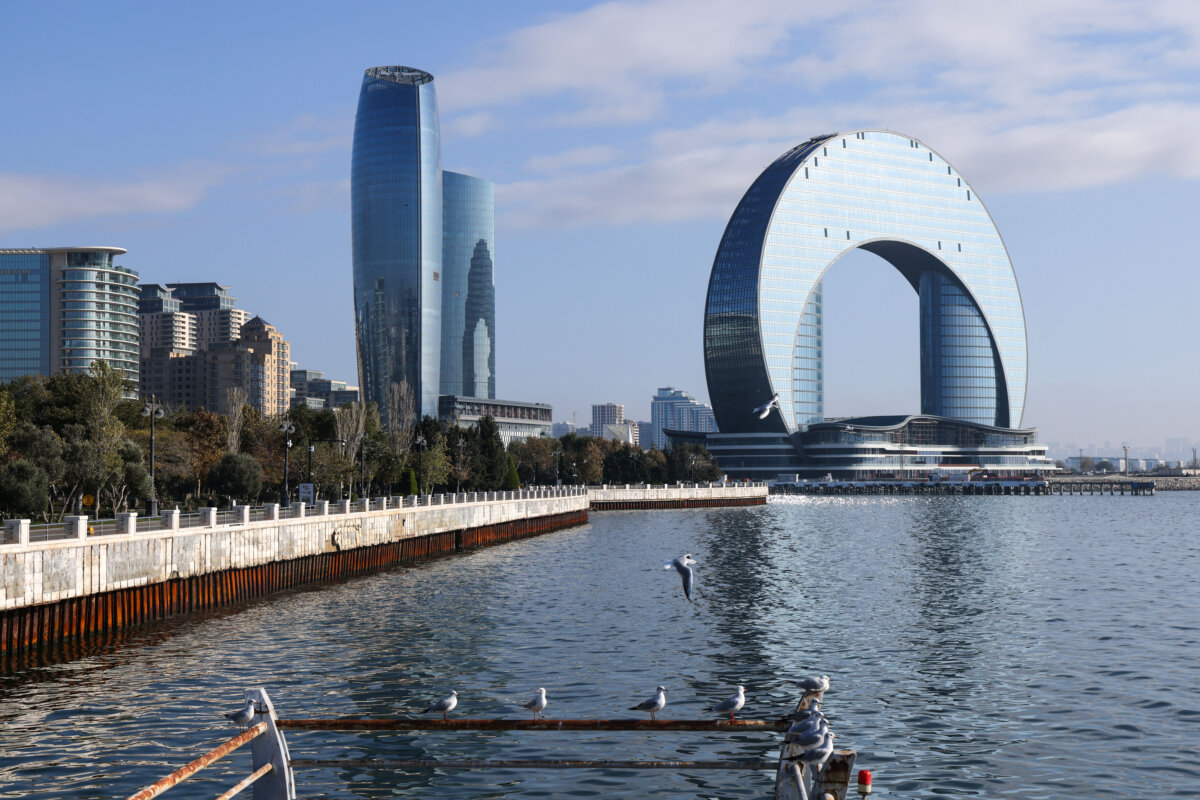
In recent years, Azerbaijan, a former Soviet republic in the South Caucasus region, has maintained relatively friendly relations with Russia.
Moscow has often played the role of mediator in the decades-long territorial dispute between Azerbaijan and its regional nemesis, Armenia.
Azerbaijan and Armenia are both members of the Commonwealth of Independent States, a Moscow-led regional bloc comprising nine former Soviet republics.
In televised remarks on July 3, Russian Foreign Ministry spokeswoman Maria Zakharova said that Moscow and Baku “maintain relations of strategic allies,” according to Tass.
This “strategic” relationship dates back to a time “when we were part of one state,” she added, in reference to the two countries’ shared Soviet past.
They also maintain strong commercial links, with Azerbaijan providing Russia a key transport corridor for trade with Iran and other Middle Eastern states.
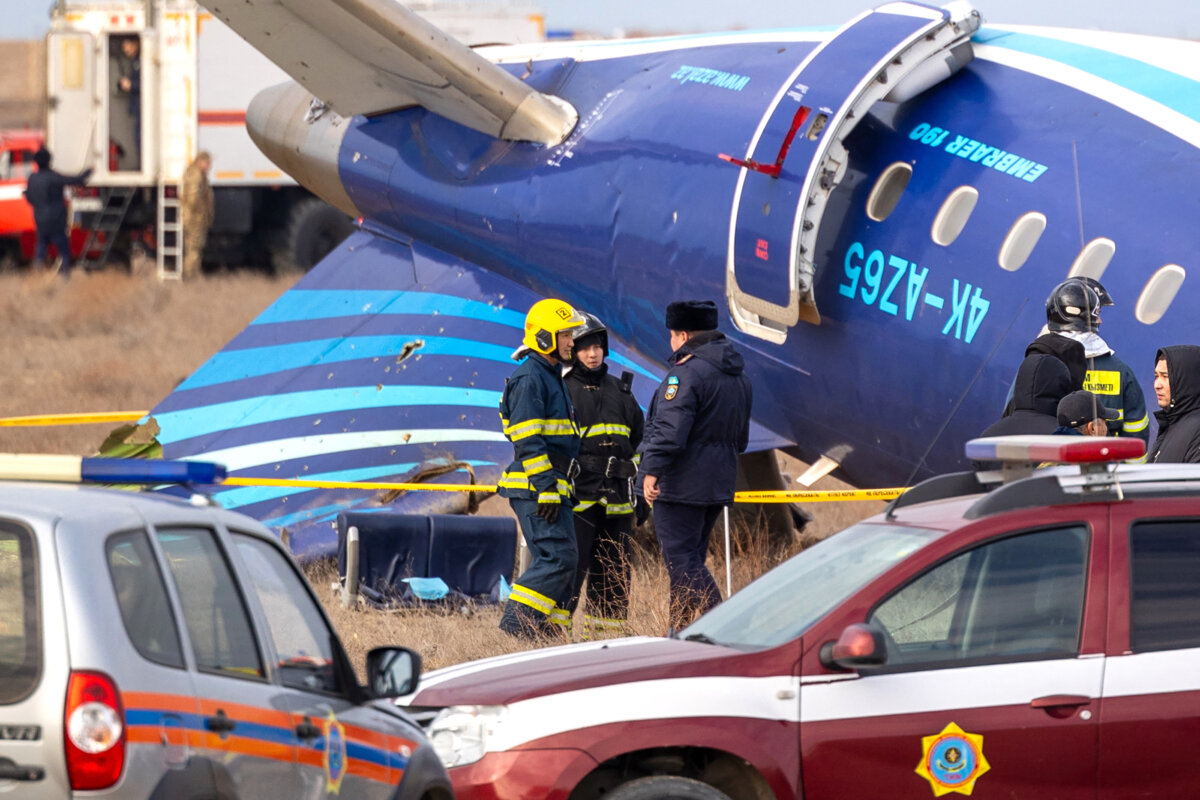
Despite these longstanding ties, bilateral relations were dealt a major blow last December, when an Azerbaijani passenger jet crashed while flying from Baku to Russia’s southeastern city of Grozny.
Azerbaijan said the airliner was struck—albeit accidentally—by Russian anti-aircraft fire, causing it to crash in Kazakhstan, killing 38 of the people aboard.
Russian President Vladimir Putin later apologized for the “tragic incident,” but stopped short of acknowledging Russia’s responsibility.
Baku, in turn, accused Moscow of attempting to play down its role in the incident.
A February report by the Kazakh authorities concluded that the ill-fated aircraft had sustained extensive external damage, but refrained from assigning blame.
Geopolitical Shifts
Relations have remained increasingly strained ever since.
In May, Ilham Aliyev, Azerbaijan’s long-ruling president, declined to attend Russia’s Victory Day parade in Moscow.
To Russia’s further annoyance, Ukraine’s foreign minister paid a visit to Baku two weeks later.
“At the end of 2024, relations between Azerbaijan and Russia were very strong,” Bryza said, noting that Putin and Aliyev had both stressed “their very close bilateral relations” at a November meeting in the Russian city of Sochi.
“Then, tragically, on Dec. 25, an Azerbaijani [commercial] aircraft was shot down by Russian anti-aircraft fire over Grozny.
“President Aliyev was infuriated that President Putin never apologized formally and/or taken responsibility for this tragic—and what appeared to be accidental—shootdown.
“That started the deterioration in relations, and tension has increased in subsequent months.”
According to Bryza, the recent arrest of ethnic Azerbaijanis in Yekaterinburg, during which two of them died in police custody, “has infuriated President Aliyev even further.”
“Simultaneously, Armenia is pulling away from Russia and strengthening its relations with Europe and the United States, while Azerbaijan’s relations with Turkey grow stronger and stronger,” he said.
Temur attributed the dramatic rupture in relations to “the Aliyev administration’s pivot in foreign policy, supported in part by Israel, which poses a significant middle-term risk to Iran’s and Russia’s national security.”
“What truly seems to trouble the Kremlin is Baku’s shift in foreign policy orientation,” he said.
On July 1, Dmitry Masyuk, a top Russian Foreign Ministry official, claimed there were “active efforts by certain forces to drive a wedge in our relations with Baku.”
Masyuk, whose remarks were cited by TASS, did not name the “forces” in question or provide any evidence for his claim.
On July 2, Russia’s foreign ministry went so far as to warn Russian nationals visiting or residing in Azerbaijan to “exercise increased caution and prudence,” according to TASS.
Reuters contributed to this report.
 Friends Read Free
Copy
Facebook
Tweet
Friends Read Free
Copy
Facebook
Tweet