
Energy analysts and energy providers have warned that the UK’s current system for managing wind power is driving up consumer bills and will continue to do so in the years to come.
According to them, the UK should rethink its green energy agenda and implement reforms to increase competition and make companies shoulder more of the costs they impose on the grid.
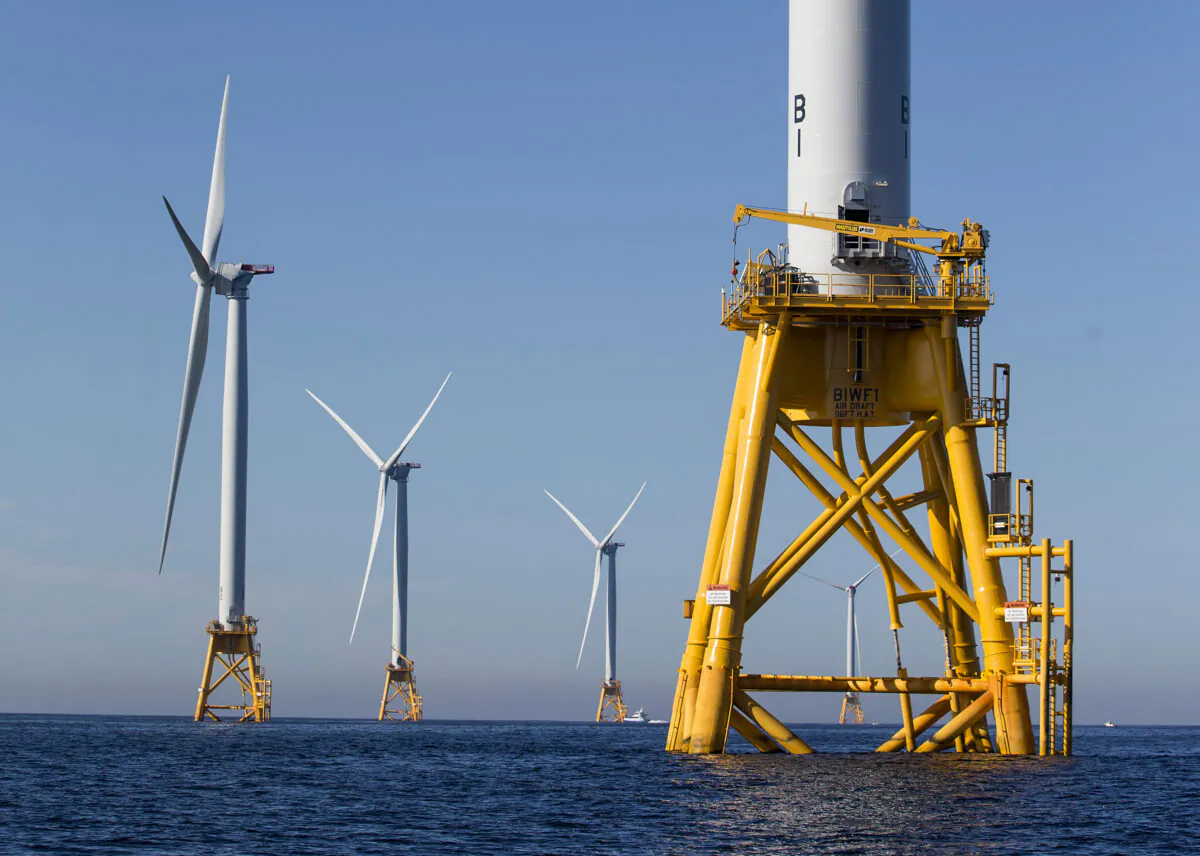
Despite being a global leader in offshore wind farms, second only to China, the UK often has to pay wind farms to not generate power when the grid cannot carry it from Scotland to the south of England, where demand is highest.
The costs of these so-called constraint payments ultimately burden households.
Independent energy consultant Kathryn Porter, founder of Watt-Logic and an adviser on market reforms, called the payments “absolutely disgraceful.”
Greg Jackson, founder and chief executive of Octopus Energy, the UK’s largest energy provider, described the system in a Sept. 21 interview as a “racket” at the expense of UK taxpayers.
It comes as U.S. President Donald Trump, a vocal critic of wind energy, particularly in the UK, has described it as “the most expensive energy ever conceived.”
Addressing world leaders at the United Nations on Sept. 23, he said the sector causes profit losses and requires “massive” government subsidies to operate.
His position contrasts with that of the UK, which has put wind energy at the heart of its ambition to become a “clean energy superpower” and seeks to decarbonize its electricity supply by 2030 and reach net zero emissions by 2050.
UK Prime Minister Keir Starmer said on Sept. 26 that the plan was about “future-proofing energy supply,” cutting dependence on foreign governments, and lowering bills.
According to UK Energy Secretary Ed Miliband, every new wind turbine “helps protect families, businesses and the public finances from future fossil fuel shocks.”
When the Wind Blows Too Hard
Most of the UK’s wind turbines are in Scotland, while the biggest demand for electricity is in the south of England.
When high winds generate more power than the grid can handle, the National Energy System Operator (NESO), the body that runs the UK’s electricity network, orders turbines to switch off.
Operators are compensated with constraint payments for the power they could have produced. NESO then buys replacement electricity, often from gas-fired plants closer to demand.
The costs are passed to suppliers under a charge known as the Balancing Services Use of System, and then added to consumer bills.
These charges are already significant.
In winter 2023 to 2024, constraint costs made up nearly 60 percent of all grid balancing expenses, according to NESO’s report.
From 2024 to 2025, balancing charges added about 3.4 percent to household electricity bills, or about $46 per year for an average home.
NESO expects costs associated with wasted wind power to reach up to $10.7 billion through 2030, although it also predicts that falling prices for wind and solar generation will lower overall electricity costs.
However, analysts are skeptical of the projection.
Researcher and writer Ben Pile told The Epoch Times that “there is not even any possibility” that the UK’s renewable agenda will reduce prices for at least 20 years.
“I think we’re probably going to see another doubling of energy prices in that time,” he said, pointing to government contracts with developers.
Government ‘in a Bind’
The UK supports offshore wind through long-term subsidy deals called Contracts for Difference (CfDs). These guarantee developers such as Denmark’s Orsted, the UK’s SSE, and Norway’s Equinor a fixed “strike price” for the power they generate.
CfDs usually last 15 years, but in July, the Labour government said it intends to offer 20-year contracts to give investors more certainty.
While CfDs protect developers, they do not solve grid bottlenecks.
If lines are full or demand is low, wind farms can still be told to switch off and receive constraint payments while the grid buys replacement power.
Harry Wilkinson, head of policy at the Global Warming Policy Foundation think tank, told The Epoch Times that the contracts had left the government “in a bind.”
“These rules are set out in the contracts that the wind generators get offered before they even build them,” he said. “The big failing from the government is the terms of the contract, which allow wind farms to place all those additional externalities, not only of the constraint payments, but of the other costs of intermittency, because you need backup when the wind isn’t blowing.”
Public Sentiment and Call for Reform
A YouGov poll in July 2025 found that 80 percent of UK citizens support building more renewable power to cut reliance on fossil fuels, while a March survey showed that four in 10 had at least occasionally struggled to pay their energy bills.
While public support for renewables is strong, analysts warn that without reforms to the wind energy system, costs will remain high.
Wilkinson said reforms must be carefully designed to avoid undermining investor confidence.
He said the aim should be to bring down prices over time by increasing competition and ensuring that companies bear more of the costs they impose on the grid.
“It’s clear that those reforms do need to move the UK to an energy system that is going to deliver lower power prices in the future,” he said.
Paying Twice
Porter traced the roots of the problem to a long-standing UK policy called “Connect and Manage,” which allowed wind farms to link to the grid before adequate transmission upgrades were completed.
“This allowed a lot of wind farms to be built and connected,” she said. “The problem is that there’s been no limit around Connect and Manage at all. So there are some wind farms built deliberately knowing that most of their electricity can’t be used.”
She pointed to the Seagreen Offshore Wind Farm off Scotland’s coast, which opened in 2023.
“In 2024, two-thirds of its electricity had to be curtailed,” she said. “Consumers have to pay twice: once for gas generators to produce the power they actually use, and again to wind farms not to generate.”
Porter said UK national energy watchdog Ofgem is failing to protect customers.
“It’s pointless building wind farms that you can’t use,” she said.
Power Balance
The UK already has more than 31 gigawatts of installed wind capacity, according to RenewableUK, the industry’s main trade body. Offshore, it ranks second only to China.
The government’s Clean Power 2030 plan aims to double onshore wind, triple offshore capacity, and expand solar power while phasing out gas generation.
But supply chains are fragile.
A 2024 report by the Institute for Public Policy Research think tank noted that the UK, despite being the world’s biggest importer of wind turbines between 2019 and 2021, has no domestic manufacturer of large turbines.
Most equipment comes from Denmark and Germany.
Building wind farms also demands large amounts of raw materials, including copper and rare earths, much of which is mined and processed in China.
Critics say that raises questions about energy security and environmental costs.
“When you look at what it takes to build wind farms, you have to use an awful lot of steel and concrete and other minerals,” Porter said. “It’s 15 tons of copper per megawatt of offshore wind.
“All of that stuff has to be dug out of the ground and processed. It uses a lot of energy and it creates a lot of pollution, particularly in South America.”
China dominates the global processing of rare earth minerals, accounting for 61 percent of global extraction and 92 percent of refining production, according to the International Energy Agency.
“We all buy China’s rare earth magnets to put into wind turbines and then boast about our green credentials, ignoring the environmental damage happening elsewhere,” Porter said.
According to her, nuclear energy, with higher power density and smaller land use, may be a more reliable long-term option. Her remarks come as the UK turns to nuclear to strengthen its energy mix.
In a push to expand nuclear power, the UK and the United States agreed in September to build modular reactors, while other projects are planned in Nottinghamshire, England.
In July, the UK government approved the $68 billion Sizewell C plant in eastern England, the second new nuclear station in more than two decades.
 Friends Read Free
Copy
Facebook
Tweet
Friends Read Free
Copy
Facebook
Tweet