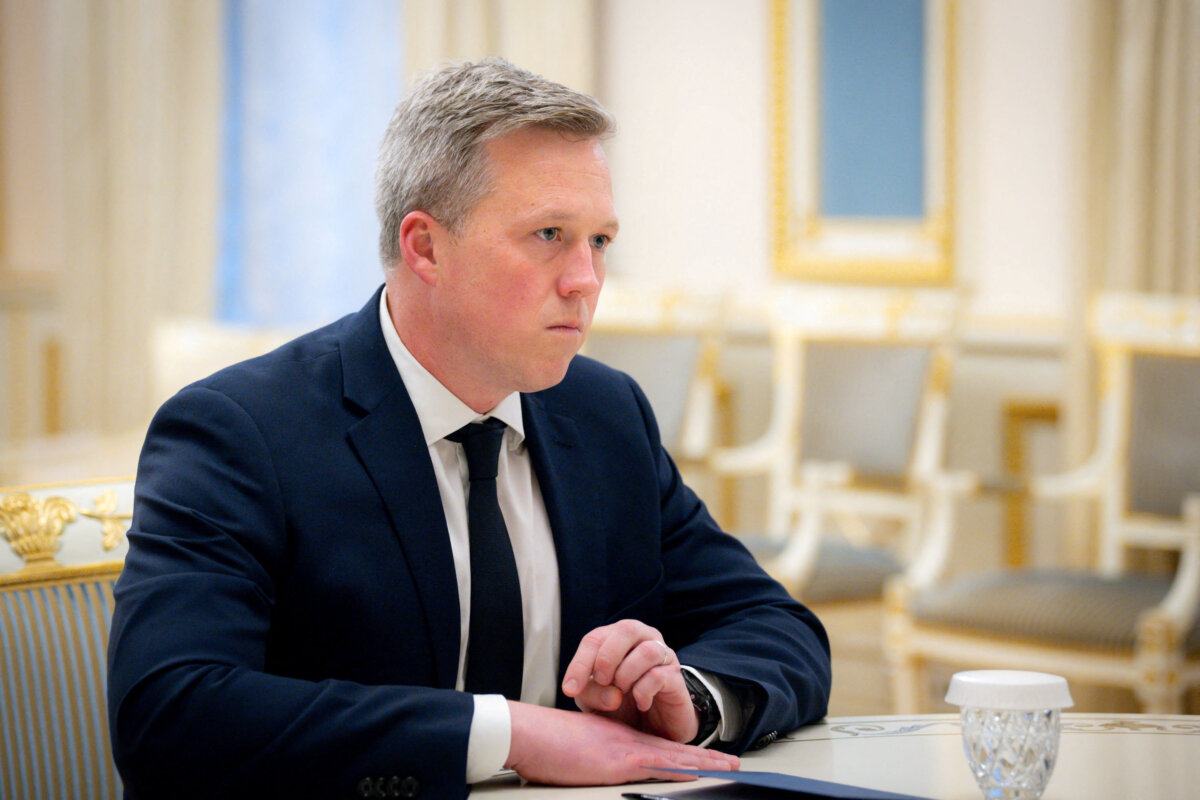

U.S. Army Secretary Dan Driscoll met with a Russian delegation in Abu Dhabi, the United Arab Emirates, on Nov. 24 and Nov. 25 to advance talks to end the ongoing fighting in Ukraine.
“Late Monday and throughout Tuesday, Driscoll and team have been in discussions with the Russian delegation to achieve a lasting peace in Ukraine,” Lt. Col. Jeff Tolbert, a spokesperson for the Army, said in a statement to media outlets.
As the senior civilian official overseeing the Department of the Army, Driscoll’s typical responsibilities include overseeing the service’s manpower, managing the acquisition of new weapons and technology for the force, and balancing its budget. The nature and objective of his talks with the Russian delegation in Abu Dhabi remain unclear.
Tolbert said the Army secretary “closely synchronized with the White House” for the talks.
The Epoch Times reached out to the White House for more details about Driscoll’s meeting with the Russian delegation but did not receive a response by publication time.
White House press secretary Karoline Leavitt on Nov. 25 said the United States made significant progress toward peace between Russia and Ukraine.
“There are a few delicate, but not insurmountable, details that must be sorted out and will require further talks between Ukraine, Russia, and the United States,” she said in a post on X.
Last week, the Trump administration pushed forward a 28-point proposal to settle the conflict after nearly four years of direct fighting between Russian and Ukrainian forces. Early reports indicated that the proposal would have effectively ceded Russian-held areas of Ukraine to Moscow, blocked Ukrainian entry into NATO, and capped the size of Ukraine’s military.
The initial 28-point plan received a mixed reception.
European leaders said in a joint statement that the proposal is a “basis which will require additional work” and raised concerns with limiting Kyiv’s military and denying it a path into NATO.
U.S. lawmakers on both sides of the aisle also warned against offering too many concessions to Moscow.
Sen. Thom Tillis (R-N.C.) joined Sens. Jeanne Shaheen (D-N.H.), Peter Welch (D-Vt.), Chris Coons (D-Del.) and Angus King (I-Maine) in a joint press statement on Nov. 22, warning that President Donald Trump cannot expect to achieve a lasting peace by offering Russian President Vladimir Putin “concession after concession and fatally degrading Ukraine’s ability to defend itself.”
A U.S. delegation met with Ukrainian officials in Geneva on Nov. 23. The White House subsequently issued a statement saying that the involved parties “drafted an updated and refined peace framework.”
“Ukraine and the United States agreed to continue intensive work on joint proposals in the coming days. They will also remain in close contact with their European partners as the process advances,” the White House stated.
Following the Geneva talks, Ukrainian President Volodymyr Zelenskyy said the parties had cut down the number of points in the peace proposal from the original 28 and that “many of the right elements have been taken into account in this framework.”
Zelenskyy said there is still more work to do to finalize the plan.
“I will discuss the sensitive issues with President Trump,” the Ukrainian leader said.
Reuters contributed to this report.
 Friends Read Free
Copy
Facebook
Tweet
Friends Read Free
Copy
Facebook
Tweet