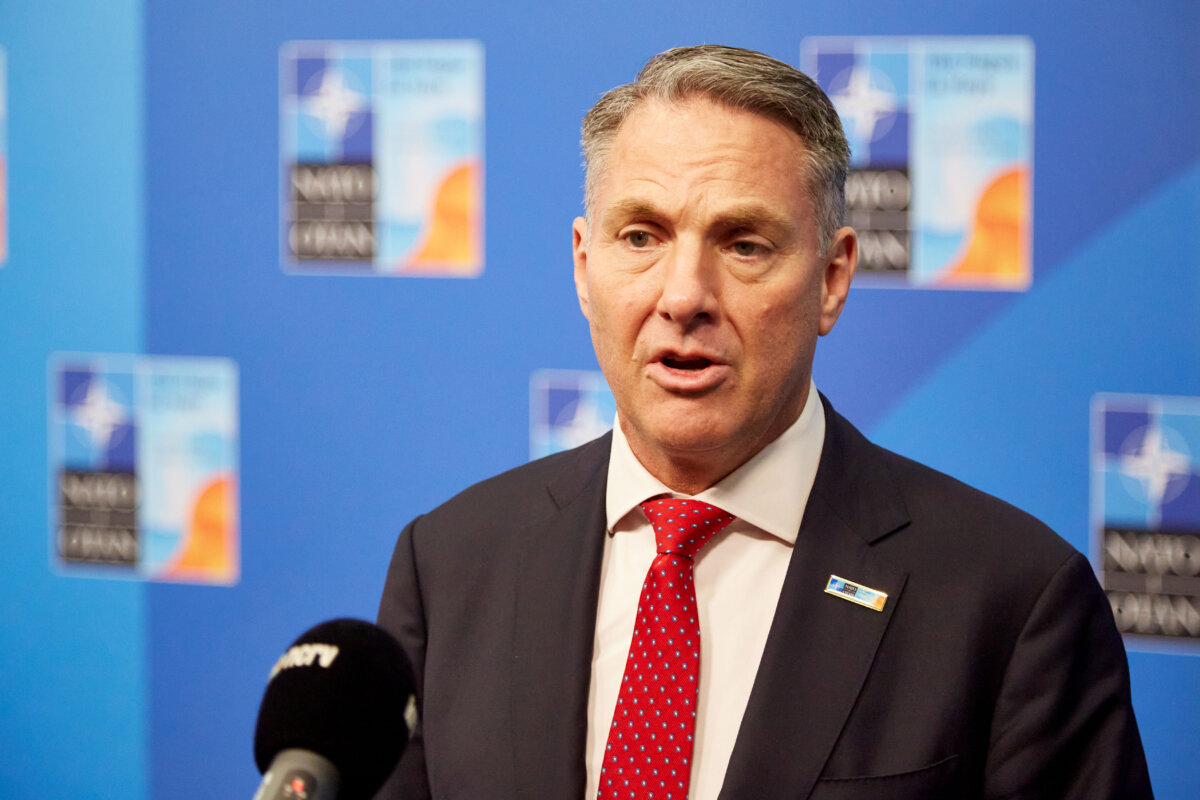

Australia’s Defence Minister Richard Marles has issued a measured response amid pressure from the Trump administration for European allies to bolster defence spending to 5 percent of GDP.
The move was followed by comments from White House Press Secretary Karoline Leavitt who said Asia-Pacific allies should have no issue raising their defence spending to similar levels.
“I mean, look if our allies in Europe and our NATO allies can do it, I think our allies and our friends in the Asia-Pacific region can do it as well,” she told reporters.
“But as for our specific relations and discussions, I will let the president speak on those.”
U.S. President Donald Trump had earlier threatened to double tariffs on Spanish imports after Socialist Prime Minister Pedro Sanchez refused to comply with the 5 percent directive set by NATO.
NATO has pushed for member nations to raise spending to that level by 2035.
“A very significant decision has been made here in relation to European defence spending and that is fundamentally a matter for NATO,” Deputy Prime Marles said.
“We’ll continue to assess what our needs are going forward. As our prime minister has said, we will resource that.”
In June, U.S. Defense Secretary Pete Hegseth called for Australian leaders to lift defence spending to 3.5 percent of GDP, about an extra $60.5 billion per year. An expansion of spending to 5 percent of GDP would equate to roughly $86.4 billion.
Such a move would be challenging given the rapid expansion of taxpayer-funded welfare spending on initiatives like aged care, childcare subsidies, the National Disability Insurance Scheme, and so on.
However, Euan Graham, senior analyst at the Australian Strategic Policy Institute said a 3 percent benchmark should be a “prudent minimum.”
“Australia in broad terms now is looking rather underdone in terms of defence, having committed just over the 2 percent GDP equivalent, which was the old NATO target, but that was for a different era,” he told AAP.
“The narrative has been changed, both by U.S. pressure and let’s not forget also the primary factor, which is deteriorating security globally.”
As yet, neither Australian Prime Minister Anthony Albanese nor Minister Marles have met with the U.S. president.
Earlier in the week Albanese said a meeting would eventuate, but no time has been set.
The prime minister will fly to Beijing next month for his fourth meeting with Chinese Communist Party leader Xi Jinping.
 Friends Read Free
Copy
Facebook
Tweet
Friends Read Free
Copy
Facebook
Tweet