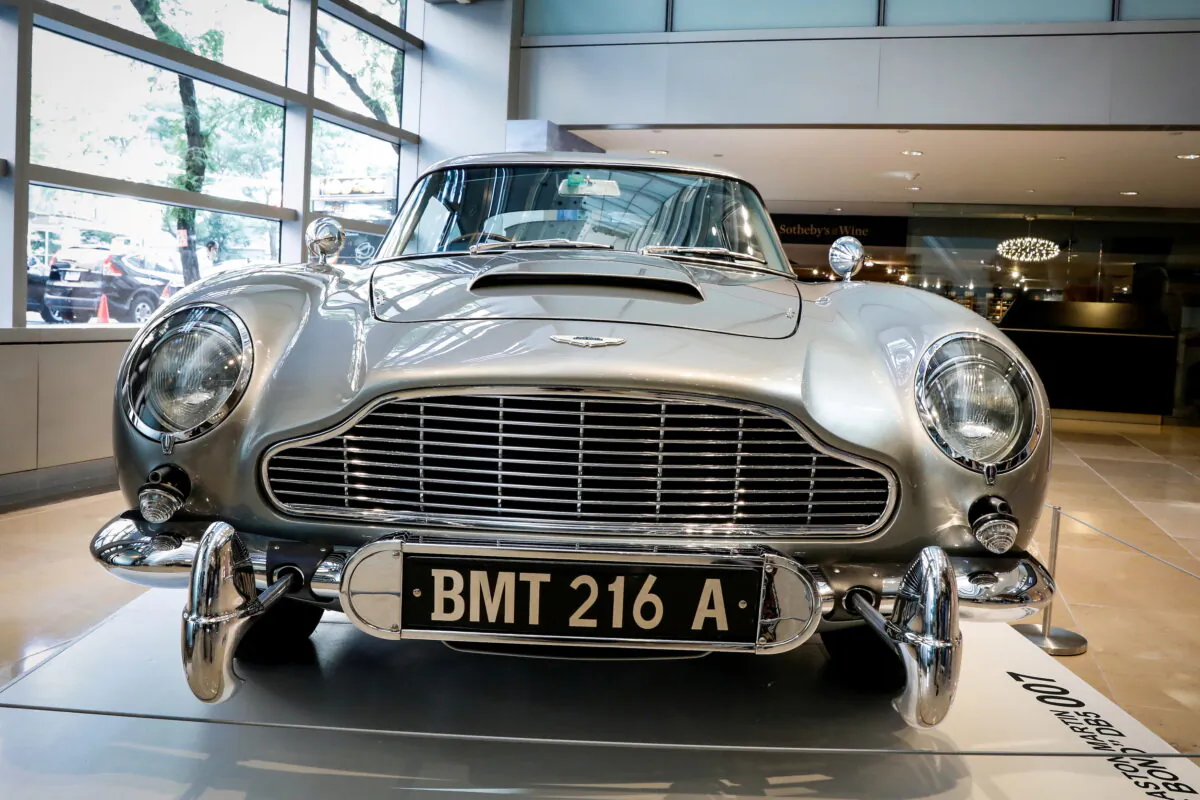
Aston Martin has announced plans to cut 20 percent of its workforce to lower costs, following what its chief executive described as a year of unprecedented geopolitical and macroeconomic challenges.
In results released Feb. 25 for the year ended Dec. 31, 2025, the British luxury carmaker, long associated with James Bond, discussed further organizational changes after earlier adjustments made at the start of 2025.
“This latest programme will ultimately see the departure of up to 20 percent of our valued workforce,” the company said in a statement.
Chief Executive Adrian Hallmark said that 2025 had been marked by geopolitical uncertainty and macroeconomic pressures, including higher tariffs in the United States and China, two key markets for luxury vehicles.
“Instead of competing on innovation and brand strength, Aston Martin was forced to navigate an unpredictable policy landscape and supply chain challenges that ultimately impacted volumes, efficiency and margins,” he said.
The firm limited shipments to the United States in the second quarter after U.S. President Donald Trump imposed a 25 percent tariff on car imports in April 2025. It then resumed shipments in June 2025 as the UK reached an agreement with the United States for a lower 10 percent tariff on UK-made cars for the first 100,000 vehicles per manufacturer.
Hallmark said that even resilient luxury brands are not immune to geopolitical friction and that the company must “adapt and take difficult decisions to ensure the long-term success of the business.”
As part of that adaptation, Aston Martin reviewed its future product cycle plan in October 2025, aiming to optimize costs and capital investment while continuing to meet regulatory requirements and customer demand.
Changes to the plan primarily shift the timing of investment into the company’s future electric vehicle platform. As a result, Aston Martin reduced its five-year capital expenditure plan from 2026 to about 1.7 billion pounds ($2.31 billion) from roughly 2 billion pounds ($2.71 billion) previously.
Product Momentum Offsets Headwinds
Despite the headwinds, Hallmark pointed to product launches as a bright spot.
“The highlight of the year was undoubtedly the commencement of Valhalla deliveries in Q4, our first mid-engined PHEV supercar,” he said.
The company wholesaled the first 152 Valhalla units in 2025 and expects to deliver around 500 more in 2026. Hallmark said the supercar, designed at the company’s Gaydon headquarters in the UK, is a key part of its future plans and contributed to strong sequential quarterly performance and total ASP growth.
Aston Martin also expanded its core lineup with high-performance derivatives, including the Vantage S, DBX S, and DB12 S, while marking the 60th anniversary of the Volante name with limited-edition models.
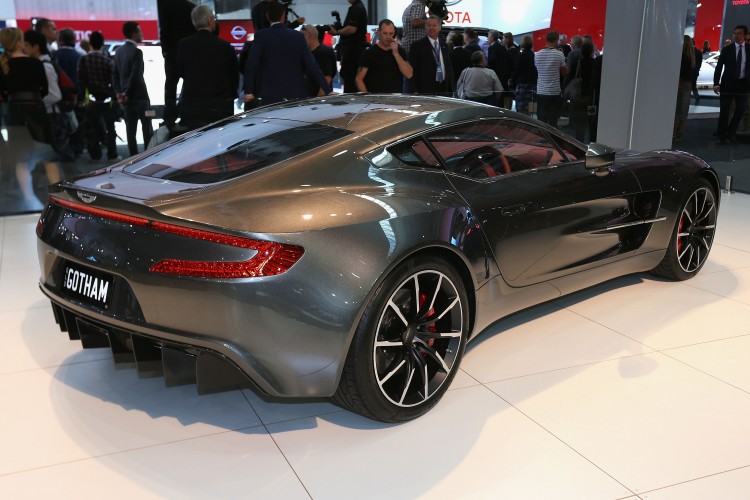
The carmaker said it continues to focus on its V8 and V12 sports cars, grand tourers, and SUVs while improving engine efficiency and reducing emissions.
Cash, Cost Discipline
Aston Martin expects to save about 40 million pounds ($54 million) a year in operating and capital costs, with most of the savings coming in 2026. The restructuring is expected to cost about 15 million pounds ($20 million) in cash, the company said.
Hallmark said improved cash collections in the fourth quarter contributed to “modest positive free cash flow in Q4 2025,” adding that the proposed sale of Aston Martin naming rights to the Aston Martin Formula One team for 50 million pounds ($67.8 million) in the first quarter of 2026 would further strengthen liquidity.
Aston Martin ended 2025 with “positive momentum,” according to Hallmark, who cited strong sequential average selling price (ASP) growth and positive cash flow in the fourth quarter.
Looking ahead, he said the company expects to deliver better financial results and plans to improve profits and cash flow in the coming years.
 Friends Read Free
Copy
Facebook
Tweet
Friends Read Free
Copy
Facebook
Tweet