

Asylum hotels, intended as an initial step for housing asylum seekers, have become a focal point in Britain’s intensifying immigration debate, reflecting growing community tensions and concerns over the government’s handling of illegal migration.
In the small English town of Epping, just northeast of London, repeated demonstrations outside the Bell Hotel this summer have drawn protesters against housing asylum seekers in hotels and counter-protesters carrying “Refugees Welcome” signs.
The clashes have required heavy police deployments, left several officers injured, and led to multiple arrests.
Such scenes are not unique.
Protests over the use of hotels for asylum seekers have spread to London, Bristol, Birmingham, Solihull, Manchester, Norwich, and Altrincham.
Asylum hotels have turned into one of Prime Minister Keir Starmer’s biggest political headaches, exposing divides between communities, local authorities, and politicians.

Local residents near two asylum hotels—in London and Altrincham—told The Epoch Times they worry about the transparency of government decisions to deploy the hotels, public safety, and the costs of housing asylum seekers.
In Altrincham, retired nurse Gwyneth Roper, 71, who lives within 200 yards of the Cresta Court Hotel, said the community was given no warning when it was repurposed as an asylum hotel.
“The hotel was running normally over the summer last year, and then suddenly they stopped taking bookings. Overnight, without any consultation with the community, up to around 200 single males were housed in the hotel,” she said.
Roper, who has previously hosted Ukrainian refugees, said that lack of communication on the part of the government fuels tension.
“I would say that the hotel is within 15 minutes’ walk of probably 15 local schools, so at the very least, there should be some safeguarding,” she said.
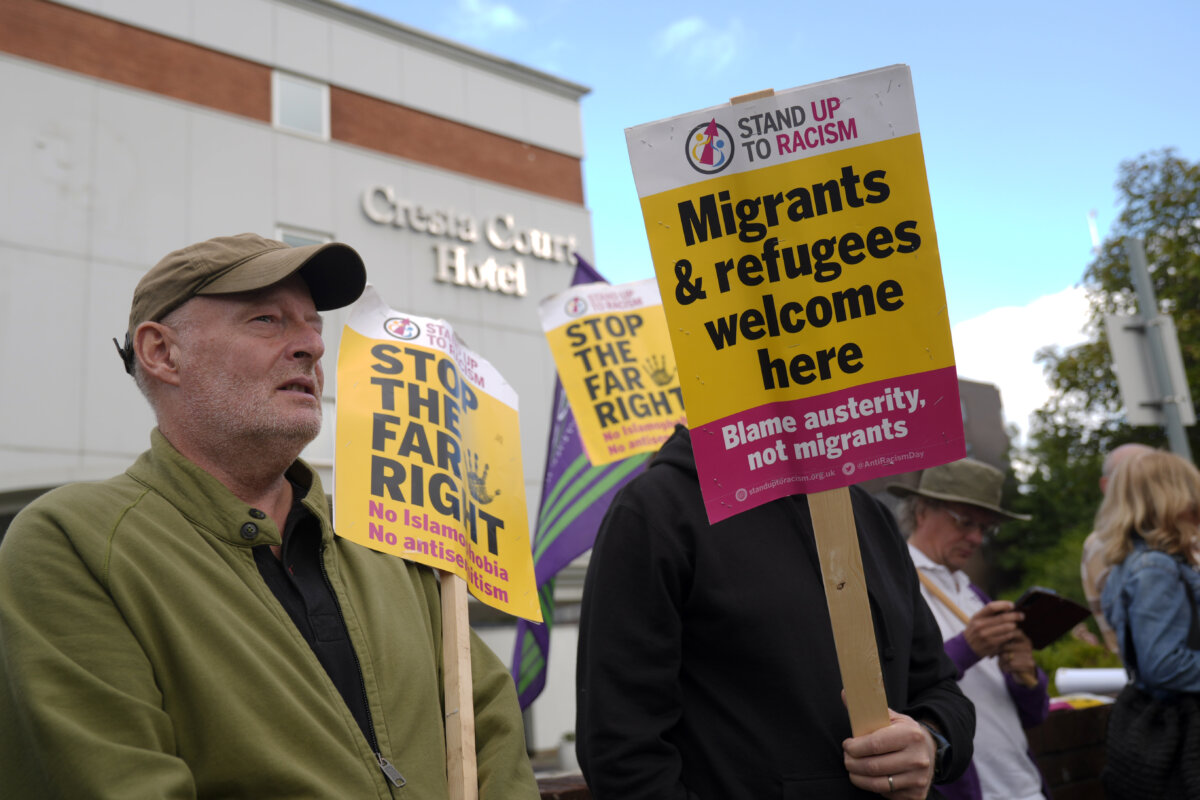
Roper said she asked the Home Office whether any risk assessments had been done before the hotel was repurposed.
The department replied that all asylum seekers undergo mandatory identity and security checks, including biographic and biometric data cross-referenced with domestic and international police databases.
System Under Strain
The so-called “asylum hotels” were introduced as a short-term step under UK rules, where new arrivals who cannot support themselves are placed in initial accommodation before moving to longer-term housing managed by providers on behalf of the Home Office.
After an asylum seeker’s case is fully decided, including any appeals, the Home Office stops providing support.
But rising small boat crossings across the English Channel, from France to the UK, and a severe case backlog have overwhelmed the system.
At its peak in 2023, more than 400 hotels were in use, costing nearly 9 million pounds (about $12 million) a day. The Home Office says the number is now just over 200, with costs reduced by 11 percent.
Still, as of June 30, more than 32,000 asylum seekers, about 30 percent of those in the system, remained in hotels.
That figure was up by 8 percent from June last year—just before Labour took office after vowing to crack down on people-smuggling gangs, stop small-boat crossings, and secure the UK’s borders—but still is 43 percent lower than the peak of 56,042 recorded in September 2023.
The backlog of asylum cases now stands at 106,000, with many decisions taking more than a year.
Over the past decade, the total number of people in the asylum system has more than quadrupled, rising from 55,814 in 2014 to 224,742 in 2024.
Yvette Cooper, currently foreign secretary and until recently home secretary, called the delays in appeals decisions “completely unacceptable.”
A new plan, announced on Aug. 24, would replace judges with independent adjudicators in asylum appeals, aiming to cut the 51,000-case appeals backlog.
Meanwhile, a pilot deal with France will see the return of about 50 illegal migrants a week, with the UK taking the same number of legal asylum seekers in exchange.
The number of migrants crossing the English Channel, a soaring issue for the government, has risen to more than 29,000 since the start of the year.
Local Flashpoints
In Epping, tensions escalated in July after a Bell Hotel resident, Hadush Gerberslasie Kebatu, 41, was charged with sexually assaulting a 14-year-old girl, an allegation he denies.
On Aug. 19, a court ordered the Bell Hotel to stop housing asylum seekers by September 2025, following a legal challenge from Epping Forest District Council over planning rules.
The government appealed and won the appeal on Aug. 29, but still faces mounting political pressure, with other councils weighing similar actions.
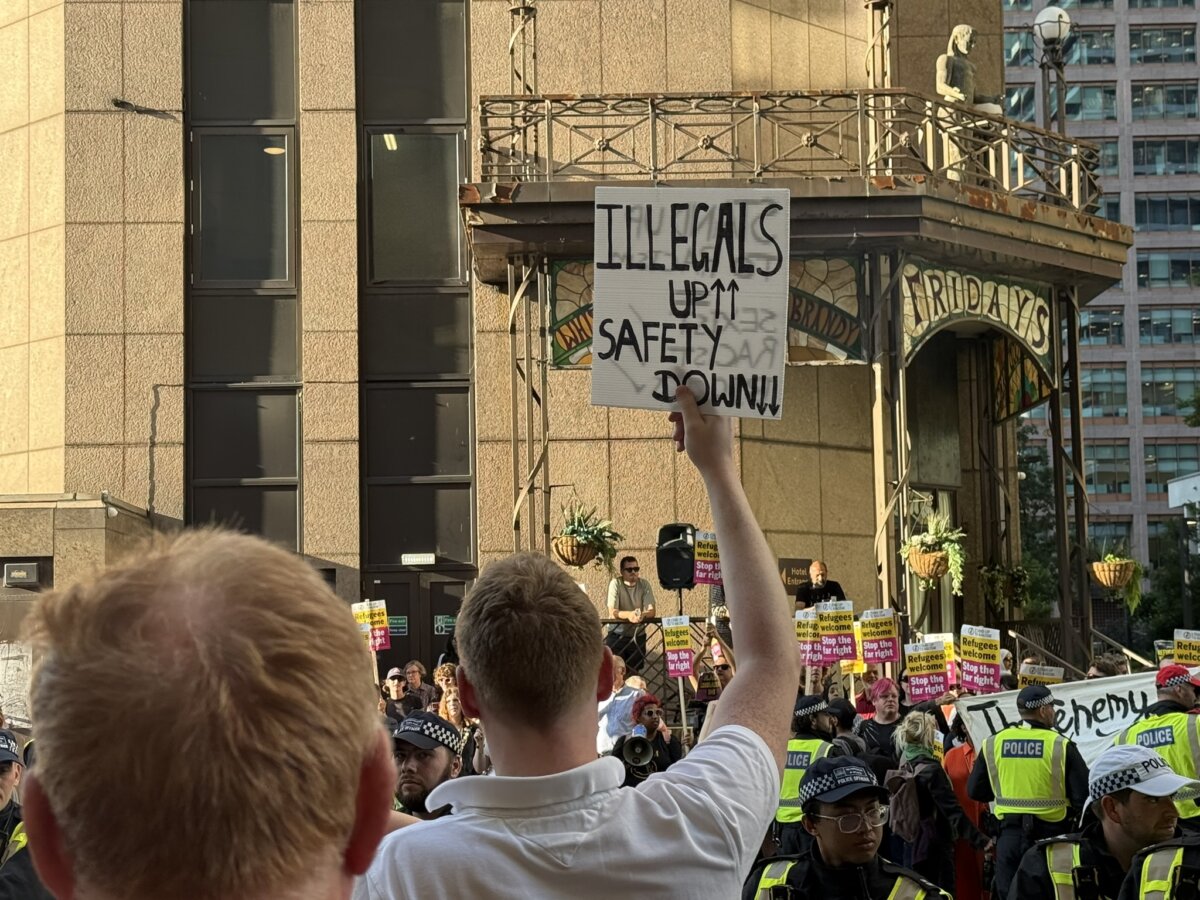
In East London, protests outside the Britannia Hotel in London’s Canary Wharf area in August also drew supporters of refugees. Some of them say government mismanagement is at fault and reject anti-migrant sentiment.
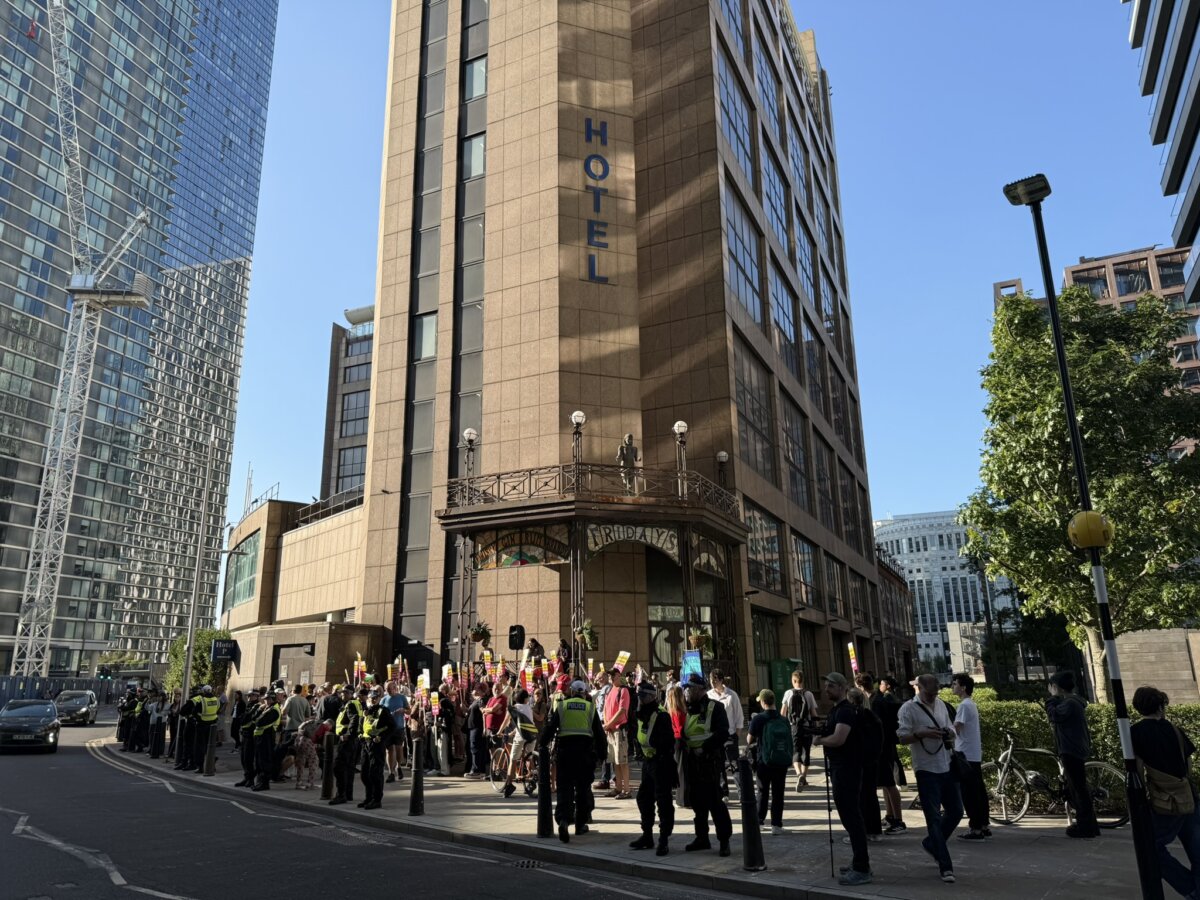
Christine Shawcroft, a longtime resident and former councillor, told The Epoch Times she’d rather see refugees in this hotel than “all the millionaires and billionaires,” who she said have taken over the area.
“Surely the waste of money is on nuclear weapons, not a handful of desperate people fleeing war zones,” she said.
Samira Ali, a national organizer with Stand Up To Racism, echoed that view, rejecting claims that protests are simply “concerned mums” worried about safety, alleging that those who protest against asylum hotels are “far-right.”
“We can welcome refugees into this country. It’s not a strain on our services. The strain on our services is the mismanagement of this government,” she said.

Protesters say they come from diverse backgrounds and reject the “far-right” label.
Canary Wharf resident Mitchell Marks said: “Most days when I’ve been out here protesting with everyone else, it’s not just white men, there’s women, there’s children, there’s kids, there’s people from Europe who live here legally.
“There’s some different religions who I’ve seen, different skin colors, so that label does not bother me in the slightest anymore.”
Amy Howlett, another east London resident, said she supports legal immigration but opposes illegal entry.
“I think there is a lack of background checks and information,” she told The Epoch Times.

Recent public polling has revealed that 71 percent of voters believe the Prime Minister is handling the asylum hotel issue badly, including 56 percent of Labour supporters.
Immigration and asylum topped the list of voter concerns, ahead of the economy and the health service.
Mounting Costs
The financial strain is another major point of contention.
A University of Oxford report, released in August, found the UK has spent more than 20 billion pounds on migrant-related schemes over the past decade, with more than half devoted to asylum accommodation.
Costs ballooned from 200 million pounds (about $270 million) in 2016 to more than 5 billion pounds (about $6.7 billion) in 2023.
Earlier this year, the UK public spending watchdog, the National Audit Office, said that the Home Office had few levers to control the cost of hotels, which might be more profitable for the suppliers than other forms of accommodation.
“The government expenditure isn’t right. What they’re doing is they’re writing checks their body can’t cash,” said Howlett.
Chancellor Rachel Reeves has pledged to phase out hotels by 2029, projecting 1 billion pounds (about $1.3 billion) in annual savings. Critics, however, say such promises fall short without a long-term plan.
“Everyone agrees that hotels are the wrong answer: They cost the taxpayer billions, trap people in limbo and are flashpoints in communities,” Imran Hussain of the Refugee Council charity said in a statement in August.
He urged quicker asylum decisions and safe, legal routes to prevent dangerous crossings.
Political Fallout
While Starmer emphasizes international cooperation and dismantling smuggler networks, political rivals remain critical.
Nigel Farage, leader of Reform UK, opposes the use of asylum hotels and calls for detention and deportation of those who make their way to the UK illegally.
Meanwhile, Conservative Party leader Kemi Badenoch said local communities should not pay the price for what she described as the government’s failure on illegal immigration.
On Aug. 29, after the Court of Appeal overturned the temporary injunction, Badenoch called the ruling a “setback,” adding that the government “puts the rights of illegal immigrants above the rights of British people.”
Edward Brown, representing the Home Office, said that the interim injunction “runs the risk of acting as an impetus for further protests, some of which may be disorderly, around other asylum accommodation.”
Stephen Kinnock, minister of state for care, also warned that asylum seekers could be “living destitute in the streets” if there was a “disorderly discharge” from hotels.

Back in Altrincham, Roper said the government risks losing public trust unless it listens more closely.
“The government should be listening to what the constituents are saying and be more transparent about the decision on illegal immigration,” she said.
The UK Home Office did not respond to a request for comment by publication time.
 Friends Read Free
Copy
Facebook
Tweet
Friends Read Free
Copy
Facebook
Tweet