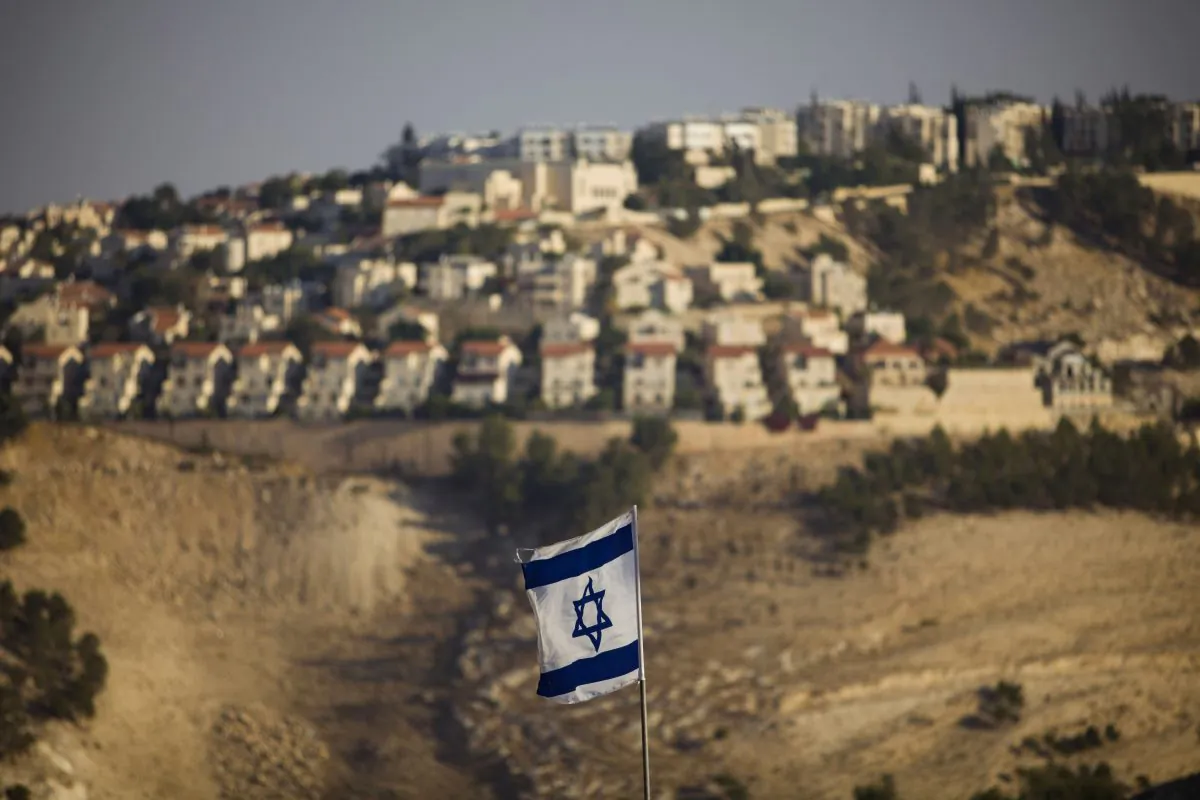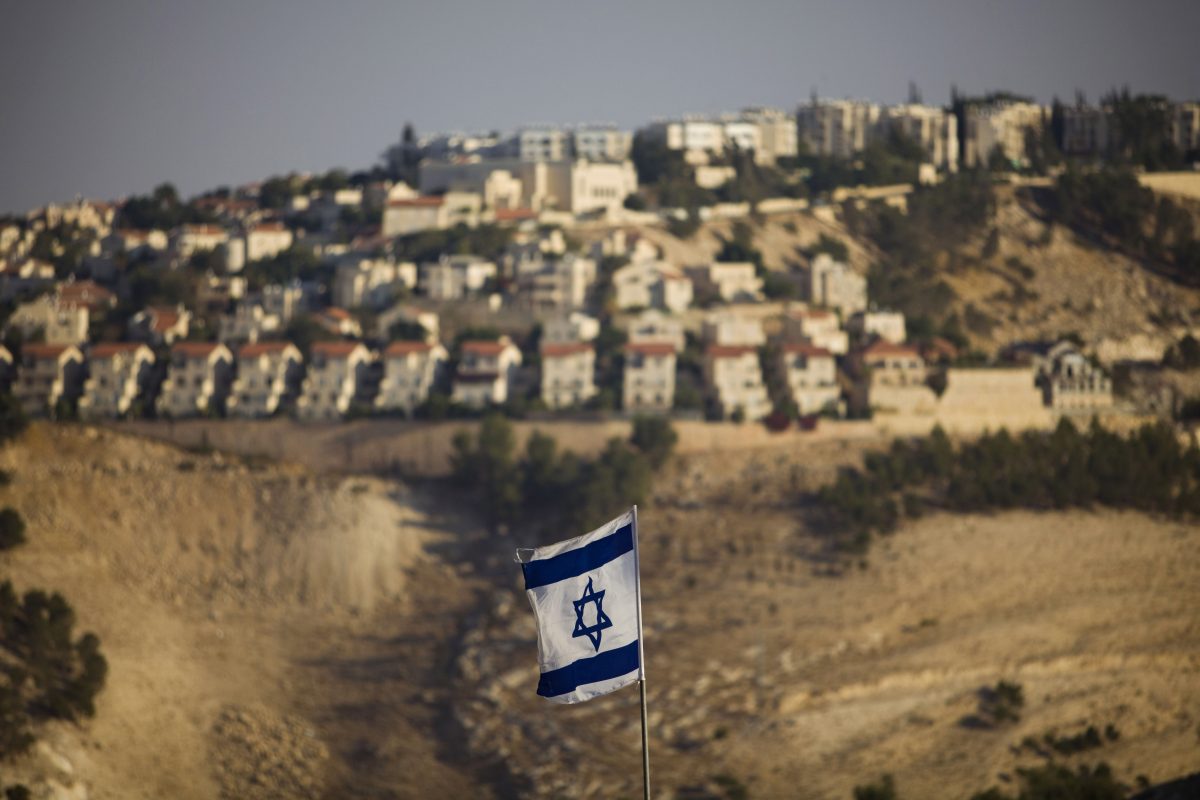

Australia is adjusting its policy towards Israel after Foreign Affairs Minister Penny Wong indicated the Albanese government was “gravely concerned” about the Israeli government’s expansion of planned settlements in Palestinian territories.
“We are gravely concerned about alarming trends that are significantly reducing the prospects of peace,” Senator Wong told the Parliament. “We are deeply concerned by the Israeli government’s settlement activity, including its advancements of thousands of settlement units and the retroactive legalisation of illegal outputs and policy changes.”
The senator said that the federal government would now consider the settlements illegal under international law and a significant obstacle to peace.
“This is consistent with the positions of past governments and reflects legal advice and U.N. Security Council resolutions which determined that the settlements have no legal validity and constitute a violation of international law,” she said.
The senator also said Australia would return to using the term ‘Occupied Palestinian Territories’ to refer to the settlements, which is consistent with the approach used by Australia’s allies the UK, New Zealand and the European Union.
“In adopting the term, we are clarifying that the West Bank, including East Jerusalem, and Gaza were occupied by Israel following the 1967 war and that the occupation continues. This reaffirms our commitment to a negotiated two-state solution in which Israel and the future Palestinian state coexist,” she said.
The decision follows the Albanese government’s decision to walk back the previous policy of recognising West Jerusalem as the capital of the country.
Senator Wong announcing the decision in 2022, said the “previous and longstanding position that Jerusalem is a final status issue that should be resolved as part of any peace negotiations between Israel and the Palestinian people.”
Australian Jewish Communities Criticise Decision
The decision has been denounced by the Executive Council of Australian Jewry (ECAJ) and the Zionist Federation of Australia (ZFA) with ECAJ President Jillian Segal and ZFA President Jeremy Leibler jointly declaring in a statement on Aug. 8 that the change in policy is wrong.
“Describing East Jerusalem, the West Bank and Gaza as ‘occupied Palestinian territories’ effectively denies any Jewish claim to the West Bank and Jerusalem,” they said.
“The most important Jewish holy sites of the Temple Mount and the Western Wall are in East Jerusalem, and there has been an unbroken Jewish presence in the West Bank for thousands of years. Israelis and Palestinians have agreed to negotiate the division of the West Bank between them. Describing the territories as ‘Palestinian’ not only pre-empts the outcome of negotiations but is counterproductive.”
The pair also criticised the foreign minister for failing to push back on internal factional demands, which they believe is behind the change and argued the announcement will be used by extremist in Israel and Palestine to push peace negotiations aside.
“It is concerning that just as Arab states are moving closer to Israel and normalising relations, this announcement moves Australia in the opposite direction. The announcement will be used by Israeli and Palestinian hardliners to bolster support within their respective constituencies and put a peace agreement further out of reach, ” they said.
“The Labor leadership ought to push back against factions within Labor and instead work to re-establish a sensible, centrist and sustainable bipartisan position on the Israeli–Palestinian conflict. The Israeli–Palestinian conflict must not become a political football.”
Labor Promised to Recognise Palestine
The change in policy indicates the Labor Party could be moving towards instituting its 2021 election promise to recognise Palestine as a sovereign state if it won government.
However, the move was criticised by Middle East experts as factional politics.
Arthur Tane, executive director of The Council of Middle East Relations in Canberra, told The Epoch Times the Labor Party’s announcement “came out of nowhere.”
“The state of Palestine is not known for its democracy. You have a limited number of parties, all with the same kind of platform. They are very anti-Israeli, and very much in support of the destruction of Israel,” he said.
“Is Albanese trying to strengthen his position among the left? Is a challenge coming his way? Because it is really unusual that it should have occurred at this time.”
One major challenge to normalising relations in the Middle East has been the refusal of certain Arab leaders to entertain the possibility of Israel being a sovereign nation.
This stance has underpinned decades-long aggression, conflict, and instability in the region.
 Friends Read Free
Copy
Facebook
Tweet
Friends Read Free
Copy
Facebook
Tweet