
Australia and the United States have already surpassed their initial critical minerals investment target, agreed when the two countries formed their partnership last year.
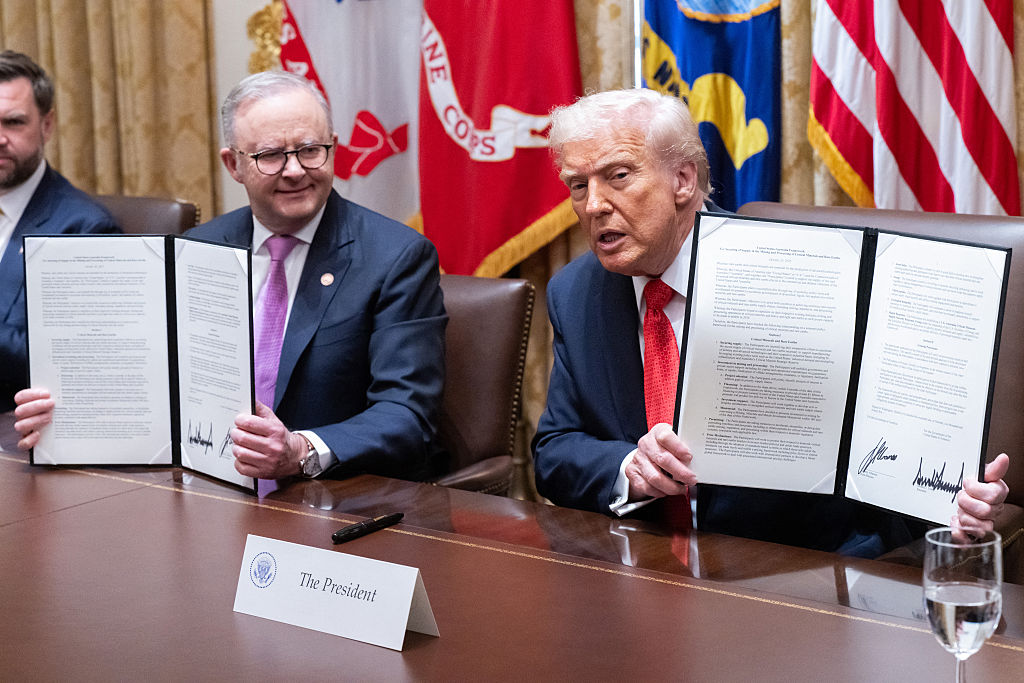
During an October 2025 visit to the United States, Prime Minister Anthony Albanese and President Donald Trump signed a rare earths agreement to jointly invest more than US$3 billion ($4.21 billion) in critical minerals projects in Australia over six months.
The move is aimed at countering China’s global dominance in the sector amid the communist regime’s attempts to weaponise global supply chains.
Six months later, the Labor government announced that more than $5 billion in funding had been delivered.
Resources Minister Madeleine King said the figure reflected both countries’ commitment to developing new critical mineral supplies.
“Australia and the United States are delivering on the commitments made in the White House, with priority projects in Australia that support production of rare earths and critical minerals including nickel, cobalt, gallium, magnesium, vanadium and graphite,” she said in a statement.
“These materials are crucial to defence systems, advanced manufacturing and clean energy technologies that will help Australia and the world meet net zero commitments.
“Australia is leading the world in diversifying critical minerals and rare earths supply chains and ensuring we make more things right here where the minerals are found, and building a Future Made in Australia.”
Trade and Tourism Minister Don Farrell also highlighted the role of Export Finance Australia (EFA) and the U.S. Export-Import Bank (EXIM) in providing funding support for Australian and U.S. companies.
The two organisations last year issued formal letters of support totalling $849 million for U.S.-based Tronox Holdings’ rare earths refinery project.
The project, with operations in Western Australia and the United States, will use the company’s existing mining and processing capabilities to produce a mixed rare-earth carbonate which is then separated into individual elements to make materials for magnets, batteries and other technologies.
EFA and EXIM have also issued letters of support worth up to $500 million each for Ardea Resources’ Kalgoorlie Nickel Project in Western Australia, which hosts Australia’s largest nickel-cobalt resource and one of the largest in the developed world.
Other projects supported under the framework are situated in the Northern Territory, Victoria, Queensland, and New South Wales and include mines producing graphite, magnesium, tungsten, vanadium, and scandium.
 Friends Read Free
Copy
Facebook
Tweet
Friends Read Free
Copy
Facebook
Tweet