
The Albanese government has introduced legislation to establish Australia’s first national gas reservation scheme, which will require LNG exporters to keep a portion of their product to serve the domestic market.
It is a move that Labor has touted as a win for the nation, while industry remains concerns about its future impacts.
The government says the Domestic Gas Reservation Bill 2026 will ease supply issues and lead to cheaper prices with the target of meeting 110 percent of predicted demand.
Under the reform, gas export licences will require companies divert 20 percent of export volume to a reserve for local consumption.
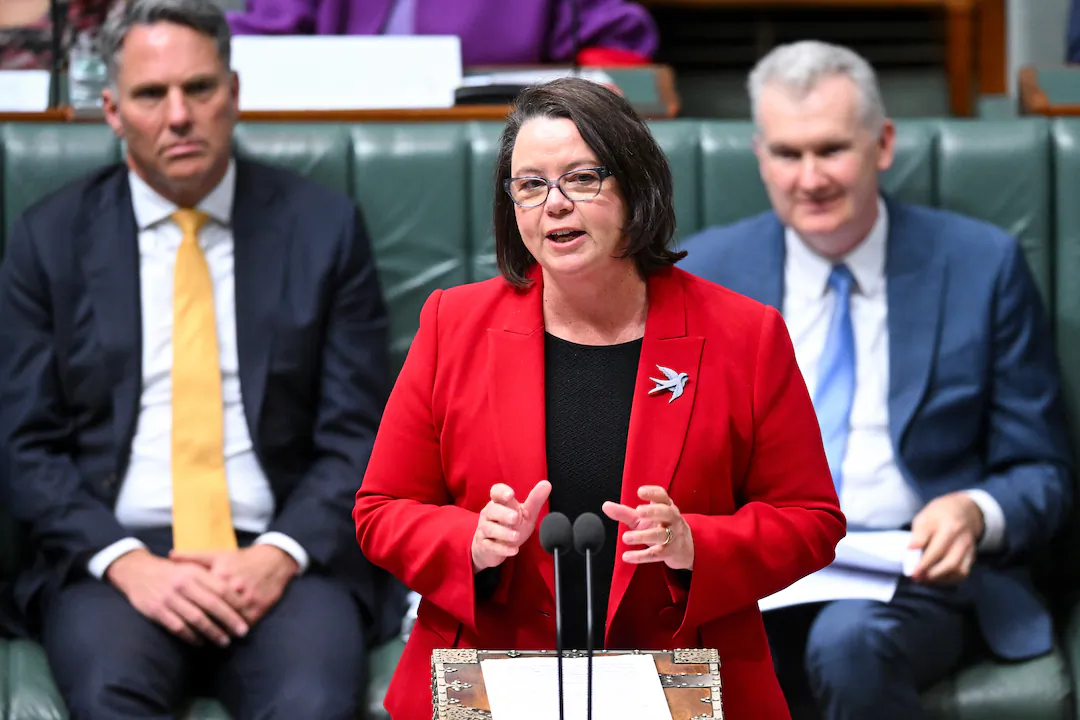
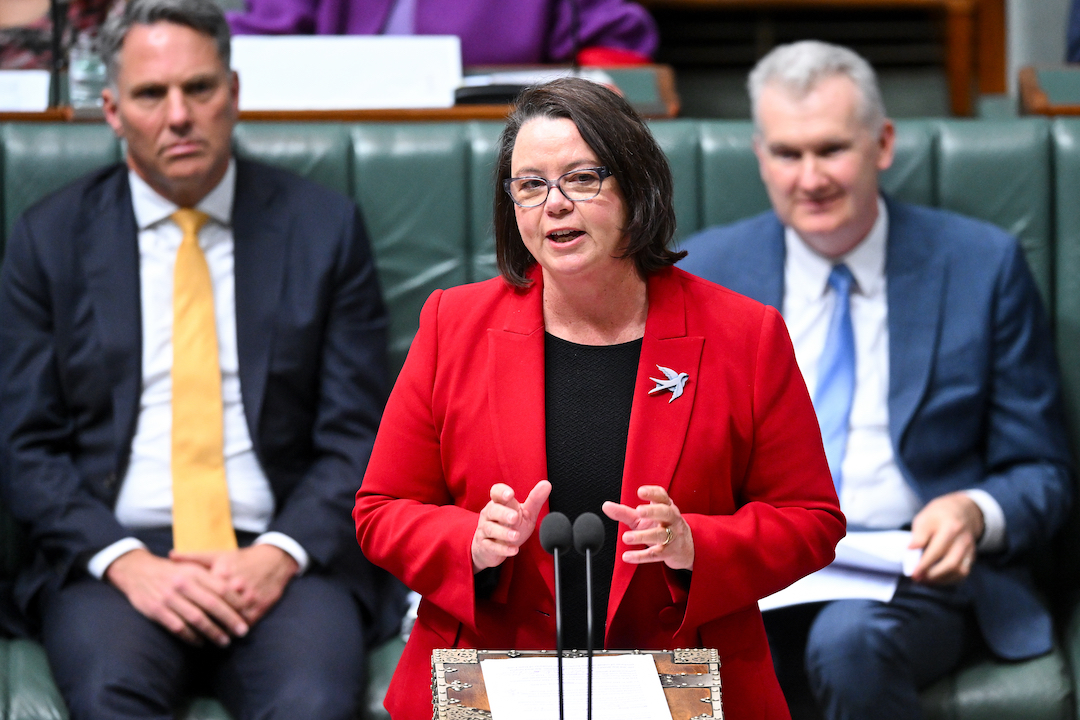
Resources Minister Madeleine King introduced the bill into the House of Representatives on Oct. 14 and later addressed the National Press Club where she called the scheme a “landmark moment” for the country.
“It is Australia’s first national gas reservation scheme, securing the Australian gas Australian homes and Australian businesses need at fair prices, setting us up for the future, powering our economy while maintaining our reliability as an energy exporter,” she said.
King says the scheme has undergone a number of changes since draft legislation was first introduced.
“Some key changes from that exposure draft include the limiting of ministerial discretion and making the scheme more transparent, preventing loopholes and making it harder to game the scheme …” she said.
The minister said the government’s current energy policy relied on a steady supply of gas being ready.
“We need gas to support the rollout of renewables,” she said. “We need gas to have a strong Australian manufacturing industry.”
King said the government hoped to create a “modest oversupply.”
“We all know having too little gas to firm renewables or provide for manufacturing industry is as dangerous as having a massive oversupply, which crashes the market, but also it can undermine investment in renewables,” she said.
Industry Airs Concerns
But industry body Australian Energy Producers argues the policy could make the country less investment-friendly or energy secure—concerned that it will just result in oversupply to push gas prices down.
“Despite repeated warnings from industry, the legislation continues to pursue an artificial oversupply of the east coast gas market that will weaken investment signals and crowd out smaller, domestic-focused producers,” AEP Chief Executive Samantha McCulloch said in a statement.
“The proposed ‘must sell’ requirement compounds these risks by potentially forcing producers to sell gas below cost or on non-commercial terms.
“This is another short-term price intervention rather than a sustainable policy to encourage investment in new gas supply and deliver long-term certainty for gas producers and users.”
McCulloch said there was a short-term sugar hit to be had from “artificially oversupplying the market,” but it ultimately risks driving domestic-focused producers out of the market.
“The government’s own analysis finds the policy could reduce gas production and investment relative to the status quo, while increasing the regulatory burden on industry by $75 million,” she said.
The bill remains before parliament.
 Friends Read Free
Copy
Facebook
Tweet
Friends Read Free
Copy
Facebook
Tweet