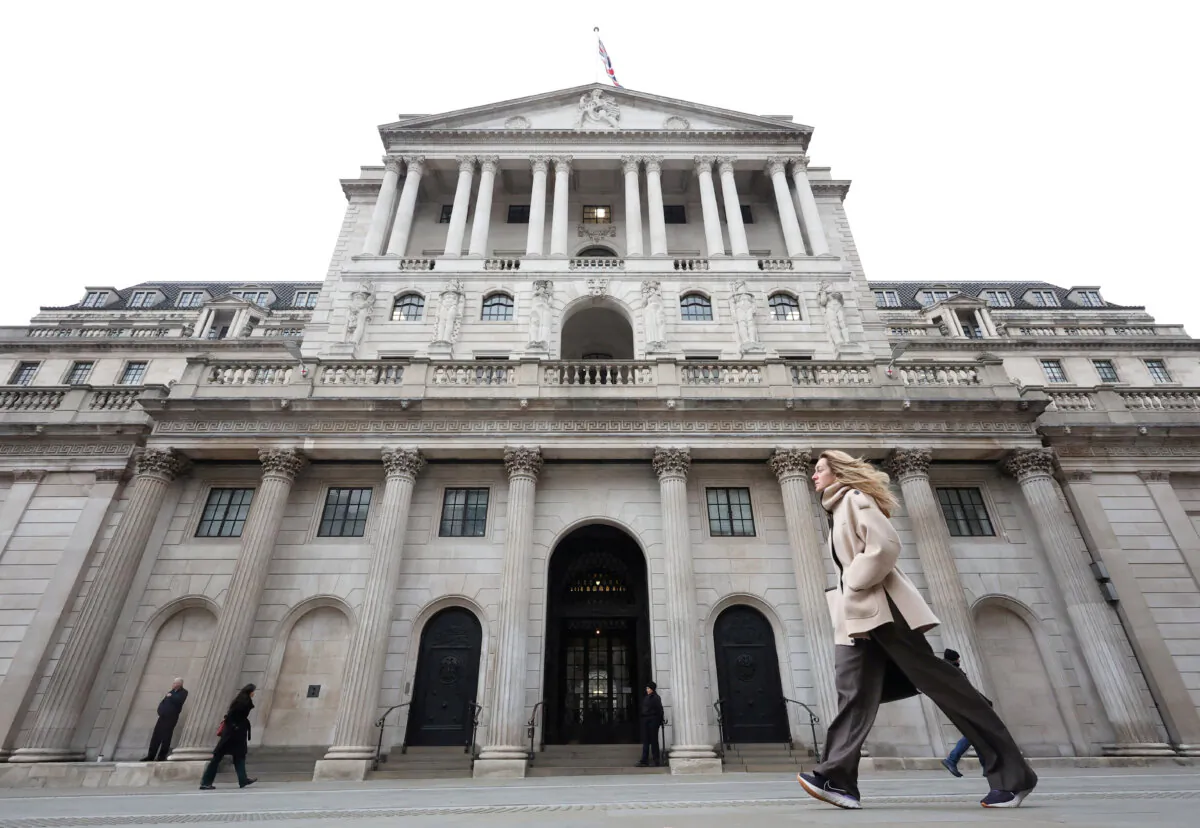

Bank of England Governor Andrew Bailey said on May 29 that allowing inflation to rise above the bank’s 2 percent target is justified, given the economic impact of the conflict in the Middle East.
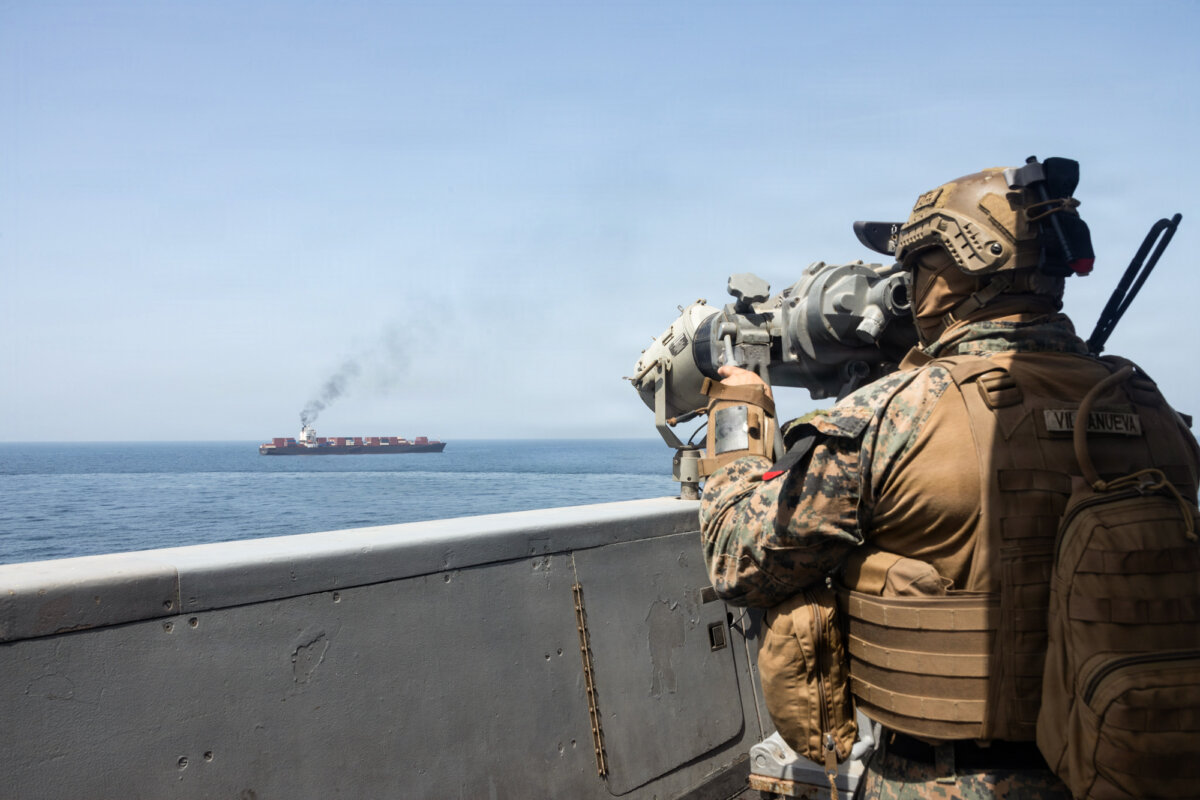
“The conflict in the Middle East has led to sharp increases in global oil and gas prices as transit through the Strait of Hormuz has been curtailed and critical infrastructure in the region has been damaged or destroyed,” Bailey told the Reykjavik Economic Conference. “This is a big negative supply shock to the world economy.”
The head of the UK’s central bank said that before the outbreak of the war in February, the UK was on track to keep inflation at around the 2 percent target for April.
The inflation number for April came in at 2.8 percent, largely driven by an increase in fuel prices, Bailey told the conference in the Icelandic capital, saying it was also likely to go higher this year as utility bills rise and firms pass higher costs down supply chains, eventually impacting consumers.
“There is nothing monetary policy can do to prevent higher energy prices from affecting businesses and households,” he said. “For net importers of energy like the UK, the terms of trade have worsened and real incomes will fall. The shock will push up inflation, and weigh on activity.”
Though Bailey acknowledged that the bank’s remit was clear that the 2 percent target applied “at all times,” it also recognized that “attempting to bring inflation back to the target too quickly may cause undesirable volatility in output.”
“Given the context of softness in the real economy and uncertainty around the scale and duration of the shock, tolerating temporarily above target inflation to provide some support for the real economy is an appropriate way to approach the trade-off,” he said, adding, “that tolerance would weaken if signs of second-round effects begin to emerge.”
The Bank of England’s Monetary Policy Committee kept interest rates on hold on April 30, waiting to see the economic impact of the war in Iran, even as the central bank said it expected inflation to climb.
Bailey also reiterated comments he made last week, saying that the bank had tightened monetary policy by taking rate cuts off the table, “and that is already affecting the economy.”
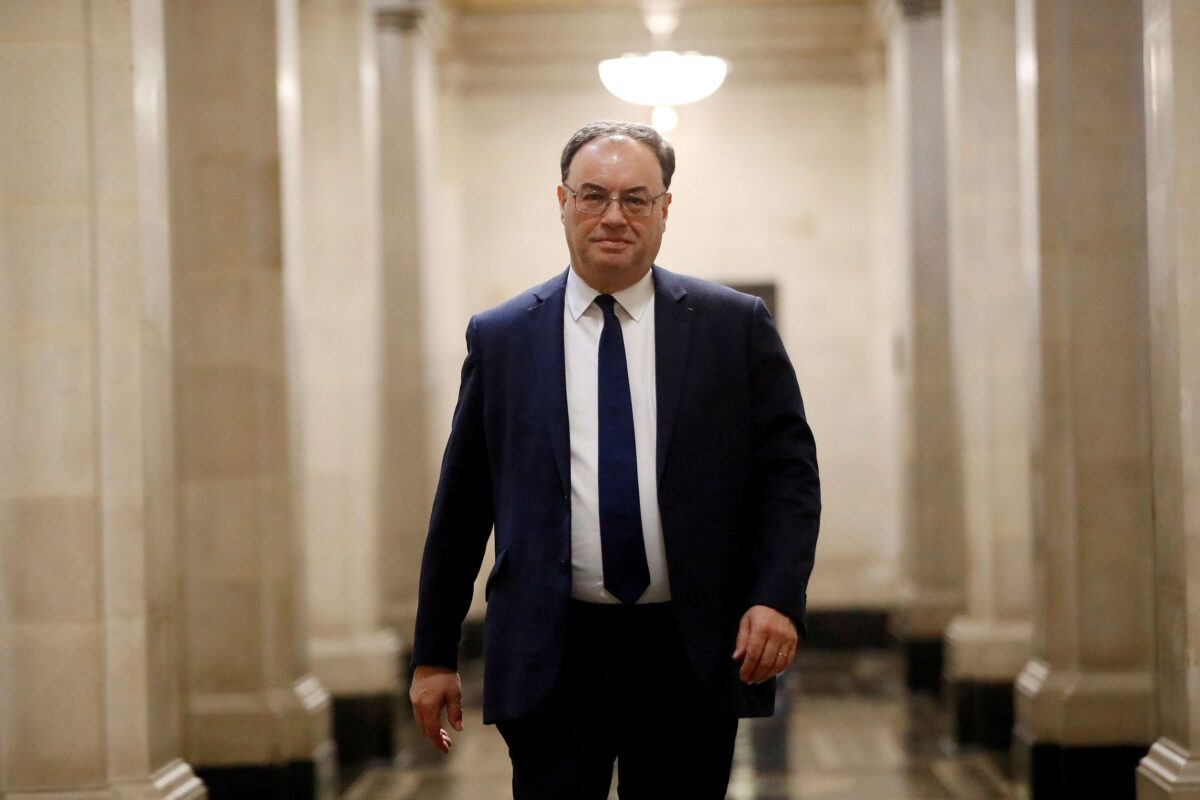
“We have to monitor the situation in the Middle East and how it affects the UK economy and inflation very closely and adjust policy as required,” he said.
In contrast, policymakers at the European Central Bank (ECB) have signaled a likely interest rate rise in June.
ECB Executive Board member Isabel Schnabel said in an interview with Reuters on May 26 that “from today’s perspective, I think a rate hike in June will be needed.”
When asked whether that meant further rate rises were in the pipeline, she said that the ECB will “remain strictly data dependent,” and “not pre-commit to any particular rate path.”
Governor of the National Bank of Slovakia Peter Kazimir, who sits on the ECB’s Governing Council in that capacity, also said that “policy tightening in June is all but inevitable,” in an interview with Reuters on May 4.
“We must understand the broader impact of higher energy prices,” Kazimir said. “They are bound to spread to the rest of the economy.”
Belgian National Bank Governor Pierre Wunsch is another ECB member who has suggested a rise next month is likely, telling Bloomberg on May 20 that if the Iran war isn’t resolved by June, “the likelihood of a hike is quite high.”
“At some point, we will have to react because we are already at 3 percent inflation,” he added.
Bank of Italy Governor Fabio Panetta said on May 29 that the current climate “may require a recalibration of the monetary policy stance to counter the risk of persistent inflationary pressures,” during his annual report in Rome.
“A few years after the inflationary shock following the pandemic, the expectation of a timely response from central banks is fueling rising interest rates across all maturities,” he said.
Panetta added that at the ECB Governing Council’s June meeting, it will “be crucial to assess the extent to which energy price increases can be passed on to other prices and their impact on consumption, investment, and economic activity.”
“This assessment will determine the calibration of the monetary response,” he said.
Reuters contributed to this report.
 Friends Read Free
Copy
Facebook
Tweet
Friends Read Free
Copy
Facebook
Tweet