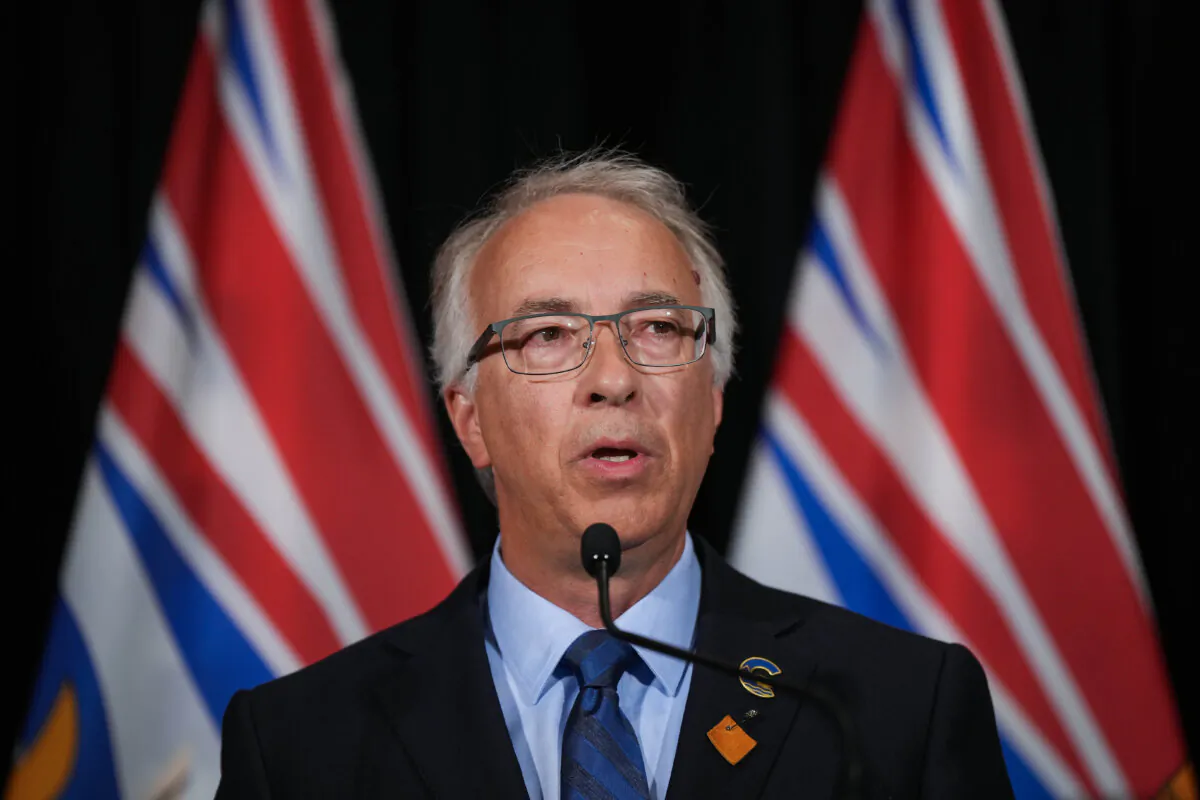

The B.C. Conservatives are calling on the federal government to refer the implications of a recent court decision that granted land title rights to a First Nation group to the Supreme Court of Canada, saying the ruling has raised legal questions and created uncertainty about private property rights.
B.C. Conservative Leader John Rustad said in a letter to federal Justice Minister Sean Fraser that he should refer the Cowichan decision to the Supreme Court, as it raises the question of “whether Aboriginal title and private ownership can coexist,” Rustad said in an Aug. 26 news release. The Cowichan Tribes won a lawsuit earlier this month over land title rights to a region that includes parts of the province’s Lower Mainland and the Fraser River.
Rustad said the court decision has created “uncertainty at the very core of our land ownership system,” and that guidance from the country’s highest court was necessary to address the ruling’s implications.
“Reconciliation cannot occur at the cost of private property rights. Conservatives have been clear on this matter,” Rustad said in an Aug. 26 social media post. “Now, it’s time for the Supreme Court to step in.”
The Epoch Times reached out to the justice minister’s office but didn’t immediately hear back.
B.C. Supreme Court Justice Barbara Young issued the ruling in favour of the Cowichan Tribes on Aug. 7, saying that their aboriginal title lands had been granted away more than 150 years ago, and that “although it has taken a very long time,” their aboriginal title to that land has now been established.
Young also said the government title grants “unjustifiably infringe the Cowichan Nation Aboriginal title to these lands.”
The First Nations group called the decision a “historic victory,” saying it meant the return of their settlement land “ever since the Crown began its unauthorized alienation of our lands there in the 1870s.”
Defendants in the lawsuit were the provincial and federal governments, the City of Richmond, the Vancouver Fraser Port Authority, and the Musqueam and Tsawwassen First Nations. The two First Nations deny that the Cowichan hold aboriginal title or fishing rights in the traditionally shared territories.
The B.C. NDP government has said it will appeal the decision and seek to stay its implementation until the appeal is resolved.
“We disagree strongly with the decision,” B.C. Attorney General and Deputy Premier Niki Sharma said in an Aug. 11 statement.
“This ruling could have significant unintended consequences for fee simple private property rights in B.C. that must be reconsidered by a higher court,” she added. “Our government is committed to protecting and upholding private property rights, while advancing the critical work of reconciliation.”
Sharma noted the case is an example of why the province prefers to address land claims through negotiation “rather than risk considerable uncertainty through court decisions.”
B.C. Premier David Eby has raised concerns over the ruling’s implications, saying that clarity on private property rights is key for economic certainty.
Rustad said the lack of clarity has left homeowners, farmers, small businesses, and investors “in limbo.”
“When the foundation of land ownership is uncertain, confidence in the economy and our ability to move ahead with major projects is shaken,” he said in the Aug. 26 press release.
 Friends Read Free
Copy
Facebook
Tweet
Friends Read Free
Copy
Facebook
Tweet