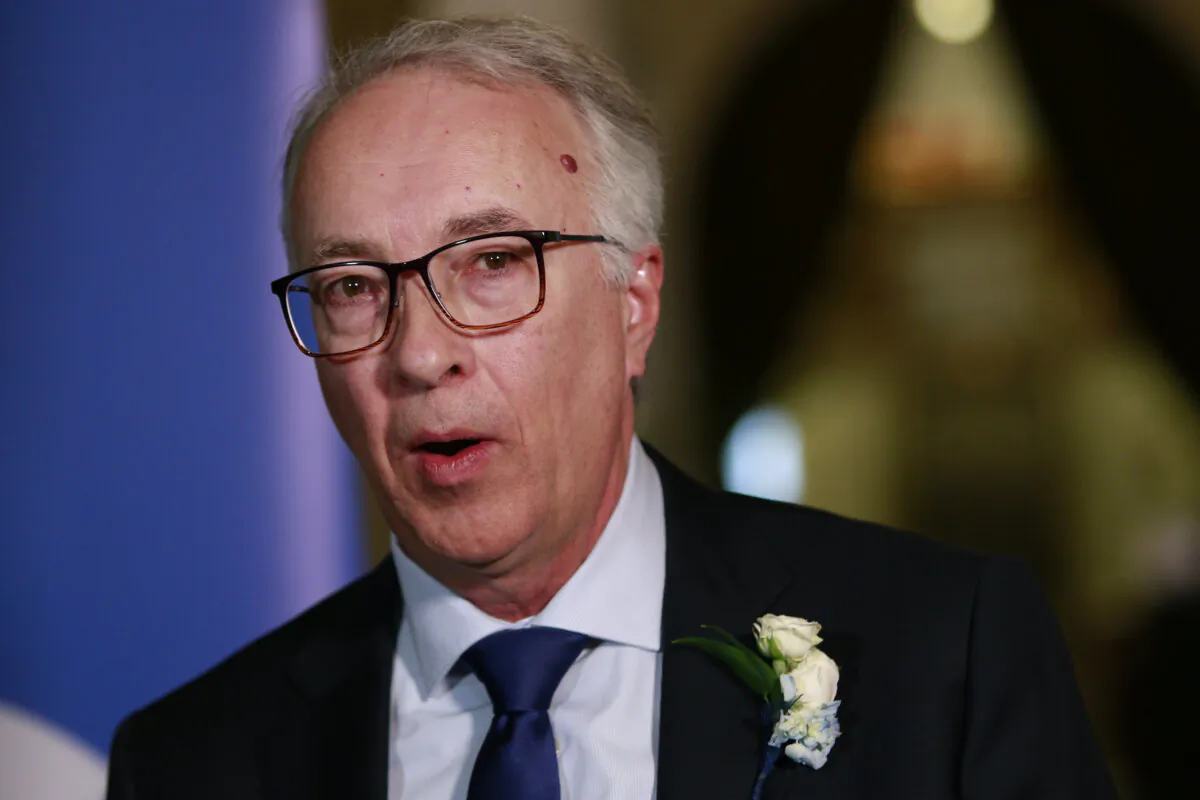
Conservative Party of B.C. Leader John Rustad is calling on the provincial government to suspend negotiations with First Nations until Canada’s highest court can offer “clarity” on the rights of property owners impacted by the landmark Cowichan Tribes case.
Rustad urged B.C. Premier David Eby in an open letter published Oct. 19 to send the case to the Supreme Court of Canada to seek clarification on the private property rights issues that have emerged after the B.C. Supreme Court awarded Aboriginal land title to the Cowichan Tribes on Aug. 7 for roughly 750 acres of land in Richmond, B.C.
The court ruled that previous land grants issued by the federal and provincial governments were “invalid” and violated the land title held by Cowichan Tribes due to their historical ownership. The court did not declare in its ruling that private land owner fee simple titles held by individuals or companies are automatically invalid.
“The question is straightforward,” Rustad wrote. “Can Aboriginal title and private property coexist over the same land, and if so, what are the legal consequences for each?”
Until the Supreme Court has answered that question, the province must “immediately pause all negotiations” with First Nations, Rustad said.
He said in a social media post that Eby’s decision to advance the U.N. Declaration on the Rights of Indigenous Peoples Act (DRIPA) without first securing constitutional clarity will “sew division, distrust, and divestment in BC.”
DRIPA was implemented as law by the province in 2019 as B.C.’s framework for implementing measures in accord with the U.N. Declaration on the Rights of Indigenous Peoples (UNDRIP). UNDRIP is a non-binding 2007 U.N. resolution detailing the rights of indigenous peoples regarding self-determination, land ownership, and laws concerning consent.
Eby has said that the Cowichan Tribes ruling has created uncertainty about how indigenous title relates to private property.
He told reporters at the Union of BC Municipalities convention in Victoria last month that the uncertainty created by the decision needs to be clarified urgently, but questioned calls for sending the issue to the Supreme Court, because he said it could lead to a “non-binding decision in the abstract, in a vacuum.”
Eby said it’s important the appeal court is able to make a decision based on evidence, and on the implications for the entire region, including First Nations.
B.C. Attorney General Niki Sharma said Aug. 11 the government would appeal the decision and seek a stay “to pause implementation until the appeal is resolved.”
Eby has since said the province is working with all parties to get the case to court as quickly as possible.
Matter Before the Courts
The lawsuit leading up to the court’s ruling this past summer was originally filed by the Cowichan Tribes in 2019. The claims were opposed by the Musqueam and Tsawwassen First Nations, the federal and provincial governments, the City of Richmond, and the Vancouver Fraser Port Authority in a case that included a 513-day trial.
The Cowichan First Nation has yet to pursue the invalidation of titles for privately held properties since the court’s Aug. 7 ruling.
A meeting has been scheduled for all impacted landowners Oct. 28 in Richmond, the city’s mayor has said.
Richmond Mayor Malcolm Brodie says there are dozens, if not hundreds of people impacted by the Cowichan Tribes ruling. The municipality has hand-delivered between 125 and 150 individual notices to affected owners, including a briefing note which says Richmond will “make legal arguments that Aboriginal title and fee simple title cannot co-exist over the same lands.”
Brodie has also disagreed with Rustad’s call to send the land title and ownership question to the Supreme Court now because he said it would not resolve all of the outstanding issues.
The mayor expressed his confidence that the decision will be reversed by the appeal court, but he warned that the process may require one to two years, followed by an additional appeal to the Supreme Court of Canada, which could extend the timeline by another two to four years.
The Canadian Press and Paul Rowan Brian contributed to this report.
 Friends Read Free
Copy
Facebook
Tweet
Friends Read Free
Copy
Facebook
Tweet