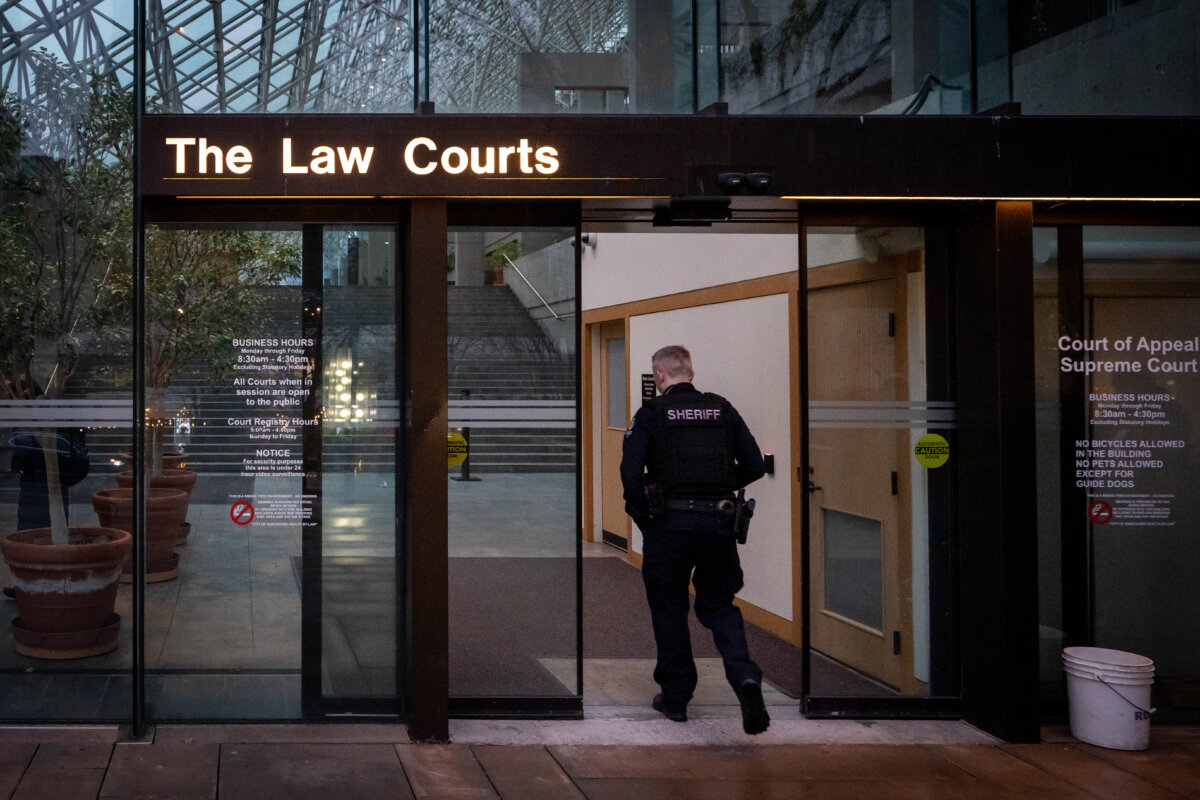
A dispute over land acknowledgements in B.C. public schools may soon be headed to the B.C. Supreme Court.
Lara Yates of Sechelt, B.C., is seeking a judicial review and overturning of a ban on her entering school property, arguing it violates her Charter right to free expression. The ban stems from her expressed opposition to land acknowledgements at the school, while Yates is also speaking out against mandatory participation in coursework involving land acknowledgments.
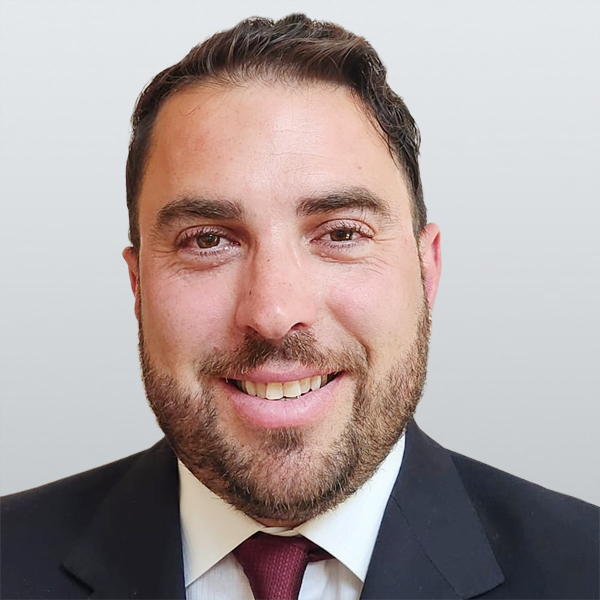
Yates is represented by lawyer Lisa Bildy through her practice Libertas Law. In addition, Bildy serves as executive director of the Free Speech Union of Canada, a not-for-profit organization that is also supporting the case.
“This case is exactly why our organization exists — to help ordinary Canadians who are facing consequences for expressing opposition to the prevailing orthodoxy,” Bildy wrote in an email to The Epoch Times, adding that she will be filing Yates’s judicial review petition “shortly.”
The Epoch Times contacted the the school jurisdiction involved in the dispute, Sunshine Coast School District 46, but didn’t hear back.
School Assignment
Yates says she first raised concerns with school staff in early December 2025 after her daughter failed a Grade 12 course at Chatelech Secondary School for refusing to do an assignment that required students to create their own land acknowledgments.
Yates says concerns she expressed to staff about her disagreement with her daughter taking part in what she viewed as compelled political expression went unresolved by school staff and School District 46.
The situation escalated on Dec. 4, 2025, when Yates was attending a theatre performance her daughter was taking part in at the school. Yates briefly interrupted an indigenous land acknowledgment before the performance by saying, “save us your race-baiting.” She says she then stayed quiet for the rest of the performance.
Yates alleges in legal filings that her daughter was taunted and bullied by classmates following the performance after being identified by the drama teacher as the daughter of the woman who had interrupted the land acknowledgment.
In a Jan. 13 letter to district superintendent, Bildy says the high school principal summoned a counsellor after the performance to determine whether Yates’s daughter should be released back to her family, and that the principal also reported the family to Child Protection Services.
“Ms. Yates’ expression may have briefly disrupted the Event,” Bildy wrote in the letter to the superintendent, but added that the school’s response was “an unjustified infringement of section 2(b) of the Charter of Rights and Freedoms.”
This subsection of the Charter protects freedom of thought, belief, opinion, and expression, including the right to express political views without government censorship or punishment.
Escalation
On Dec. 5, 2025, following the incidents at the theatre performance, the school principal banned Yates from Chatelech Secondary School property until at least Jan. 31, 2026, under a Section 177 exclusion order of the B.C. School Act. The order said Yates had used “offensive and hateful language” and caused a “significant disruption” on school grounds, and said the ban might be extended if any more such behaviour by Yates occurred on or off school property.
Bildy says provincial social workers did subsequently visit the Yates’s home as a result of the principal’s call and interviewed her children. However, Bildy said they did not find child protection concerns and the file was confirmed as closed in a March 19 letter from the Ministry of Children and Family Development.
Around one month later, Bildy says Yates contacted the Free Speech Union of Canada, who agreed to help fund her legal challenge with representation via Libertas Law.
“We have seen several cases at the Free Speech Union where schools have used or threatened to use their trespass powers to ban parents from school property for online criticism or, as in this case, objecting verbally to a political statement by the school,” Bildy told The Epoch Times.
Review
The school principal opened a formal written review on Jan. 23 on the scope of the ban, saying that it only applied to Yates and would stay in effect unless she agreed not to disrupt school proceedings in the future.
In a Jan. 28 letter, Bildy argued that this order was “quasi-penal in nature” and was being used as an “unauthorized ex post facto punishment of the parent.”
School district assistant superintendent upheld the ban on Jan. 30, saying Yates’s behaviour on Dec. 4 had been “extremely disruptive and upsetting” and made school members feel unsafe. The district official added that “Charter rights are not absolute” and said the school had done what was necessary to ensure “a safe and orderly environment,” adding that Yates should go to the B.C. ombudsperson if she wanted to appeal.
In a Feb. 13 response, Bildy said the ombudsperson was not the correct body to hear an appeal and had no power to “fix” a decision by a school board. She said that if the school board wouldn’t hear an appeal, “our next option is to file a petition for judicial review of the decision in the courts.”
The back-and-forth with the district ended on Feb. 17 when the district said Yates had “exhausted the District’s internal appeal process” and the ban would continue unless she promised to “not engage in disruptive activity including the kind she engaged in on December 4, 2025.”
Yates ultimately withdrew her two children from Chatelech, saying staff behaviour had led to the decision.
Neutrality
As Bildy prepares to file for a petition for judicial review in B.C. Supreme Court, the argument will centre on alleged Charter violations by way of compelling political and ideological speech in a public institution.
Yates will seek to have the school ban overturned, arguing that the district violated her Charter rights by punishing her for protected expression and compelling political and ideological speech.
Bildy says the case underscores the obligation of public schools to remain “politically neutral.”
“Public schools, like all of our public institutions, should be politically neutral and focused solely on their core mandate. It is inappropriate to indoctrinate children or use them to advance radical ideas that have an explicit or implicit goal of undermining Western civilization,” she said.
“Parents need to be alert to this and start putting pressure on their political representatives to clean house and get public schools back on track.”
Land Acknowledgments
Land acknowledgments in B.C. and across the country are generally voluntary but have become common in schools, legislatures, and public institutions, often framed as recognizing indigenous territories and supporting reconciliation.
In B.C., this practice also reflects the province’s legal framework under the Declaration on the Rights of Indigenous Peoples Act (DRIPA), passed in 2019, which commits the province to aligning its laws with the the U.N. Declaration on the Rights of Indigenous Peoples (UNDRIP).
Land acknowledgements and aboriginal title have become more politically charged in British Columbia over the past year, with tensions sharpened by the B.C. Supreme Court’s Cowichan decision last summer, which granted aboriginal title to an area of Richmond, B.C., to the Cowichan Nation.
An additional decision in December last year by the B.C. Court of Appeal ruled that the province’s automated, “free entry” online mineral claim registration system was unlawful because it failed to include proper consultation with First Nations and was inconsistent with UNDRIP.
B.C. Premier David Eby changed positions several times on plans to suspend parts of DRIPA that he said had created legal uncertainty and increased litigation risk for the province, but ultimately announced on April 19 that his government would not introduce suspension legislation this session after backlash from First Nations leaders.
 Friends Read Free
Copy
Facebook
Tweet
Friends Read Free
Copy
Facebook
Tweet