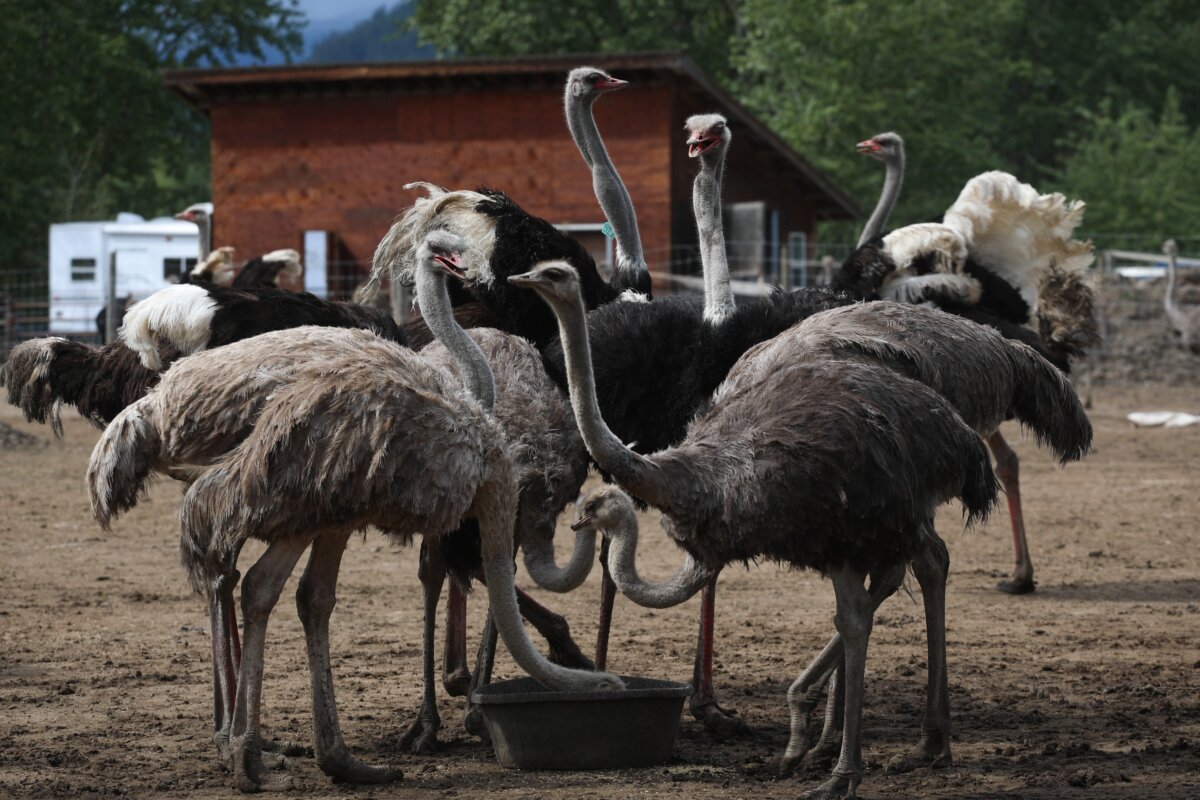

Canada’s food safety regulator says it will proceed with “total depopulation” of hundreds of ostriches at a British Columbia farm, following the owners’ unsuccessful bid to have their case against the cull heard by the country’s highest court.
The Canadian Food Inspection Agency (CFIA) announced its plans to move ahead with the cull at Universal Ostrich Farms shortly after the court rendered its decision this morning. The farm is located in the small town of Edgewood, B.C., roughly 150 kilometres east of Kelowna.
The agency “will be moving forward to complete depopulation and disposal measures as authorized by the Health of Animals Act,” it said in a Nov. 6 statement. “The CFIA has respected all orders and decisions of the courts throughout the legal process and expects the ostrich farm owners and supporters to do the same now that the Supreme Court of Canada has issued its judgment.”
The Supreme Court today reached a unanimous decision to dismiss the appeal from the farm’s owners, saying that CFIA’s stamping-out policy was reasonable according to the applicable case law. The decision comes more than 10 months after the CFIA mandated the cull order on Dec. 31, following the discovery of an avian flu outbreak.
The owners of the farm have been challenging the order in court, arguing that the surviving ostriches display no symptoms of illness and should be saved, saying they have acquired herd immunity and have scientific value. The Supreme Court of Canada granted the farm an emergency interim stay of the CFIA’s “stamping-out policy” in September pending its decision on whether to review the farm’s appeal.
The ruling lifts any legal constraints that would prevent the cull from being carried out.
Farm spokesperson Katie Pasitney, the daughter of farm co-owner Karen Espersen, posted a tearful update to social media after the court’s decision went public.
“This is what pain looks like, Canada. She’s going to lose everything she’s ever loved for 35 years,” Pasitney said in a video posted to Facebook, referring to her mother, who could be seen crying in the background. “That’s what pain looks like when the government fails you.”
The fate of the B.C. ostriches has garnered widespread attention both in Canada and around the world and large groups of protesters have been on site at the farm for months to protest the cull.
The agency did not say when the cull would be carried out. CFIA workers had begun setting up more equipment and flood lighting around a large hay-bale enclosure near the back of the ostrich pen shortly after the announcement.
Ongoing Battle
The battle between the farm and the CFIA first began in December 2024 after the farm’s owners notified a veterinarian about two sick birds on-site.
The CFIA contacted the farm before its owners had heard back from the vet, saying it had received an anonymous tip that indicated the possible presence of H5N1, also known as avian influenza, in the flock.
The agency collected samples from the two ostriches, which have since died, and confirmed the presence of H5N1, commonly referred to as avian flu. Sixty-nine of the animals died in the months following, although only two tested positive for H5N1. The farm owners believe the flu virus was brought to the farm by migrating ducks.
CFIA protocol called for the humane slaughter and disposal of the remaining birds by the farm, but Universal Ostrich Farms successfully obtained a court injunction pending a judicial review.
The farm owners unsuccessfully challenged the cull in Federal Court and a judicial review was dismissed on May 13 after the judge said CFIA’s decision was both “reasonable” and “made in a procedurally fair manner.” The farm was also instructed by the courts to pay $15,000 to CFIA.
CFIA officials first appeared at the farm on Sept. 22 with a police escort, to prepare for the cull, but the stay from the Supreme Court offered a reprieve.
The farm remained under CFIA control while awaiting the court’s decision and, now that the farm’s last legal recourse has failed, agency officials are warning protesters against trying to interfere in the upcoming cull of the birds.
“Any such actions may result in enforcement measures or prosecution,” the agency said in its statement.
The CFIA told The Epoch Times earlier this fall that “humane depopulation and disposal of birds at the infected premises” will be performed with veterinary oversight.
“We have a duty to protect Canadians from the serious potential risks that Avian Influenza presents to our people and our economy,” a spokesperson said in an email.
The agency has not said what method it will use to cull the flock. A 2016 CFIA manual says ostriches can be killed by breaking their necks, lethal injection, gassing, or shooting.
Compensation for destroyed animals is awarded to owners in accordance with the Health of Animals Act and under the Compensation for Destroyed Animals and Things Regulations, the spokesperson added.
“Compensation is based on the fair market value of the animals,” the spokesperson said. “For ostriches, compensation of up to $3000 per bird may be awarded when there is supporting documentation. While compensation may not offset the emotional toll of depopulation, it can provide resources to recover and reestablish operations.”
The farm has said it has 399 ostriches. CFIA has said its estimates put the count at between 300 and 330.
Several public figures have urged Canada to stop the cull, including U.S. Centers for Medicare and Medicaid Services administrator Dr. Mehmet Oz, American billionaire John Catsimatidis, and U.S. Secretary of Health and Human Services Robert F. Kennedy Jr.
The Canadian Press contributed to this report.
 Friends Read Free
Copy
Facebook
Tweet
Friends Read Free
Copy
Facebook
Tweet