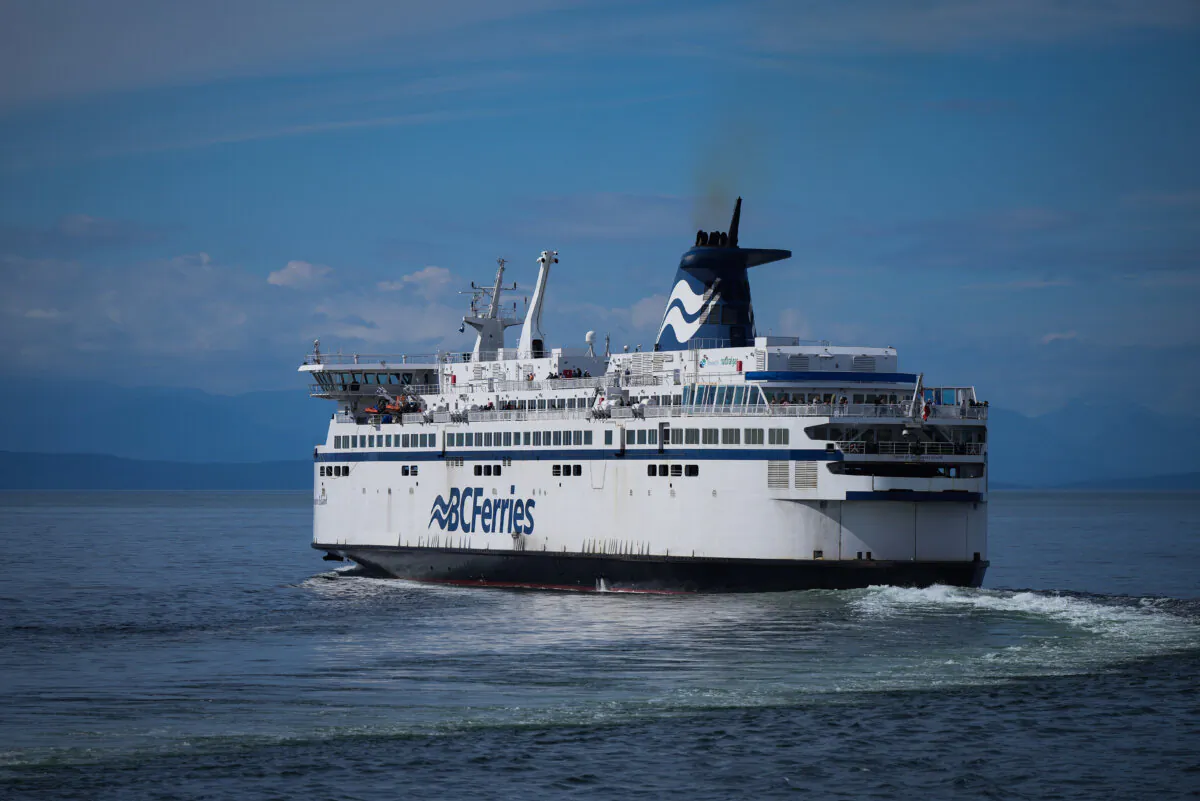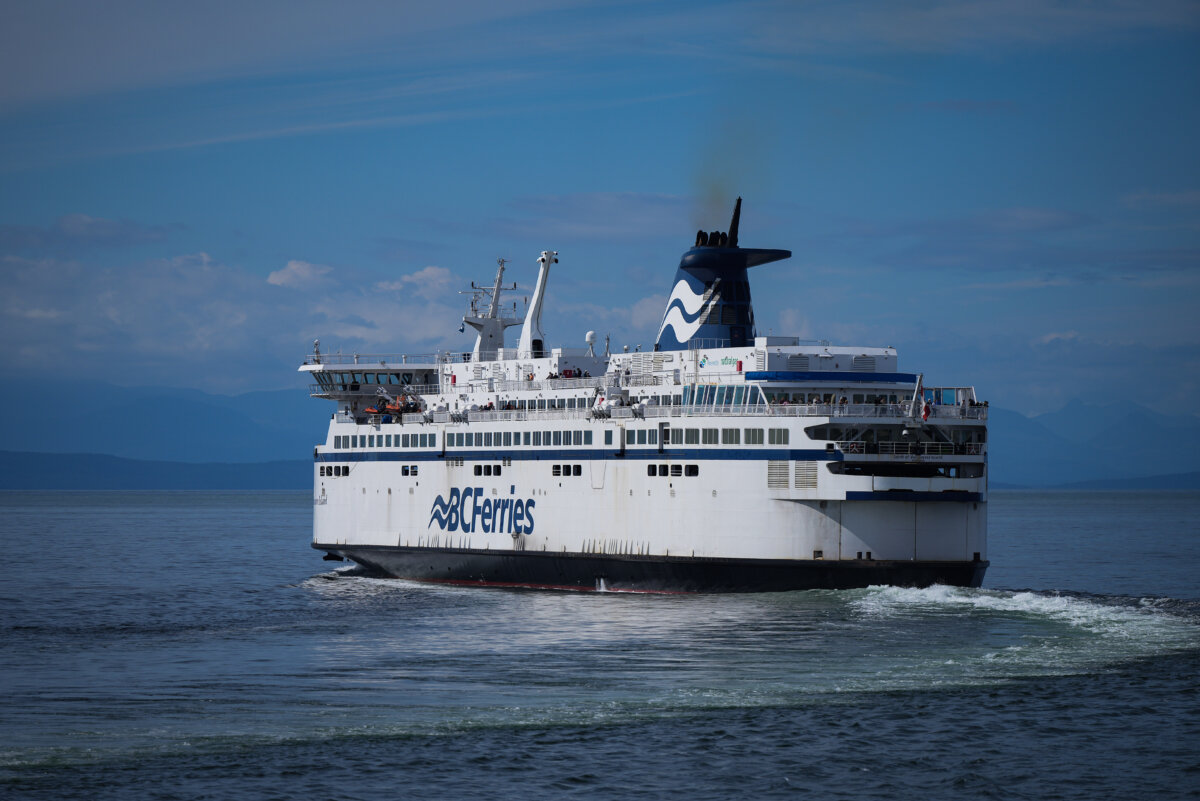

British Columbia’s transport minister says he’s concerned with B.C. Ferries’ decision to hire a Chinese shipyard to build four new ferries for its passenger fleet amid ongoing trade disputes between Canada and China.
“I do have concerns around procuring services from any country that is actively harming Canada’s economy through unfair tariffs or other protectionist trade practices. I have shared these concerns with BC Ferries,” B.C. Transport Minister Mike Farnworth said in a statement.
Farnworth said while B.C. Ferries is an independent company responsible for its own operational decisions, he was “disappointed more involvement from Canadian shipyards was not part of the contract.” B.C. Ferries was formerly a Crown corporation, but now operates as a privately held company with the B.C. government as its sole shareholder.
China and Canada have been locked in a trade dispute for several months. Ottawa imposed 100 percent tariffs on Chinese electric vehicles last fall, which led to Beijing imposing a 100 percent levy on Canadian imports of canola oil, oil cakes, and peas, along with a 25 percent tax on pork and seafood products in March 2025.
B.C. Ferries said in a June 10 statement that it had selected the Chinese state-owned China Merchants Industry Weihai Shipyards (CMI Weihai) to build the vessels after a “rigorous global procurement process.” B.C. Ferries said the company has a “strong track record” of building passenger vessels for large companies such as Stena RoRo in Sweden and Grimaldi Lines in Italy.
The four vessels are set to replace four aging ships that are increasingly facing mechanical issues. The new vessels are set to arrive in 2026 and come into service in 2029.
B.C. Ferries CEO Nicolas Jimenez said CMI Weihai is the “global leader in ferry construction” and was the “clear choice” based on its technical capabilities, safety standards, and overall cost.
Interferry CEO Mike Corrigan said there are currently few shipyards outside of China that still have the capabilities to build large ferries and provide tech support throughout the vessel’s life. “Over the last decade or so, the vast majority of Interferry’s operator members building large ferries have done so and continue to do so in China,” he said.
The company’s Head of Fleet Renewal Ed Hooper added that B.C. Ferries will have their own team of shipbuilding experts on site at the shipyard throughout construction to “provide ongoing oversight and quality assurance.”
B.C. Conservatives have criticized the government over the BC Ferries contract with the Chinese firm.
“China’s money laundering, China’s fentanyl, & China’s election interference have all hurt BC & Canada,” B.C. Conservative Leader John Rustad said on social media on June 11.
“This is a national security issue —moreover, BC cannot give China billions of BC tax $$$ that should be going to OUR BC workers.”
The Epoch Times contacted the premier’s office for comment but did not immediately hear back.
Canadian officials have in the past expressed concern about China’s state-owned enterprises.
“The People’s Republic of China does not really distinguish between private companies that operate from within China’s state-owned enterprises, and [use] whatever means they can to try to further the strategic objectives of the Communist Party of China,” Nicole Giles, senior assistant deputy minister at the Canadian Security Intelligence Service, told parliamentarians during a meeting in May 2024.
“We do see corporate actors out of PRC [People’s Republic of China] using all means and various techniques at their disposal to try to further the objectives of the Communist Party of China.”
 Friends Read Free
Copy
Facebook
Tweet
Friends Read Free
Copy
Facebook
Tweet