
Tension has been mounting between Russia-allied Belarus and Eastern European NATO members, particularly Poland.
“The situation along NATO’s eastern flank is tense,” former U.S. Ambassador to Azerbaijan Matthew Bryza told The Epoch Times.
“As Polish Prime Minister Donald Tusk recently said, Poland is closer now to armed conflict than it has been since the Second World War,” said Bryza, who is also a former White House and State Department official.
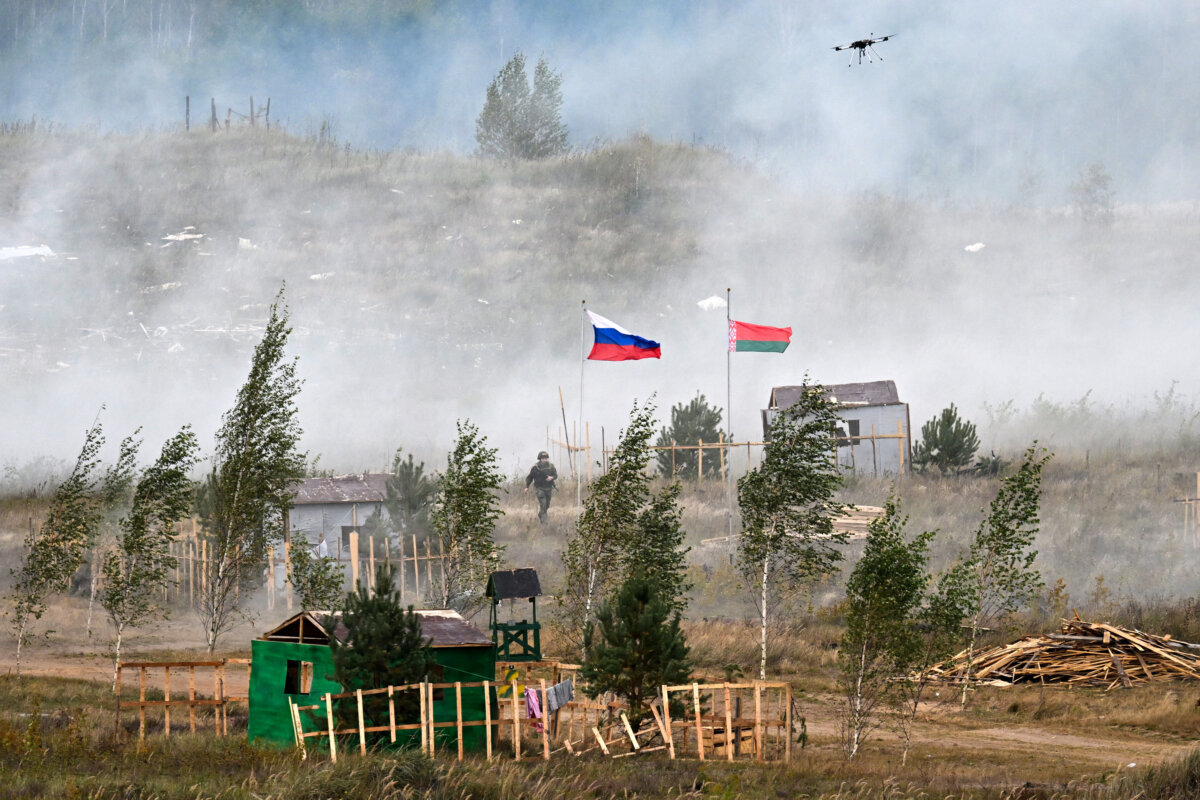
Poland unilaterally sealed its border with Belarus a day before Russia and Belarus began holding extensive joint military drills on Sept. 12.
The five-day “Zapad-2025” joint exercises saw the two allied militaries test their ability to fend off attacks—by air, land, and sea—by hypothetical enemies.
Along with testing a range of conventional weapons, they also rehearsed the deployment of nuclear weapons, according to Belarusian and Russian officials.
Pavel Muraveiko, Belarus’s military chief, said the drills involved “the planning and the consideration of the application of non-strategic nuclear weapons,” according to Minsk’s state-run news agency BelTA.
A day before the war games kicked off, a Kremlin spokesman described the exercises as “routine drills, not aimed against anyone else.”
“It’s about a continuation of defense cooperation and efforts to improve interaction between two strategic allies,” the spokesman said, as quoted by Russian state media outlet TASS.
Warsaw, however, was not reassured, with the Polish prime minister calling the scheduled drills “very aggressive from a military doctrine perspective.”
Bryza, citing historical precedents, said Poland’s decision to seal its border with Belarus on the eve of the drills was justified.
“This has been a Russian tactic in the past—to use military exercises to prepare for incursions, like, for example, into Czechoslovakia in 1968,” he said.
Russia also held military drills in the runup to its invasion of Ukraine in 2022, noted Bryza, who sits on the board of The Jamestown Foundation, a Washington-based think tank focusing on defense and security policy issues.
Drones Rattle Warsaw
Before the war games began, the situation along Poland’s eastern border had been fraught.
In the early hours of Sept. 10, Poland, with the help of several NATO allies, downed more than a dozen unidentified drones that had breached its airspace.
Warsaw and other Western capitals have since claimed the incursion was a deliberate provocation by Russia—an allegation Moscow denies.
“No specific circumstances have been cited to support the malicious intent attributed to our country,” a Russian foreign ministry spokeswoman said in a statement on Sept. 18, according to TASS.
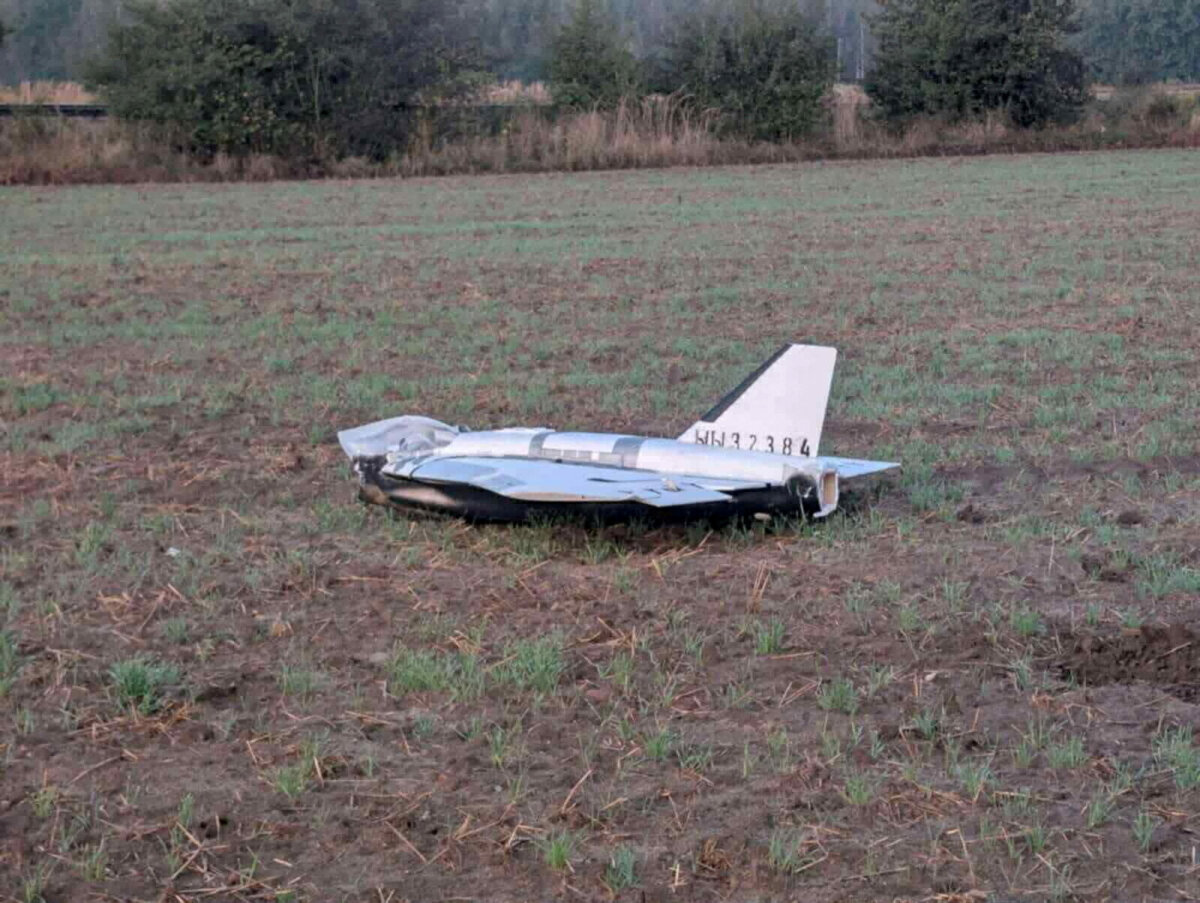
Nevertheless, Poland has imposed air-traffic restrictions, which remain in effect, along its borders with both Belarus and Ukraine.
Hours before the drone incursion, Belarus—which, like Poland, borders Ukraine—claimed its military had also downed several drones that had entered its airspace.
According to Minsk, the drones went astray—as a result of electronic jamming—during tit-for-tat strikes between Russia and Ukraine.
Belarus claims that it warned Poland and Lithuania about the errant drones, which it has thus far refrained from identifying as either Russian or Ukrainian.
“This allowed the Polish side to respond promptly to the actions of the drones by scrambling their forces,” military chief Muraveiko said in a statement issued at the time.
Cem Karadeli, a Turkish political analyst, said he believes that the incident was an effort by Russia to test Poland’s reaction to a cross-border drone incursion.
“And a smart one, too,” Karadeli, professor of international relations at Ankara’s Ufuk University, told The Epoch Times.
“The Russians proved they could cross Poland’s border—NATO’s border—unimpeded. The main idea was to test NATO’s defenses.”
He said the drone incursion was likely timed to coincide with the start of the “Zapad-2025” joint military exercises.
“The timing was deliberate,” Karadeli said. “Russia wanted to test the [Polish] reaction before the drills began.”
Bryza concurred, saying the incident appeared to be aimed at “testing NATO’s response.”
“It appears that some of the drones were launched from Belarus,” Bryza said, dismissing Minsk’s claim that it had sought to warn Warsaw about the drones in advance.
“It looks like it was meant to help Russian and Belarusian forces involved in the drills understand how NATO would respond to such an incursion, which could also serve as a prelude to an attack on NATO territory.”
Two days after the incident, as the Russia–Belarus drills began, NATO announced the launch of a major operation aimed at bolstering its eastern flank.
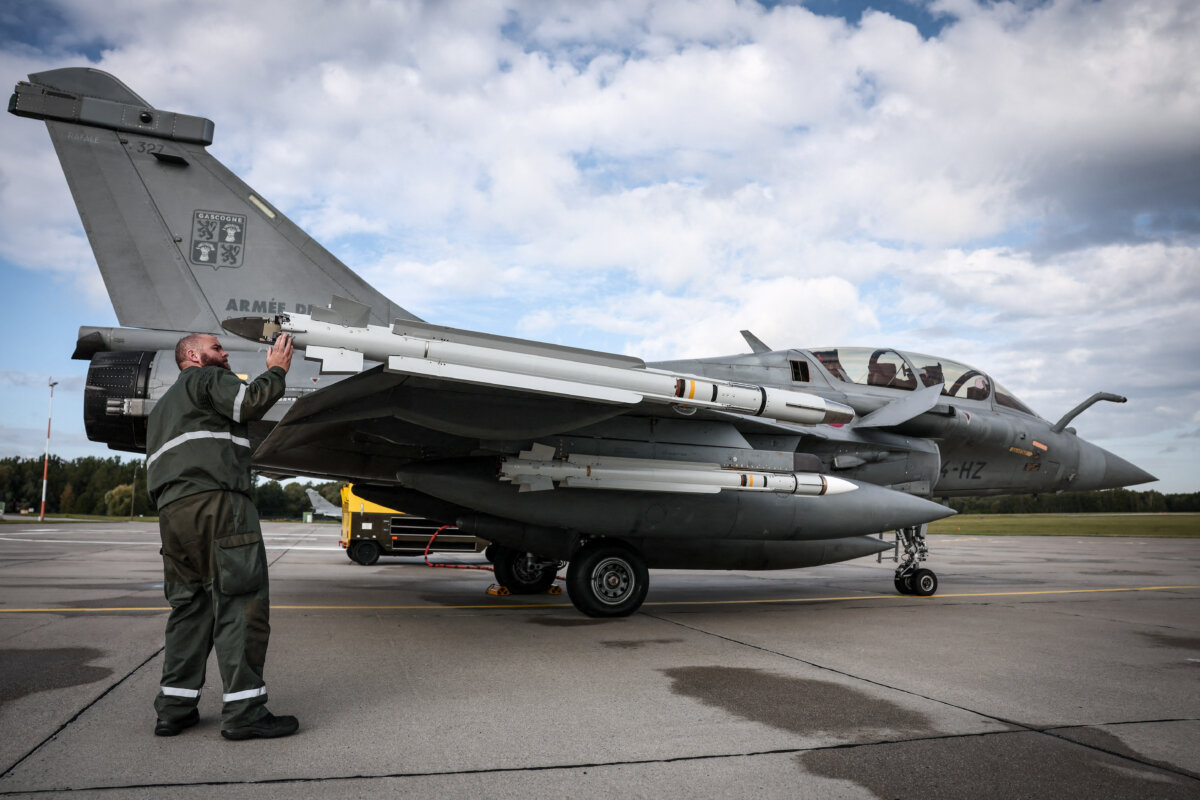
According to NATO chief Mark Rutte, the operation—dubbed “Eastern Sentry”—involved a range of military assets from Britain, France, Denmark, and Germany, and other alliance members.
Despite the beefed-up defenses, on Sept. 18, Poland reported continued drone activity near its border with Belarus.
“Last night, the Border Guard observed increased activity by Belarusian and Russian drones attempting to cross Polish airspace,” Polish Interior Minister Marcin Kierwinski said.
“It’s clear that the situation on the Polish–Belarusian border remains very, very tense.”
Restoring US–Belarus Ties
Despite the escalating tensions, Washington has recently signaled its desire to improve its relations with Belarus, which have been suspended since 2022.
On Sept. 11, White House special envoy John Coale visited Belarus, where he said U.S. President Donald Trump hoped to reopen Washington’s embassy in Minsk, normalize bilateral ties, and jump-start trade between the two countries.
The Trump administration also lifted sanctions on Minsk’s national air carrier after Belarusian President Alexander Lukashenko freed 52 prisoners whose release Trump had requested.
Some observers have suggested that Trump’s conciliatory gestures to Belarus could be an attempt to draw Minsk away from the Russian orbit.
“I doubt Belarus can be wooed away from Russia that easily,” Karadeli said.
He compared Russia–Belarus ties to those that exist between Turkey and Azerbaijan, which the two countries often describe as “two states, one nation.”
Since 1999, Russia and Belarus have been bound by a “Union State” treaty that aims to cement political, economic, and military ties between the two countries.
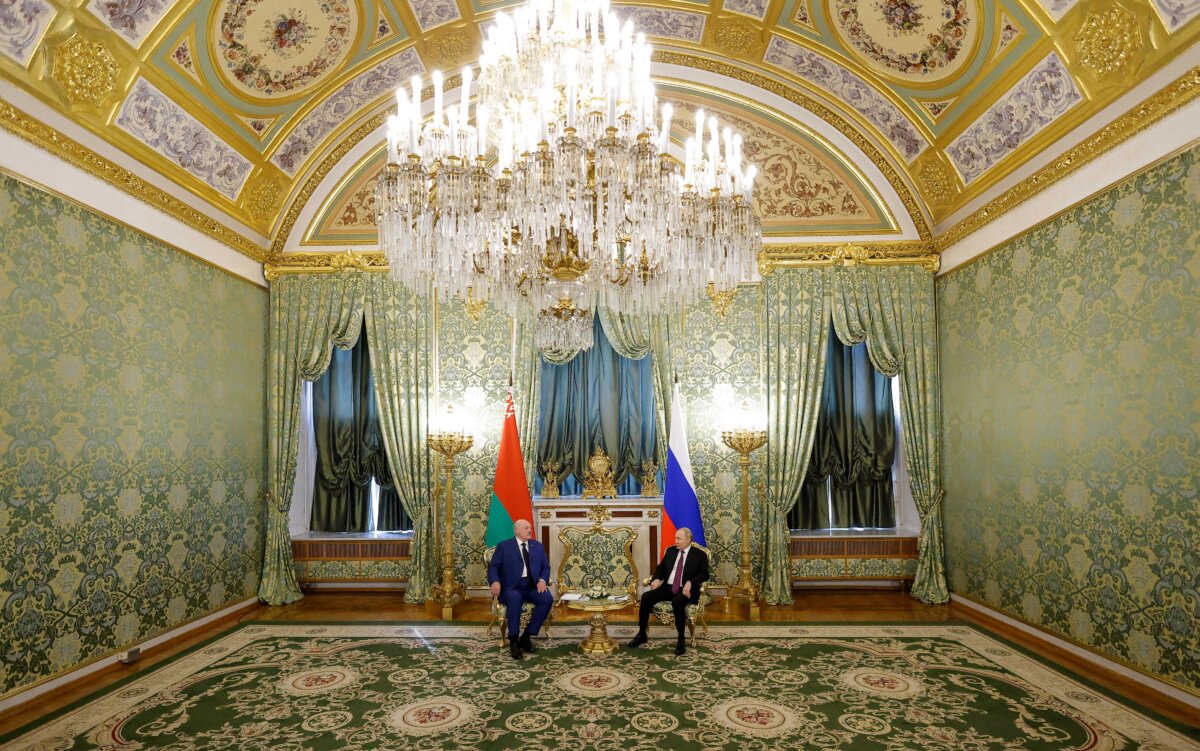
Karadeli said he believes Washington likely views Belarus as an alternative source of energy and rare earth minerals.
“They went forward with the Ukrainian rare earths deal, then a smaller agreement with Moscow,” he said. “Now, they’re doing the same with Belarus.”
He also noted that Washington’s move is “part of the American grand strategy against Beijing—trying to minimize U.S. dependence on rare metals from China.”
According to Bryza, strategists in Washington have “long believed it might be possible to peel Belarus away from Russia—that might be in President Trump’s mind.”
“He is looking for ways to undercut Russia’s ability to wage war in Ukraine,” he said.
“Peeling Belarus away [from Moscow] would be one way to do that.
“But I hope President Trump’s team is well enough informed to realize that there’s no chance of Lukashenko breaking with Putin.”
In an Aug. 8 interview with Time magazine, Lukashenko rejected the notion of his country making “agreements with the Americans behind Russia’s back.”
Bryza suggested that Trump may be “looking for ways to appeal to President Putin to pursue a cease-fire in Ukraine by reaching out to Lukashenko.”
He added, “There may be messages being transmitted from the White House to Putin, saying, ‘We’re trying to reduce tension with Lukashenko, and we could do the same with you—if you negotiate in good faith toward peace with Ukraine.’”
Reuters contributed to this report.
 Friends Read Free
Copy
Facebook
Tweet
Friends Read Free
Copy
Facebook
Tweet