
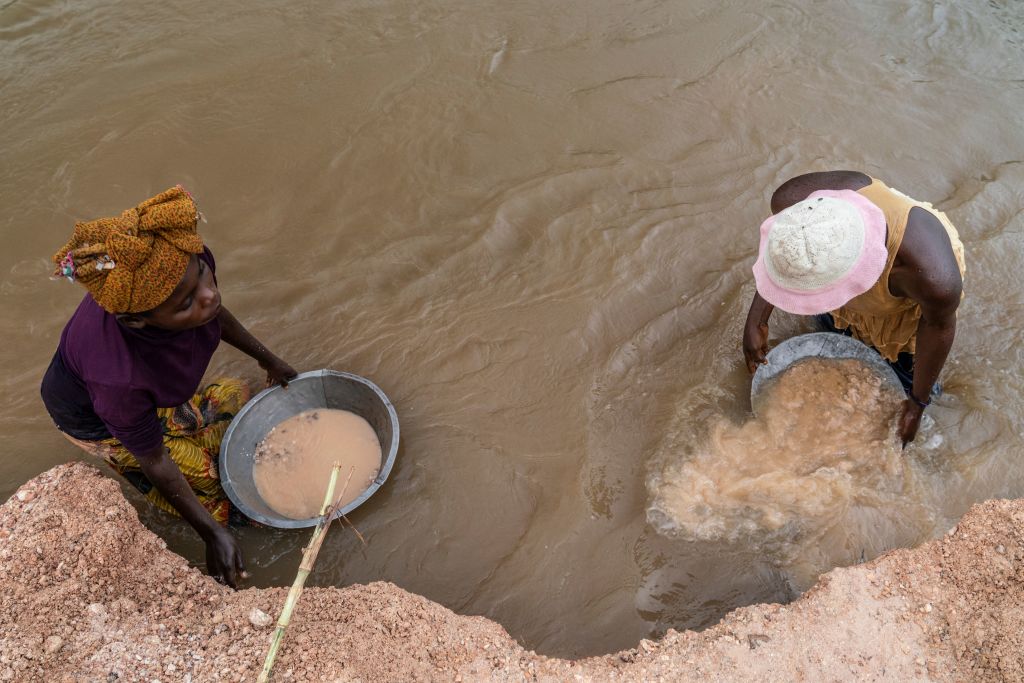
KoBold Metals, backed by billionaires Jeff Bezos and Bill Gates, has started a massive lithium exploration campaign in Congo (DRC), seeking to bring the critical resource used in electric vehicles and other batteries to the United States, the company announced on April 13.
“This campaign is possible because of the courage and vision of the DRC government and the tireless work of the [U.S. State Department] to create the conditions for American companies to succeed in the DRC,” KoBold CEO Kurt House posted on X on April 13.
KoBold Metals opened an office in Lubumbashi, Congo’s second-largest city, in February after signing an agreement in 2025 to gain access to nearly 1,200 square miles in the mineral-rich Manono lithium project, where some of the highest-grade lithium pegmatites in the world have been found, KoBold said.
KoBold agreed to invest more than $1 billion to bring lithium from the deposit to Western markets and has already paid more than $20 million into Congo’s treasury, making it the largest new investor in the central African nation in recent years, according to House.
“A year ago, KoBold had no employees and no land in the DRC,” House said in a statement, according to Mining.com. “Today, we are the largest American investor in the country, and we are launching the most ambitious mineral exploration program ever attempted.”
The company plans to expand exploration to nearly 2,000 square miles by the end of the year.
The permits are focused on lithium exploration but also include rights for coltan, rare earths, and other battery minerals.
The company was started in 2018 with a goal of developing ways to discover new deposits of critical metals needed for electric vehicle batteries, according to cofounders House and Josh Goldman.
“We’re trying to transform mineral exploration from a manual, judgement-guided, trial-and-error process into a data-driven and scalable science,” the founders said in an article published in 2023 in engineering magazine IEEE Spectrum. “Find the significant minable deposits of cobalt, copper, lithium, and nickel resting anywhere from 100 to 2,000 meters deep in the earth’s surface.”
The cost of discovery is relentlessly increasing, House said in 2024. The easy-to-find ore deposits at the surface have gone cold, leaving most miners looking for new technologies to detect deposits deeper in the earth, he said.
The company was also focused on preventing “catastrophic impacts of climate change.” A global transition to electric vehicles would require discovering and mining an additional $15 trillion of cobalt, copper, lithium, and nickel by 2050, the company estimated.
To do this, KoBold plans to create a “Google map”-style analysis of Earth for these mineral deposits.
“We plan to use [artificial intelligence] to streamline the largely scattershot process of discovering new ore deposits,” the founders said. “Once they’re discovered, we plan to partner with mining companies for the actual mining operations and advise them on efficient extraction, again using our [artificial intelligence] tools.”
In Zambia, KoBold Metals used its technology to help start a digital store for the Zambian government, replacing a paper-based system with a depository of geological data. The digital store allows geologists to access geological information instantly, the company announced in October.
KoBold Metals is also backed by other billionaire investors through Breakthrough Energy Ventures, including Michael Bloomberg and Richard Branson.
In May 2025, KoBold agreed to a framework for it to buy Australia-based AVZ Minerals’ interests in the Manono lithium deposit in Congo.
AVZ Minerals acquired a mining permit in 2022 for the Manono project through a subsidiary, Dathcom Mining, and the DRC government-owned Cominière, granting a 75-percent stake in the project.
Congo canceled AVZ Minerals’ exploration license in 2023 after a legal dispute erupted among AVZ Minerals, China’s Zijin Mining Group Co., and Congo. The government divided the exploration area into two separate pieces, giving one to the Chinese firm and the other to AVZ Minerals.
AVZ Minerals won a compensation case at the International Court of Arbitration of the International Chamber of Commerce in March 2025, before entering into an agreement with KoBold.
In June 2025, the Trump administration brokered a peace agreement between the DRC government and Rwanda to help secure access to Congo’s vast reserves of critical minerals and precious metals.
KoBold thanked U.S. Secretary of State Marco Rubio, U.S. senior adviser for Africa Massad Boulos, and Congolese President Félix Tshisekedi for opening the doors to the investment.
“We’ll make America and the DRC safer, stronger, and more prosperous,” the company stated in a release in May 2025.
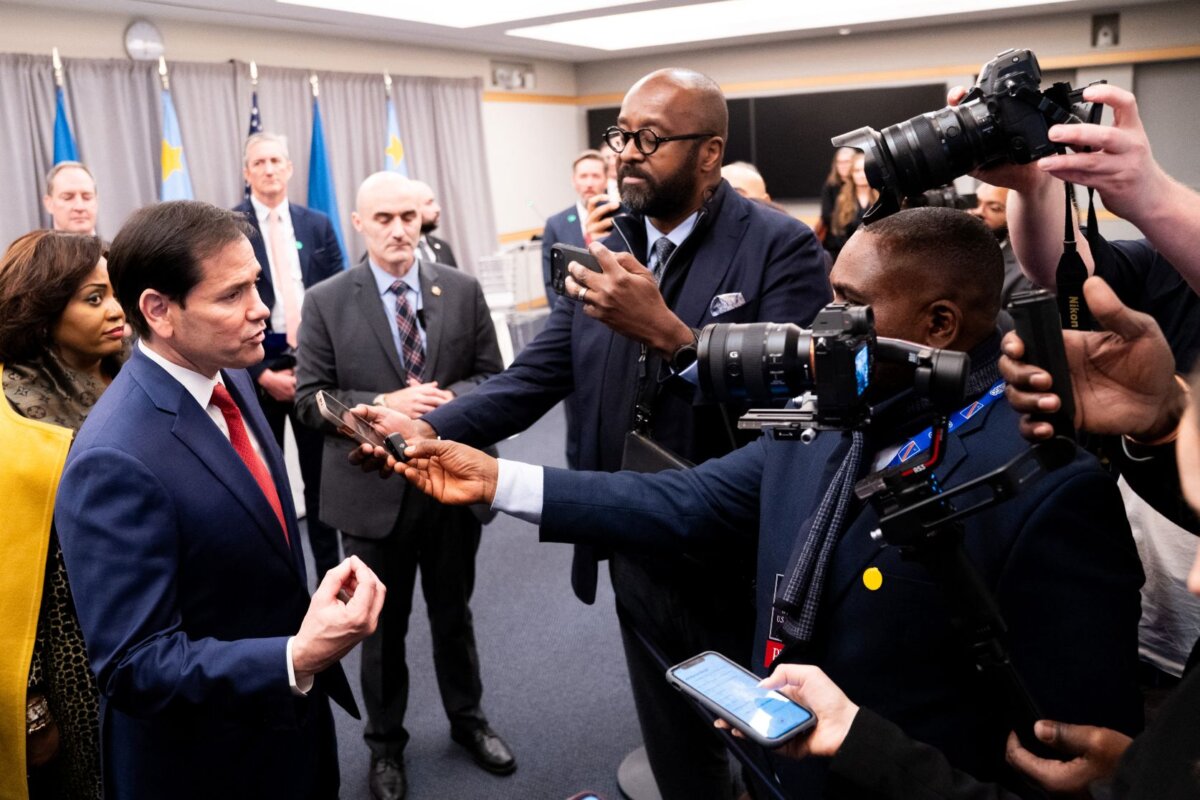
In the agreement, the companies committed to advancing the peace process by rapidly developing the Manono deposit and selling minerals at fair value.
The development is expected to create thousands of high-paying jobs for local workers over the next few decades.
KoBold received seven mineral exploration permits across Congo in July 2025, Reuters reported. Four of the licenses are located in Manono territory in Tanganyika Province, and three are in Malemba Nkulu, Haut-Lomami Province.
The company now has exploration properties in Zambia; Quebec, Saskatchewan, and Ontario in Canada; and Western Australia.
The lithium development could help loosen China’s grip on the world’s mineral market. China controls about 70 percent of the global lithium supply chain, according to the U.S. Energy Information Administration.
KoBold, Gates, Bezos, and Breakthrough Energy Ventures did not return requests for comment about the project.
 Friends Read Free
Copy
Facebook
Tweet
Friends Read Free
Copy
Facebook
Tweet