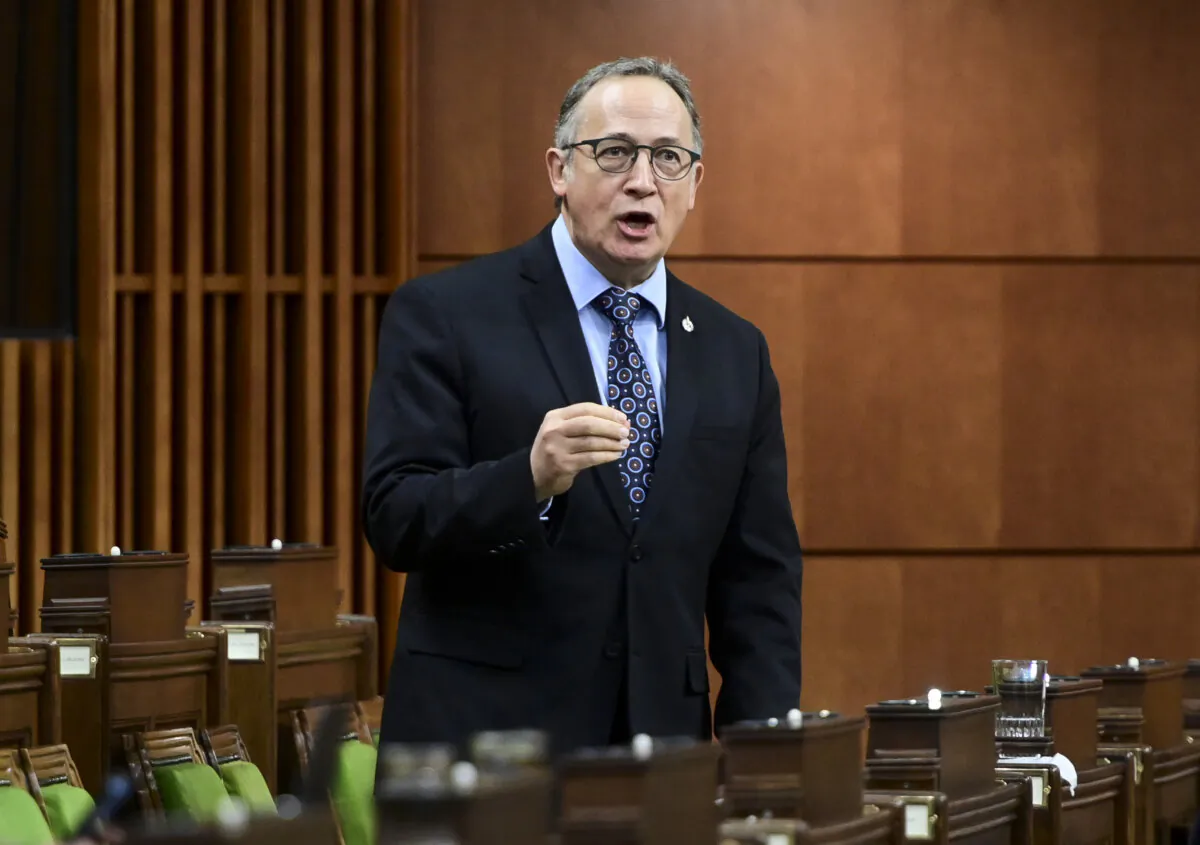

A Bloc Québécois bill that aims to protect Canada’s supply management system from future international trade negotiations has been passed in the House of Commons.
This was the first bill to clear the Commons in the new Parliament, after a similar bill in the previous Parliament had already passed and was being reviewed in the Senate before Parliament was prorogued earlier this year.
Bill C-202, which passed on June 5 in a unanimous vote, states that the foreign affairs minister “must not make any commitment on behalf of the Government of Canada, by international trade treaty or agreement,” to increase the tariff rate quota for dairy products, poultry or eggs, or reduce the tariff that applies when those goods are imported in excess of the quota.
“The Bloc Québécois is committed to fiercely defending our agricultural model and we will never let go,” Bloc MP Yves Perron said in a June 5 statement. “We are now counting on speedy passage in the Senate for the bill to come into force as soon as possible.”
Canada’s supply management system coordinates production and demand of dairy, eggs, and poultry products, while controlling imports as a way to set stable prices for farmers and consumers. The system was created in 1972 in response to decreasing prices for the products, and it imposes tariffs of up to 300 percent.
“We are pleased that all parties have today reiterated their support for our work for agricultural entrepreneurs in Quebec and Canada,” Perron said. “This rapidity of action is crucial in the current trade negotiations with the United States as we need to ensure that no part of the management of the offer can be ceded.”
When the bill was introduced in the House of Commons on May 29, Prime Minister Mark Carney said his government will protect the supply management system, adding that he had pledged to do so during the federal election campaign.
“Supply management will never be on the table in negotiations with the Americans,” Carney said.
“We will protect the French language and Canadian culture in its entirety in any discussion or trade negotiation with any country around the world, including the U.S. We will carefully consider the Bloc Québécois bill.”
Last fall, after the NDP pulled its support for the minority Liberal government, the Bloc Québécois tried to get a commitment from the Liberals to speed up the adoption of its previous bill to protect supply management, C-282, in exchange for propping up the government. The Liberals didn’t accept the offer.
Bill C-282 was first introduced by Bloc MP Luc Thériault in June 2022 and was passed by a majority of MPs in the House of Commons, but was stalled in the Senate following examination by the Foreign Affairs and International Trade Committee in September 2024.
“From east to west, entire regions are being revitalized by producers who are united by the supply management model,” Thériault said at the time, during a meeting of the Senate committee on foreign affairs and international trade. “This bill is therefore a positive for Canada as a whole.”
Several senators raised concerns during the meeting over potential impacts the bill could have on Canada’s future trade negotiations, such as limiting its flexibility in negotiations and harming its reputation as a reliable trading partner.
Independent Sen. Marty Deacon said C-282 “raised alarm bells” and that the bill seemed to be “good politics but not good policy.”
Conservative Sen. Michael MacDonald also mentioned concern that the bill could “potentially drive up costs for the consumers and limit the variety of products available on the Canadian market.”
During a press conference in Montreal on March 28, Carney was asked by reporters if he discussed supply management with U.S. President Donald Trump during the phone call between the two leaders that same day.
“We will never have discussions with respect to supply management, it’s off the table,” Carney replied.
Successive U.S. administrations have been critical of Canada’s supply management system, listing it as a trade irritant. Trump said that American farmers have been treated “very unfairly” by Canada imposing high tariffs.
Matthew Horwood contributed to this report.
 Friends Read Free
Copy
Facebook
Tweet
Friends Read Free
Copy
Facebook
Tweet