The Autonomous Bougainville Government (ABG) has signed a Memorandum of Understanding with Indian resources company Lloyds Metals and Energy, hoping it is the first step on a path that will lead to the reopening of the Panguna mine.
The move also aims to put an end to Beijing’s attempts to seize control of the country’s most valuable asset and, with it, a strategic port in the Pacific.
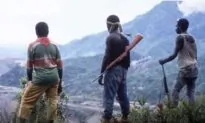
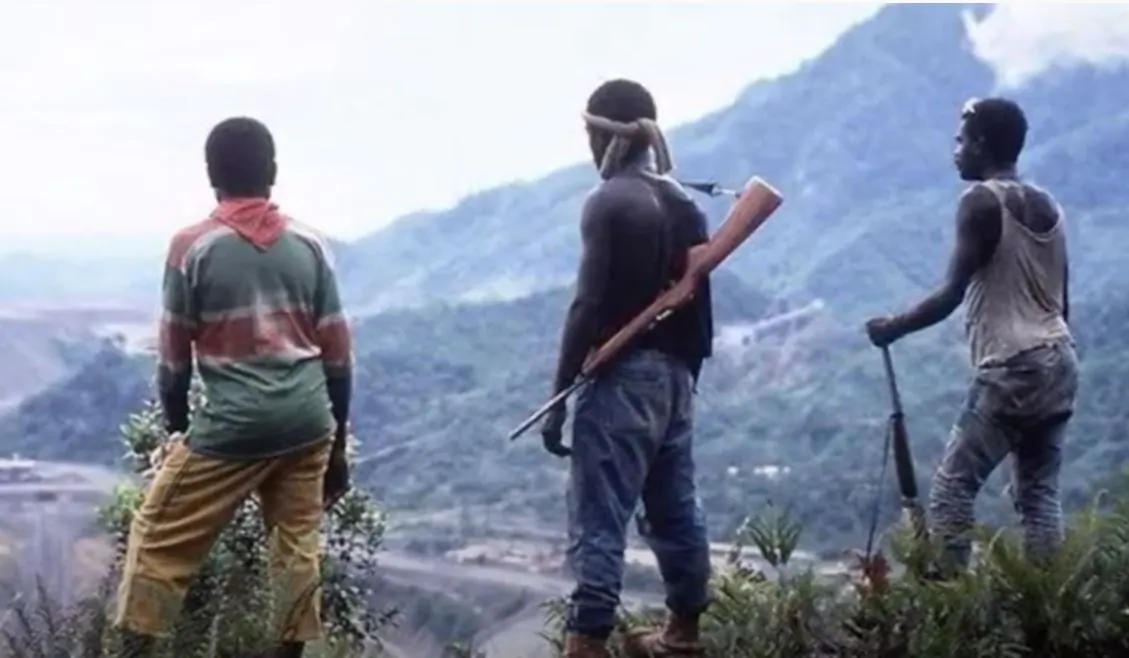
The mine hasn’t operated since the beginning of the war for Bougainville’s independence from Papua New Guinea (PNG), which broke out in 1988 and forced Rio Tinto to shut it down.
The conflict, fought between Bougainvillean separatists and the Papua New Guinea (PNG) Defence Force, lasted a decade and resulted in an estimated 20,000 deaths. It was brought to an end by the signing of the Bougainville Peace Agreement, in which the PNG government agreed to the founding of the ABG, which would have broad authority over what became known as Bougainville Province.
But reopening Panguna proved difficult, not least because the Chinese Communist Party (CCP) saw the conflict as an opportunity to seize control of the mine.
Rivalling some of the largest copper mines in operation today, it is estimated to contain around 1 billion tonnes of copper and 12 million tonnes of gold, with a value of around $100 billion.
The company Rio Tinto established to run the mine, Bougainville Copper, still exists and issued a brief statement to markets, saying it became aware of the ABG’s discussions with Lloyds “only recently” and had not been consulted on the deal.
The company had, in previous releases, claimed that it was the ABG’s first choice to redevelop the mine.
Its share price fell 49 percent to 59.5 U.S. cents following the announcement.
Beijing’s Unrelenting Efforts to Gain Control
The official statement from the ABG didn’t specifically mention Panguna, though it’s obvious that’s what has attracted Lloyds.
Instead, it speaks of establishing “a structured platform for consultation on major development priorities.”
But, crucially, it adds that both parties are committed to “exploring development opportunities in a structured, transparent, and well-coordinated manner”—an oblique reference to past attempts by Beijing to step in and take over the mine.
Not only would the copper and gold add to the CCP’s strategy of cornering the world market for metals needed by the tech sector, but a presence in that location would help fulfil Beijing’s strategic objectives in the Indo-Pacific.
Bougainville’s position—between Papua New Guinea to the west and the Solomon Islands to the east—means it forms part of a chain of Pacific Islands across the north of Australia and New Zealand.
The town of Arawa, just north of the mine, is also home to a major deep-water port built by Mitsubishi and Bechtel at the height of the local mining boom. It was used for shipping ore overseas, but could conceivably serve as a home for naval vessels.
In 2013, Bougainville’s then-President John Momis reprimanded the Panguna Mine Affected Landowners Association after it attempted to circumvent the approval process and sign a deal directly with Beijing Aerospace Great Wall Mineral Investment Ltd, involving the Chinese firm in the redevelopment of the mine.
However, Beijing remained the preferred partner for Momis, who signed several memoranda of understanding and backed the establishment of a Special Economic Zone with China in 2011.
Along with Fidelis Semoso, the former minister for economic development, he also signed a deal which saw the ABG buy 500,000 shares in Bougainville Import and Export General Corporation Limited, a joint venture with a Chinese corporation.
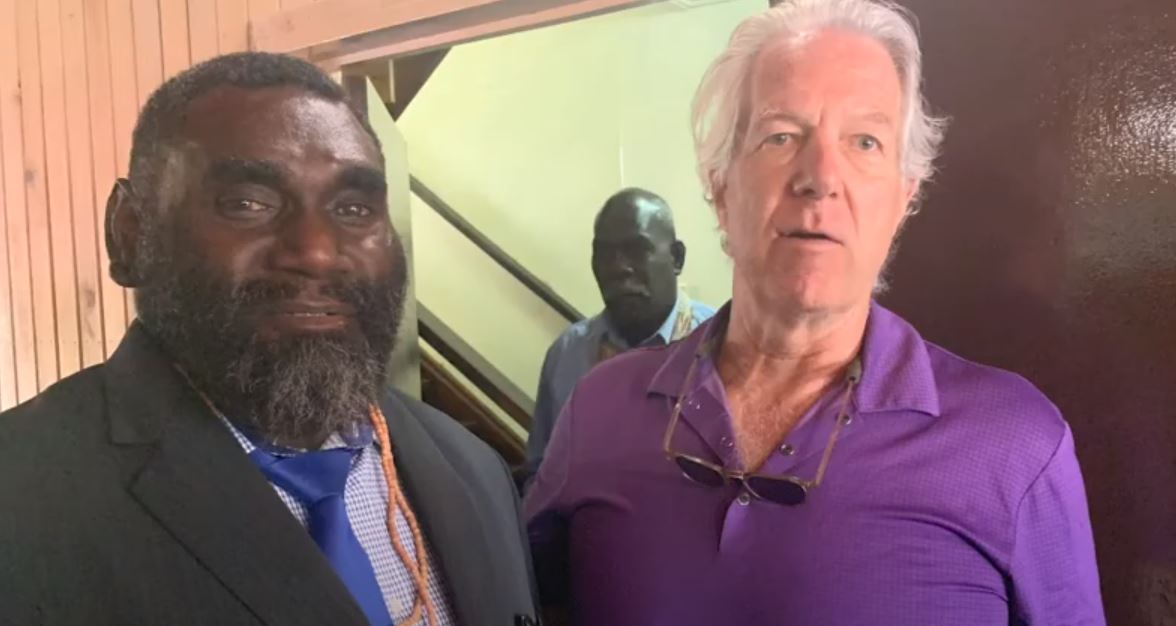
According to John D. Kuhns, an American investor in Panguna who spends much of his time in the region, at one point, agents sent by Beijing paid for 10 mining licences without lodging a formal application and went as far as to build a 50-man camp in Panguna.
However, this sparked a fierce response from the locals, who burned it down because, Kuhns says, “the Chinese did not pursue any relationship with the people.”
Kuhns is chairman and CEO of Numa Numa Resources Inc., which had been working with the Bougainville government, and ABG President Ishmael Toroama in particular, on reopening the mine and, more generally, building the Bougainville economy. He, too, was blindsided by the announcement.
Toroama, has a very different attitude from his predecessors. Kuhns described him to The Epoch Times in a 2022 article as “highly intelligent [and] absolutely incorruptible.”
But while Toroama may see an alliance with India as a bulwark against further takeover attempts by Beijing, Kuhns told this masthead on Nov. 26 that the CCP are “always patiently circling, with no chance they’re going away.”
 Friends Read Free
Copy
Facebook
Tweet
Friends Read Free
Copy
Facebook
Tweet