
Brazil’s Supreme Court dismissed U.S. sanctions, ruling that laws or judicial decisions from other countries have no effect in the country without prior approval from the government institutions provided for in the Federal Constitution and Brazilian laws.
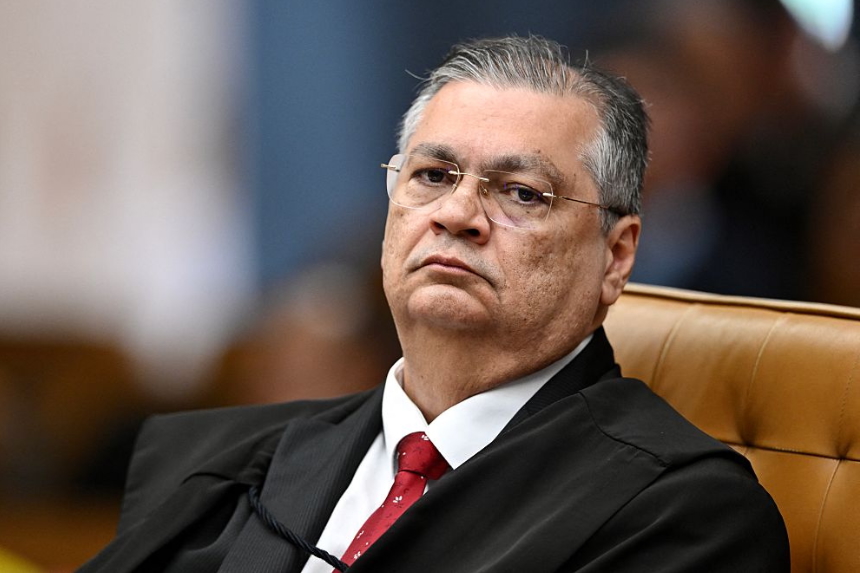
Justice Flavio Dino of the Supreme Federal Court (STF) suspended the validity of any judicial decisions, laws, decrees, and executive orders from foreign countries without analysis or approval by a Brazilian judicial body.
“Based on the Federal Constitution, the rapporteur stressed that foreign judicial decisions can only be executed in Brazil through homologation or observing the mechanisms of international judicial cooperation,” a translation of an Aug. 18 STF statement says.
The decision took as an example a complaint filed by the Brazilian Mining Institute with the STF regarding a series of environmental compensation claims brought by Brazilian municipalities in UK courts in the Minas Gerais case, which resulted in an injunction from the UK courts against the Brazilian Mining Institute. However, Dino stated that “the arguments are applicable to all similar cases.”
Dino also emphasized that Brazilian states and municipalities are barred from filing new lawsuits before foreign courts, out of respect for national sovereignty and the powers conferred by the Brazilian judiciary by the Constitution.
Eduardo Bolsonaro, former Brazilian President Jair Bolsonaro’s son and a federal representative who is in the United States, on Aug. 18 criticized what he said was the Brazilian government trying to block the application of the Magnitsky Act.
“Without mentioning the Magnitsky Act, Judge Dino prevented restrictions stemming from unilateral foreign acts. Well, the Supreme Court, or rather, these two individuals, Flávio Dino and Alexandre de Moraes, are now exposed,” said Eduardo Bolsonaro in a video on X.
“May God enlighten your hearts and minds, because the United States’ response, according to all indications, is very close,” he added.
The United States, through the Department of the Treasury, sanctioned Brazilian Supreme Court Justice Alexandre de Moraes on July 30 under the Global Magnitsky Act for ordering arbitrary arrests and restricting the freedom of expression of the administration’s political opponents, such as former Brazilian President Jair Bolsonaro.
The Global Magnitsky Human Rights Accountability Act targets perpetrators of serious and systematic human rights abuses worldwide and entails the freezing of the sanctioned individual’s assets or interests in assets located in the United States.
The move came after the U.S. State Department revoked the visas of De Moraes and his immediate family members on July 18, citing a “political witch hunt” against former President Bolsonaro and “censorship of freedom of expression in the United States.”
Bolsonaro was indicted by Brazil’s Attorney General’s Office before the Supreme Court on July 14 for allegedly committing “acts contrary to the democratic rule of law” for an alleged coup attempt following Luiz Inácio Lula da Silva’s election victory in 2023.
The former president has stated that “all the accusations are false.”
On July 9, U.S. President Donald Trump published on Truth Social a copy of a letter he wrote to Bolsonaro in which he criticized Brazil for becoming an “international embarrassment” due to the trial against Bolsonaro. He then ordered 50 percent tariffs on all Brazilian exports.
Alicia Marquez contributed to this report.
 Friends Read Free
Copy
Facebook
Tweet
Friends Read Free
Copy
Facebook
Tweet