When one hears the term “heritage listing” it usually conjures images of stunning architecture and breathtaking monuments from times long forgotten.
But not every heritage listing comes with a dose of beauty and nostalgia, according to the Centre for Independent Studies (CIS), who has recently revealed with its “Heritage Howlers” list.
CIS chief economist Peter Tulip said the “awards” highlight what he calls a “growing tendency” for heritage protection over aesthetically dubious buildings.
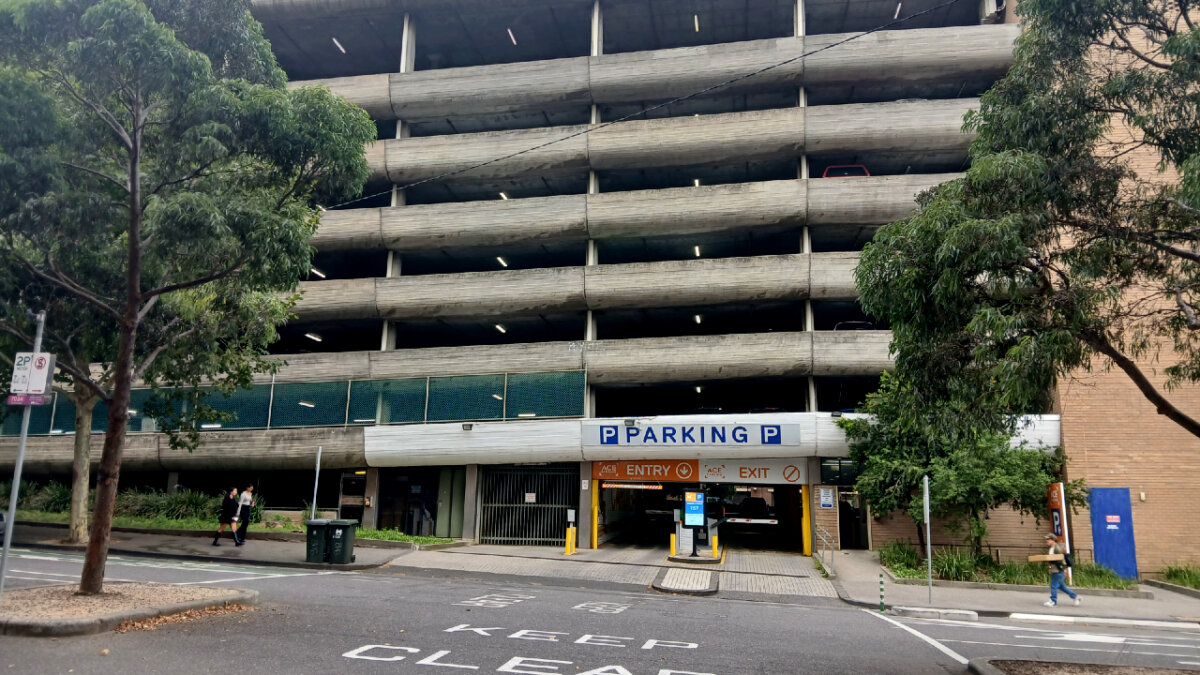
First place in the CIS “Heritage Howlers” award was granted to Carlton Carpark on the corner of Grattan and Cardigan Streets in Melbourne, Victoria.
The blocky, seven-storey carpark was built in the 1970s and aligns strongly with the brutalist aesthetic which came about after World War II, often involving raw concrete and minimalist designs.
The building received its heritage listing from the City of Melbourne due to its representation of that style of architecture.
Domenico Cerantonio of Cera Stribley architects was one of those critical of the decision at the time, saying “reserving the car park as a relic of architectural history is doing the wider community a disservice, and preventing present-day architects from contributing to the built environment in a more meaningful, relevant and sustainable way.”
In second place, think tank CIS also nominated a number of small electrical sub-stations across Victoria and New South Wales.
“These small brick boxes, often decorated with the avant-garde artistic efforts of truant teens, are preserved so future historians can reflect on the heroic struggle to convert high-voltage current into something suitable for a toaster,” Tulip said in a statement.
Third place was handed to North Sydney’s MLC building, which Tulip likened to a filing cabinet posing as an office tower.
The building was constructed in 1956, and was the nation’s first large office development.
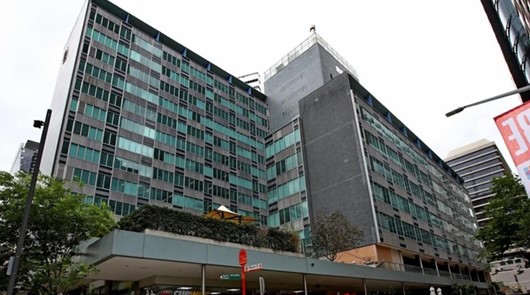
It was also the first building in Australia to make use of a decorative “curtain wall,” a type of outer facade that serves either practical or aesthetic purposes without relying on the main building frame.
But Tulip questions why it should have a heritage listing.
“Preserving the building ensures future Australians can marvel at a time when architectural ambition peaked at ‘very large rectangle,'” he said.
While each state handles heritage differently, heritage buildings can sometimes be demolished if they are considered severely unsafe, if the structure is failing, or if it is a situation where there is no other alternative.
Other contenders on the CIS list include the concrete brutalist Dee Why Civic Centre in Northern Sydney, Melbourne’s West Gate Service Station, and the old Goldenholm Dairy Farm site at Fyshwick near Parliament House, which is simply a grass field.
Tulip said that despite his light-hearted comments, the topic of heritage-listing seemingly ordinary structures was a serious issue.
“This bowdlerised heritage process ties up a surprisingly large amount of well-positioned land that could be used to ease the housing crisis,” he said.
“It is one of the roadblocks that is preventing more housing being built to boost supply and affordability.”
Heritage Listing System Complex
In response to inquiries from The Epoch Times, the federal government said heritage listing criteria was decided by all three levels of government.
“Australia’s heritage framework is a tiered system, where local, state and federal governments are responsible for heritage listings that are significant to their community,” a Department of Climate Change, Energy, the Environment and Water spokesperson said.
“Different heritage listing criteria is applied across all levels of government.”
The spokesperson said that under the Environment Protection and Biodiversity Conservation Act 1999, the Australian government is responsible for heritage places included in the World, National and Commonwealth Heritage lists.
The National Heritage List is Australia’s list of natural, Indigenous and historic places of outstanding significance to the nation.
Other decisions are generally held by states or councils.
US Pursues Classical Architecture Over Brutalism
The CIS list comes as the U.S. government embarks on beautification of its capital Washington D.C. while rejecting brutalist design.
Last year, the Trump administration issued an order for all new federal buildings constructed over US$50 million to align with Gothic, Romanesque, Neoclassicism, Beaux Arts, Second Empire, Pueblo Revival, Spanish Colonial, and other Mediterranean styles of architecture with historically roots in America.
“Applicable federal public buildings should uplift and beautify public spaces, inspire the human spirit, ennoble the United States, and command respect from the general public,” Trump’s executive order said.