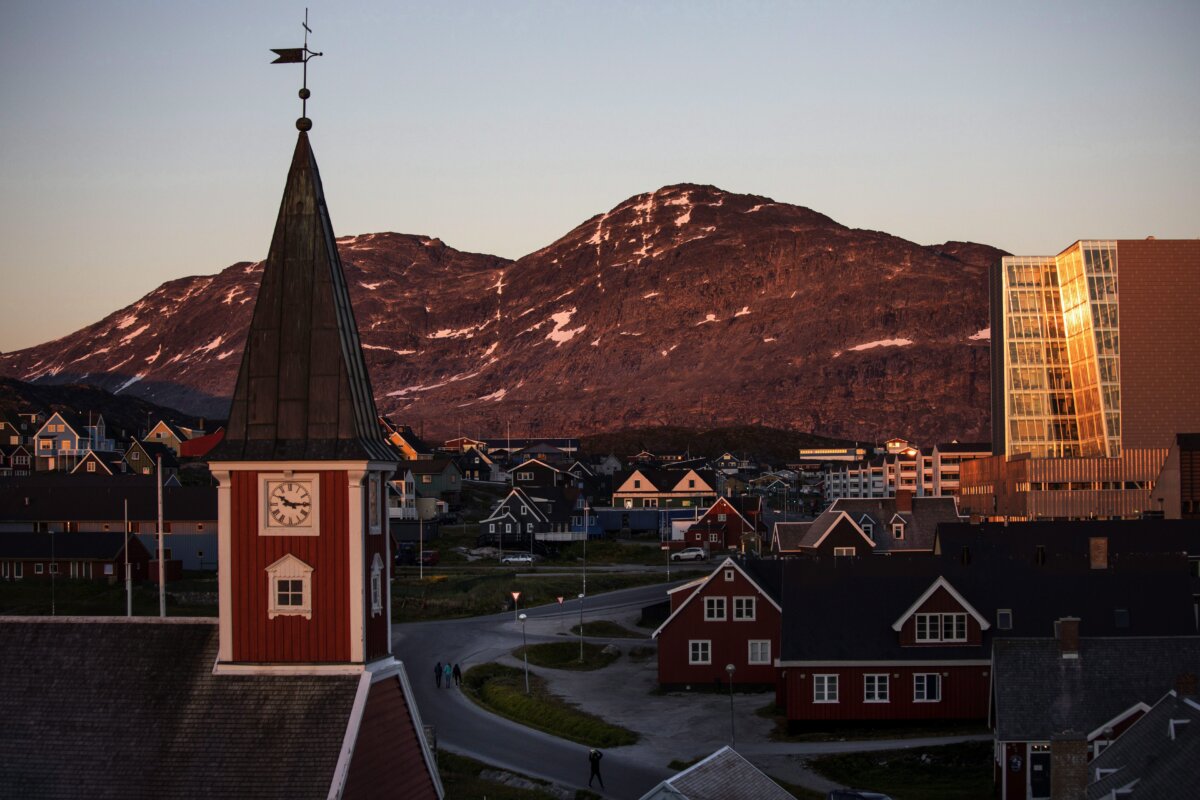

Canada and Greenland have signed a non-binding cooperation pact on critical minerals that Ottawa says will boost “North-North” cooperation and build economic health and energy security.
The March 2 declaration of intent comes after Ottawa established a consulate in Nuuk, Greenland, early last month. The agreement specifies that Canada and Greenland will collaborate on developing and trading mineral and energy resources, and building a “low-carbon” electricity grid. It also says the two will jointly research how Arctic landscape changes and permafrost could impact infrastructure and supply chains in the future.
The non-binding agreement says Ottawa and Nuuk will share fieldwork and data, hold conferences, and host exchanges of experts, but each side is responsible for funding its share of the process.
Also on March 2, Canada announced the second phase of the rollout of its Critical Minerals Production Alliance. Ottawa says the latest round of 30 partnerships and investments—including a mining project in Greenland—could help “unlock $12.1 billion in critical minerals projects.”
Greenland is rich in critical minerals, including those necessary for certain types of military technology and many industrial purposes. The Malmbjerg Project by Greenland Resources, which could receive up to $7 million from the Canadian government, is expected to produce molybdenum, which has uses in defence and aerospace.
The Critical Minerals Production Alliance was launched during last summer’s G7 meeting in Kananaskis, Alta., with the stated purpose of developing secure and resilient critical mineral supply chains among allies.
The alliance also says it aims to counter market manipulation and monopolization. Although it didn’t name any nation, China produces and refines the vast majority of the world’s rare earth elements and controls a significant share of the world’s critical mineral production and refining.
Natural Resources Minister Tim Hodgson said the alliance will help improve supply chains and boost defence industries.
“This second round of partnerships and strategic investments under the Critical Minerals Production Alliance shows how we are moving from ambition to action,” Hodgson said March 2. He added that allies are putting “real capital behind the secure, sustainable supply chains that our economies and our defence industries depend on.”
The Canada–Greenland agreement comes amid heightened geopolitical attention focused on Greenland, a territory of Denmark, with U.S. President Donald Trump having said Washington must acquire Greenland to protect against incursion from Russia and China, at one point threatening sanctions on allies protesting the move.
Washington has since dropped the threat of sanctions and said it is working with Denmark and Greenland to gain the access it needs in the region for security purposes.
 Friends Read Free
Copy
Facebook
Tweet
Friends Read Free
Copy
Facebook
Tweet