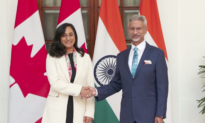

As part of the process of rebuilding ties between Ottawa and New Delhi, Foreign Affairs Minister Anita Anand said the two capitals have agreed to return to previous levels of diplomatic staffing.
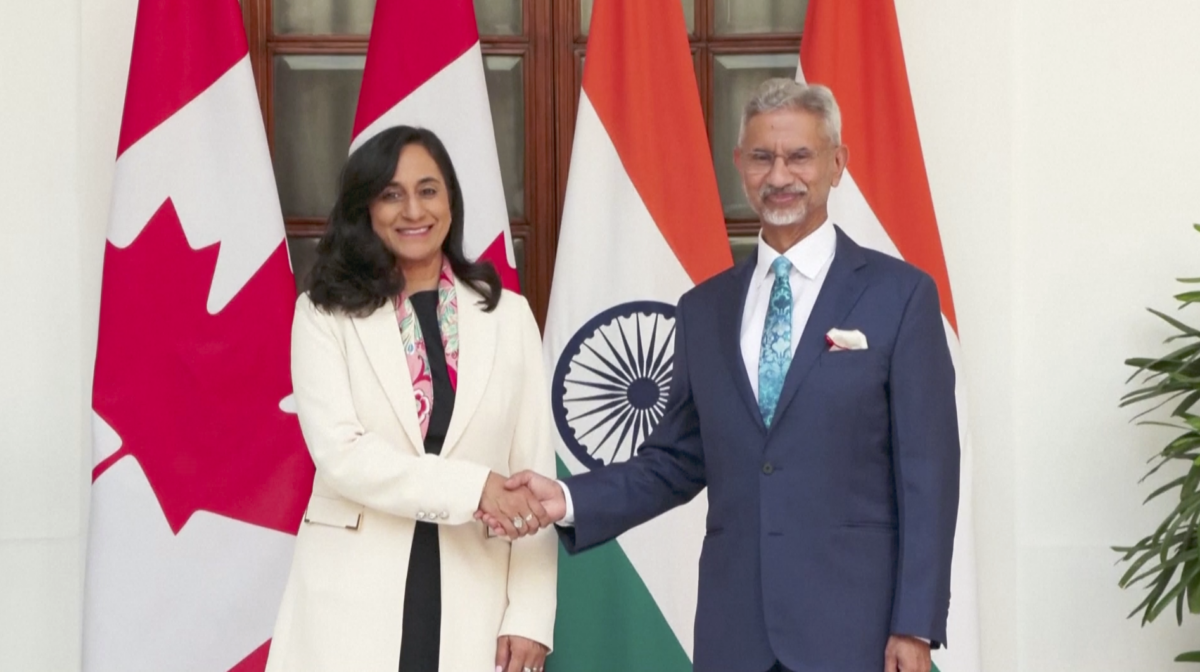
Anand made the comment while speaking to reporters from Mumbai on Oct. 14, a day after meeting in New Delhi with Indian Prime Minister Narendra Modi and her Indian counterpart Subrahmanyam Jaishankar.
India had lifted the immunity of Canadian diplomats in October 2023, resulting in Ottawa pulling 41 members of its diplomatic corps and their 42 dependents.
The move by New Delhi followed then-Prime Minister Justin Trudeau accusing Indian government agents of being involved in the assassination of pro-Khalistan activist Hardeep Singh Nijjar in B.C. India has denied any involvement.
A year later in October 2024, Ottawa expelled six Indian diplomats including its high commissioner, saying they were “persons of interest” in the Nijjar case. India responded with tit-for-tat expulsions.
Prime Minister Mark Carney hosted Modi at the G7 summit in Alberta in June, and a reset of relations has been underway since. Ottawa and New Delhi announced the reappointment of high commissioners in August, and Anand’s visit to India was the first by a minister in two years.
Anand and Jaishankar agreed to a roadmap during the visit, which lays out areas to rebuild ties and increase cooperation.
Anand said part of the step-by-step approach involves returning diplomatic staffing to previous levels at the Canadian High Commission and at consulates in the country.
“I can assure you that we are building back to a complement of Canadian diplomats across the country,” said Anand. “In terms of my conversations on this matter with Minister Jaishankar, we both agreed that we would staff up as we had been before, in order to service our respective populations.”
As the two countries are taking a cautious approach to mending relations, Anand remarked that free trade discussions are currently not on the table. Ottawa had paused advanced free trade talks shortly before Trudeau had accused India in September 2023.
Anand said there will be “increased interaction” between Canada and India in order to “jointly achieve the objective of greater trade resilience between the two countries.” The two countries have noted a shifting economic and geopolitical landscape as a driver to strengthen ties.
Anand said more in-depths discussions on trade would come once progress is made around diplomatic staffing and the ongoing security and law enforcement dialogue.
Speaking from the business hub of Mumbai, Anand said there is already a “significant level” of economic interaction between Canada and India. “A free trade negotiation and process would augment already strong economic ties with a framework,” she said.
The joint statement issued by Anand says Ottawa and New Delhi will promptly begin ministerial-level discussions on trade, and notes the countries’ interest in cooperating in traditional and renewable energy.
“In many conversations that I have had, there has been an interest in Canadian energy, in LNG, in solar, in nuclear, and the list goes on,” said Anand, who will be heading to Singapore and China next.
India, the world’s fourth-largest gas importer, announced in September it would increase its LNG import capacity by 27 percent by year 2030 by building two new plants. Meanwhile Canada’s first LNG export terminal sent out its first shipments this summer and additional LNG projects are in the works.
New Delhi has fallen under steep U.S. tariffs in recent months, after being accused by President Donald Trump of fuelling Russia’s war machine by purchasing its oil and gas. The two sides are expected to hold trade talks on the issue shortly, with India signalling interest in purchasing energy from the United States. Most of Canada’s gas production is sent to the United States, which resells it abroad at a higher price.
 Friends Read Free
Copy
Facebook
Tweet
Friends Read Free
Copy
Facebook
Tweet