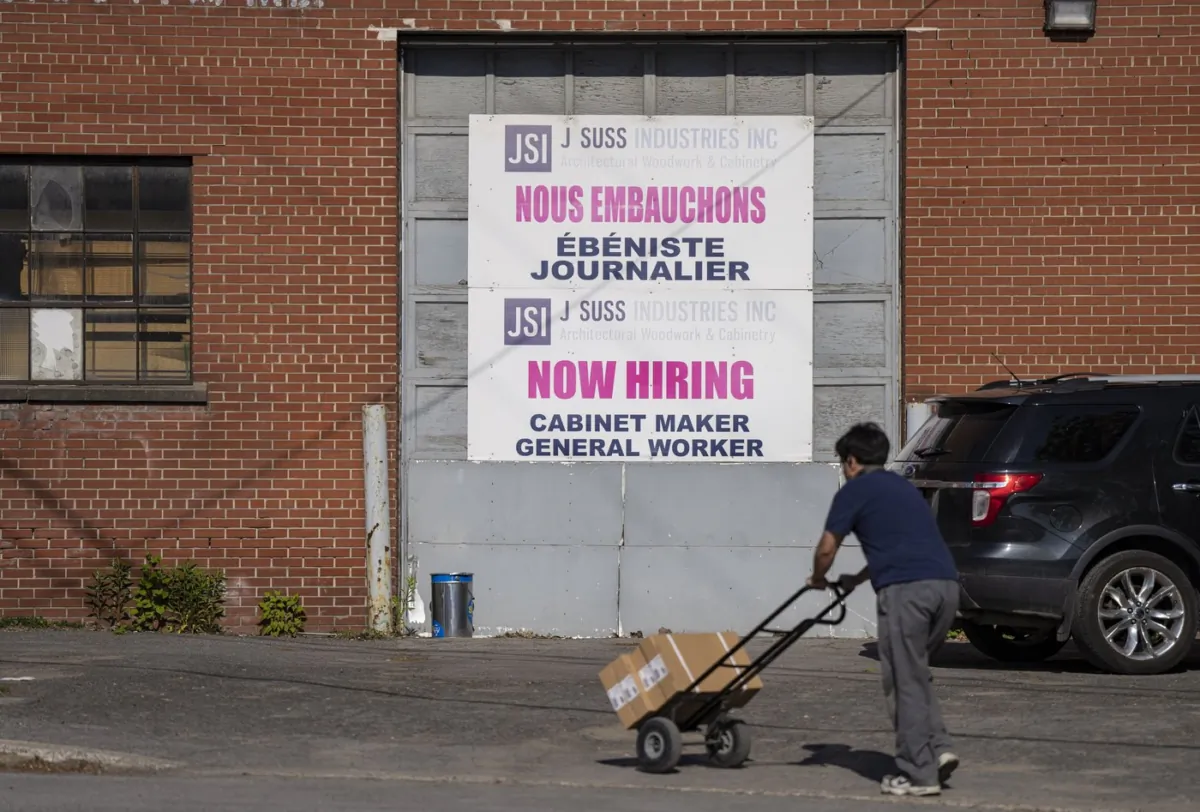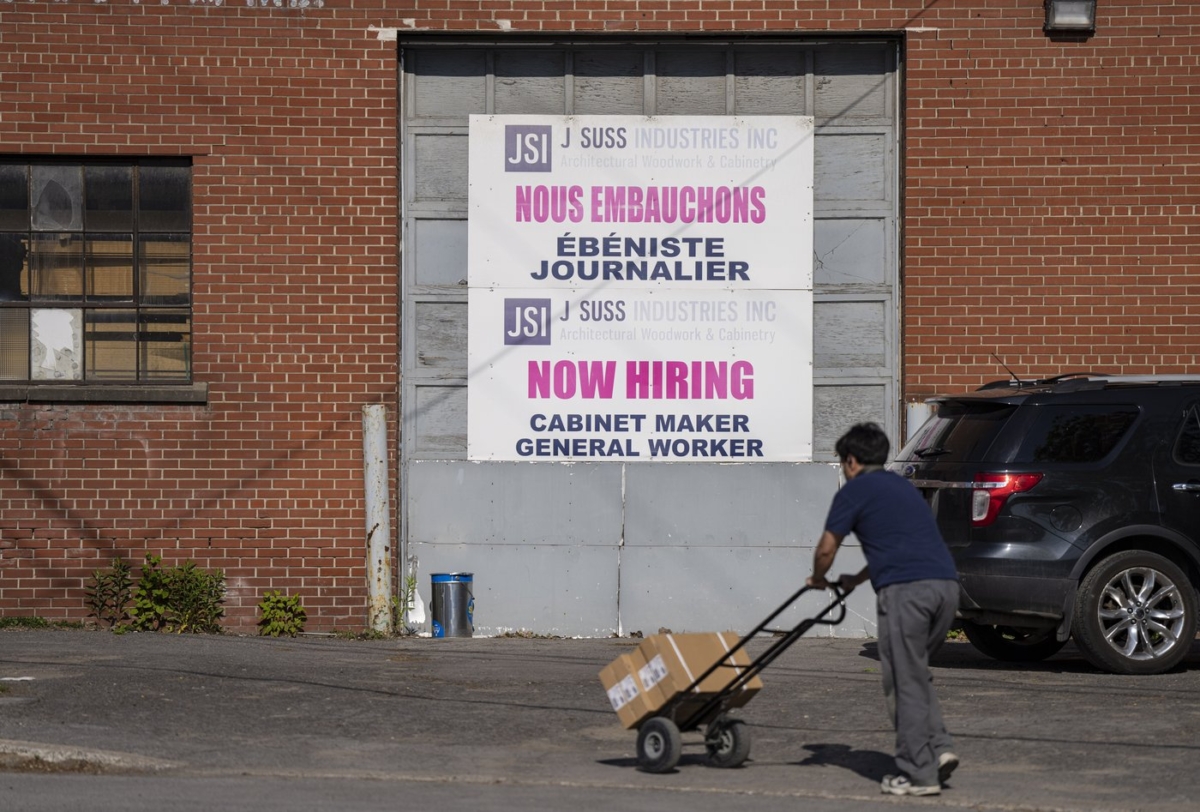

Canada’s job market saw a decline of nearly 41,000 positions in July that primarily affected full-time employment, particularly among youth and within the private sector.
The country’s employment rate declined 0.2 percentage points in July to 60.7 percent, while its unemployment rate remained steady at 6.9 percent, according to Statistics Canada’s latest Labour Force Survey released Aug. 8.
Most of the decline was in the private sector, with 39,000 fewer jobs in July. A total of 5,800 self-employed jobs were also lost. The public sector was the only sector to experience growth in July, with an increase of 4,000 jobs.
Youth were particularly impacted, with 34,000 Canadians between the ages of 15 and 24 losing their jobs in July. The employment rate decreased by 0.7 percentage points to 53.6 percent, marking the lowest rate since November 1998, excluding the COVID-19 pandemic era of 2020 and 2021.
Net employment has only grown by 0.1 percent since January, while Canada’s employment rate has declined by 0.4 percentage points.
Unemployed Canadians are still encountering challenges in securing employment. Nearly 24 percent of the 1.6 million unemployed individuals in July—approximately 400,000—have been searching for work for 27 weeks or longer, which categorizes them as experiencing long-term unemployment. This marks the highest rate of long-term unemployment since February of 1998, excluding the pandemic years, Statistics Canada said.
Unemployed Canadians were more likely to stay jobless from one month to the next compared to last year. Of those unemployed in June, 64.2 percent continued to be without work in July, up from 56.8 percent for the same months in 2024.
Prime Minister Mark Carney said at an unrelated Aug. 8 press conference that although Canada experienced a decline in jobs, wage growth has accelerated for the second month in a row, “outpacing” the growth in consumer price index.
The prime minister called this “progress on cost of living” when also factoring the effect of cutting the consumer carbon tax, however, he said “there’s much more that needs to be done” in improving the cost of living for Canadians.
Industries, Provinces
Jobs in several industries took a hit in July, with the largest decline of 29,000 jobs (3.3 percent) in the information, culture, and recreation sector. The construction industry lost 22,000 jobs in July, marking a 1.3 percent decline, after five months of little change.
Business, building, and other support services lost 19,000 jobs, marking a 2.8 percent decline and the industry’s third decline in the past four months. Employment fell in health care and social assistance by 0.6 percent, with 17,000 jobs lost, while the industry had gained 54,000 jobs last July.
On the other hand, employment increased in transportation and warehousing by 2.4 percent, with 26,000 additional jobs in July, representing the industry’s first increase since January.
Carney told reporters on Aug. 8 that there were fewer job losses in the manufacturing sectors, where pressures are expected.
“There are pressures, which is why we’re taking action in steel and lumber, and we will in autos and other areas,” the prime minister said.
Alberta had the greatest decline in employment, with a 0.6 percent dip and 17,000 fewer jobs after gaining 30,000 the month before. The province’s unemployment rate increased one percentage point to 7.8 percent in July.
British Columbia lost 16,000 jobs, representing a 0.5 percent decline, after gaining 13,000 jobs in May and experiencing little change in June. The unemployment rate increased 0.3 percentage points to 5.9 percent in July in the province.
The only province to experience an increase in employment last month was Saskatchewan, with a 0.6 percent increase and 3,500 additional jobs. Saskatchewan has the lowest unemployment rate of any province at 5 percent.
Youth Unemployment
Youth unemployment reached 14.6 percent in July, which is the highest rate since September 2010, aside from during the pandemic. The rate has steadily risen over the past two years and has increased by 4.3 percentage points compared to July 2023. Specifically among young men, unemployment has increased by 5.7 percentage points to 16.2 percent, and has increased by 2.6 percentage points to 12.8 percent among young women.
Tory MP Garnett Genuis, who serves as his party’s shadow employment minister, reacted to the job data in an Aug. 8 statement, saying the youth are getting “crushed” by Canada’s sluggish economy.
“Young Canadians are being crushed by Carney’s failure to get our economy moving again,” Genius said. “This was confirmed by July’s Labour Force Survey, which found that the youth employment rate has sunk to its lowest level in over 25 years.”
The summer job market is proving to be difficult for students intending to return to school full-time in the fall. The unemployment rate for this group reached 17.5 percent in July—the highest in the month of July since 2009, excluding 2020.
 Friends Read Free
Copy
Facebook
Tweet
Friends Read Free
Copy
Facebook
Tweet