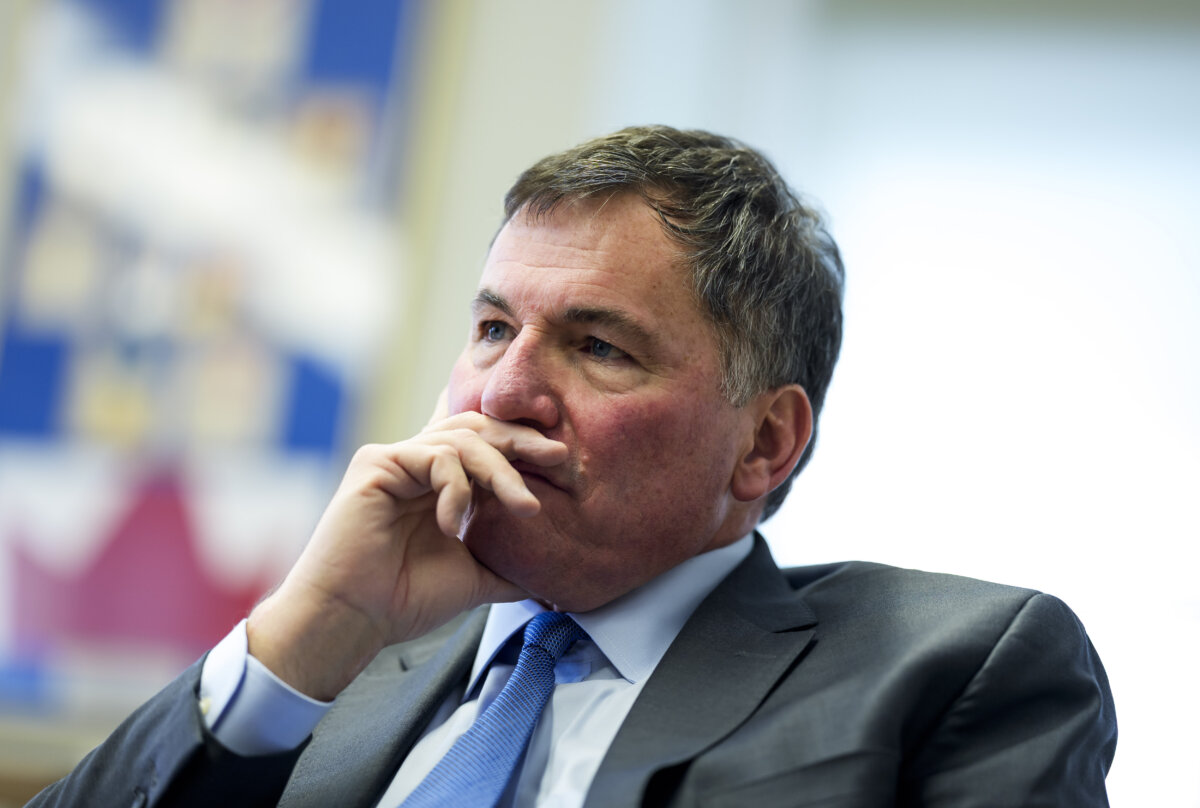

Canada-U.S. Trade Minister Dominic LeBlanc says he is optimistic about the prospect of United States-Mexico-Canada Agreement (USMCA) discussions leading to a renewed trilateral deal.
“There are the private, government-to-government-to-government conversations, which are not discouraging. They are proceeding,” LeBlanc said during a fireside chat at Canadian Club Toronto, adding that he is “not pessimistic” about the USMCA being renewed.
LeBlanc said the current discussions between the three countries are “not a re-negotiation” like they were for the North American Free Trade Agreement, which was replaced by the USMCA in 2016. And that means Canadian business leaders “don’t need to camp out in a hotel lobby waiting for an update in Washington,” he said.
“We’re not going chapter by chapter … and everybody goes down and waits around in hotel lobbies for updates,” he said. “If there’s no consensus in the review, the agreement continues on, and then there’s an annual review that starts.”
The United States, Canada, and Mexico could agree to renew the USMCA at the upcoming talks in July, which would lead to the agreement remaining in force until 2032. However, if the renewal is denied or delayed, the agreement could enter into a period of annual reviews.
Additionally, if one or more countries withdraw from the trilateral agreement altogether, the three countries could then make bilateral agreements.
A recent U.S. Supreme Court ruling could also have an impact. LeBlanc said he was “not pessimistic” about the prospects of free trade because of the Feb. 20 ruling, in which the court struck down U.S. President Donald Trump’s International Emergency Economic Powers Act (IEEPA) tariffs. When the United States announced new tariffs to replace them, it included a commitment to continue exempting USMCA partners as long as rules of origin are met.
“They’re doing that because it’s in the American economic interest to do that,” LeBlanc said. “It’s in the economic interest of all three countries to commit ourselves to a reliable, stable, free trade arrangement.”
LeBlanc also said that while the Supreme Court ruling on U.S. tariffs was mildly helpful for Canada, the Section 232 tariffs imposed on national security grounds are the ones “causing considerable pressure” on the economy.
Trump has implemented several rounds of tariffs on Canada under Section 232, including 50 percent tariffs on steel, aluminum, and copper; 25 percent tariffs on vehicles and auto parts; 25 percent tariffs on upholstered furniture, kitchen cabinets, and vanities; and 10 percent tariffs on oil and potash. Oil and potash tariffs were struck down by the Supreme Court ruling, and the 25 percent tariffs on Canadian exports not covered under the USMCA, which were increased to 35 percent in August 2025, are no longer in effect because of the ruling.
“[The ruling] didn’t have a massive bite in terms of tariffs applied to the Canadian economy,” the minister said, adding that 86 percent of exports to the United States are now exempt from tariffs.
LeBlanc also said he will be travelling to Washington, D.C., in early March to meet with his counterpart U.S. Trade Representative Jamieson Greer for “friendly” conversations on trade.
“I think we’re getting to a position where the United States will get specific with Canada and Mexico about specific things that they may want to see adjusted, and we’re ready for those conversations,” he said.
Greer told CBC News on Feb. 24 that Canada would be unlikely to avoid tariffs as part of the USMCA as the United States attempts to rebuild its industrial base. Greer said Canada could “come in and participate in this type of re-shoring we’re trying to do.”
When asked to clarify, Greer responded, “If Canada wants to agree that we can have some level of higher tariff on them while they open up their markets to us, in things like dairy and other things, that’s a helpful conversation.”
Various U.S. administrations have said Canada’s supply management system for dairy and poultry products, which includes tariffs of up to 300 percent after quotas are reached, are a trade irritant. Ottawa has pledged to defend supply management in Canada.
This will be discussed in the upcoming USMCA review in July. In preparation for talks, Prime Minister Mark Carney recently appointed former Privy Council Clerk Janice Charette to lead negotiations.
Noé Chartier contributed to this report.
 Friends Read Free
Copy
Facebook
Tweet
Friends Read Free
Copy
Facebook
Tweet