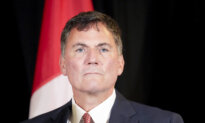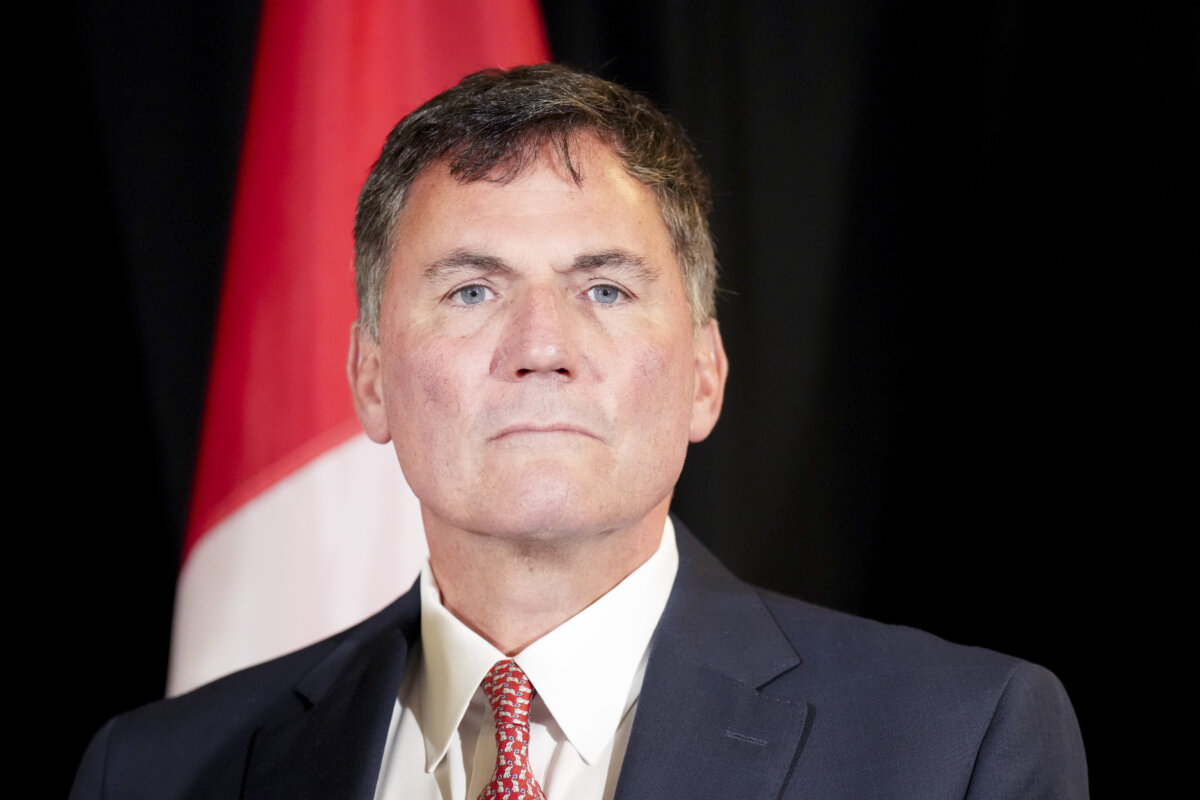

Canada’s Trade Minister Dominic LeBlanc has refuted claims made by U.S. President Donald Trump this week that Canada will approach the White House with an apology to secure a trade deal in the coming weeks.
“I’m not thinking the government of Canada is going to apologize for standing up for Canadian workers, Canadian businesses, defending our economy,” LeBlanc said while answering questions from reporters at an unrelated Sept. 29 announcement in New Brunswick.
“The American government decided to apply a series of tariffs that violated the trade agreement that this particular administration signed six years ago,” he added. “We’re going to do what’s necessary to support the Canadian economy, Canadian workers.”
Prime Minister Mark Carney laughed when a reporter asked him at a separate press conference that day to respond to Trump’s expectation of an apology.
He initially declined to comment, but then said that “Canada stands ready to negotiate in good faith” and wanted a “mutually advantageous trade arrangement that respects both our countries’ sovereignty.”
U.S. import bans on certain Canadian products took effect on Sept. 29, blocking the import of many Canadian alcoholic beverages, certain dairy products and byproducts, and some motorcycles.
The new trade restrictions signal the latest chapter in the ongoing trade conflict.
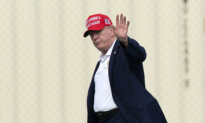
Trump told reporters earlier this week he expects Canada will want to make amends at the negotiating table in the near future.
“I think what’s going to happen is over the next three or four weeks, they’re going to come to us and they’re gonna say, ‘We’re gonna get rid of all the tariffs,’” Trump said while addressing the media in the Oval Office on Sept. 28. “We’re going to win everything.”
He said Canadian officials “call us all the time” looking for a deal, adding that Ottawa has “treated the United States very unfairly” for years.
Peter Navarro, senior counselor to the president for trade and manufacturing, called Canadian officials the “most difficult and arrogant” to work with when it came to trade talks. “The Canadian people are wonderful, but they cheat us on just about everything they can,” he said.
LeBlanc said Ottawa continues to have “conversations with our American counterparts” but is not negotiating “detailed texts as we were five to six weeks ago.”
“If the prime minister concludes at some point that there’s a deal possible that protects the sovereignty of our country that would be in the economic interests of the country, then we would obviously be in a position to have that conversation,” he said.
Import Ban
Fresh U.S. import restrictions took effect at 12:01 a.m. Eastern Time on Sept. 29, blocking the import of certain Canadian alcoholic beverages, including beer, wine and distilled spirits such as whiskey, vodka and gin. The restrictions also cover certain whey products, molasses, non-alcoholic beer and select motorcycle models.
American Action Forum director of trade policy Jacob Jensen said in a release the ban will cover US$967 million worth of Canadian imports, based on 2025 numbers. The American Action Forum is a Washington D.C.-based think tank.
Eighty-seven percent—or US$841.29 million—of that amount is Canadian liquor, beer, and wine, Jensen estimated. The U.S. government targeted these products after several Canadian provinces pulled American alcohol from store shelves in response to previous U.S. tariffs.
The federal Conservatives accused the government this week of not doing enough to support Canada’s alcohol industry, and called on Ottawa to freeze the federal alcohol excise tax and pause the escalator tax.
Banned dairy products and motorcycles make up the remaining 13 percent of the US$967 million worth of banned Canadian imports, coming in at a value of roughly US$125.71 million.
Bombardier Recreational Products (BRP) Inc., headquartered in Quebec, has said its three-wheel Can-Am Spyder and Canyon motorcycles “will be excluded from importation” into the United States. However, BRP said the impact won’t be felt until 2027 because the company has already finished the vast majority of its production and distribution for the current season.
The trade restrictions emerged following the intensification of the conflict in August, when Carney suspended negotiations and recalled LeBlanc and his negotiating team from Washington.
Both countries accused each other of making last-minute changes to the proposed deal. U.S. tariffs of 50 percent on roughly $28 billion of Canadian goods took effect on Aug. 22, and Canada responded on Sept. 8 with retaliatory tariffs covering about $27.6 billion worth of U.S. imports.
Trump also issued a memorandum in the aftermath of the negotiations, directing certain federal agencies to identify Canadian-origin products that could be removed or made unavailable for purchase through the U.S. federal procurement system.
The latest orders from Washington are on top of the 10 percent tariffs imposed by the Trump administration on Canadian goods that do not qualify for preferential treatment under the Canada-United States-Mexico Agreement (CUSMA), as well as separate sectoral tariffs on Canadian industries including steel, aluminum, automobiles and cabinetry.
The Canadian Press contributed to this report.
 Friends Read Free
Copy
Facebook
Tweet
Friends Read Free
Copy
Facebook
Tweet