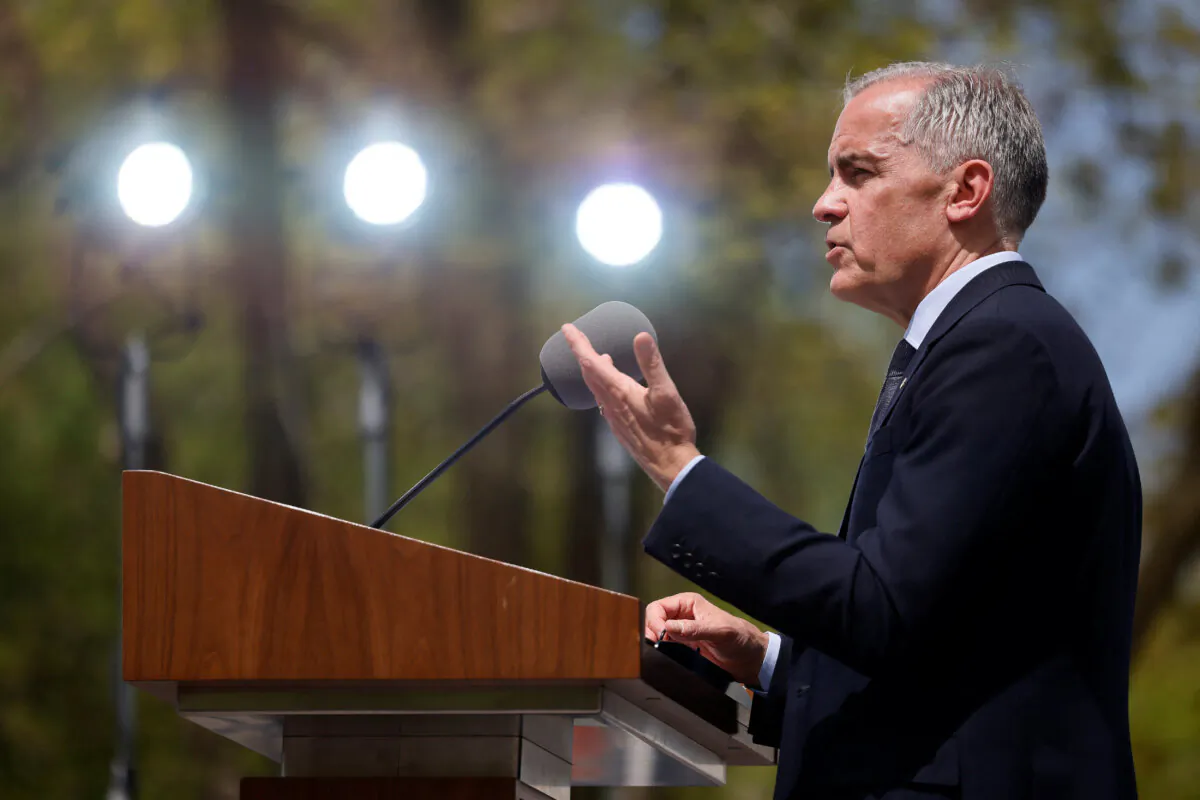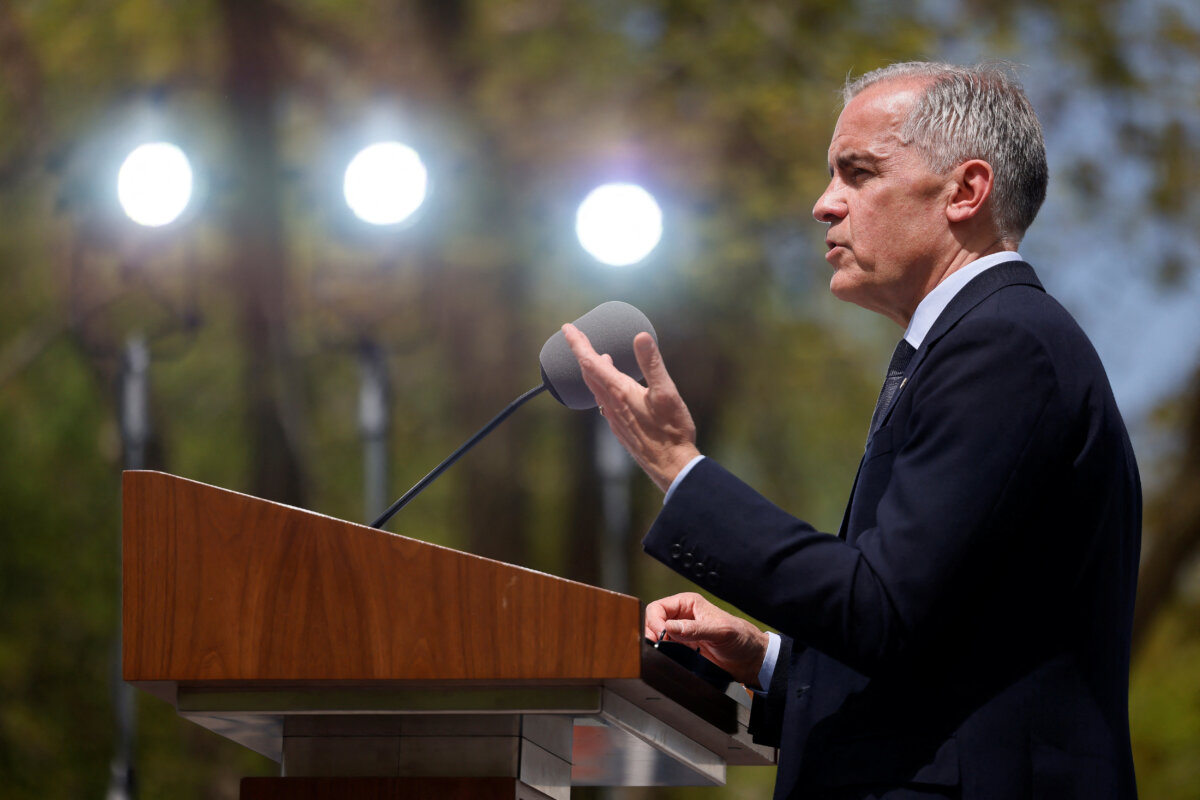

Prime Minister Mark Carney has announced Canada will massively increase military spending to meet NATO’s defence spending target of 2 percent of GDP by the end of the current fiscal year in March 2026.
“As the world grows more dangerous, Canada will ensure our country is protected from coast to coast to coast, while creating higher-paying jobs across the land,” Carney said at a press conference in Toronto on June 9.
Carney said while the United States had long been Canada’s closest ally and trading partner, the country has recently begun to “monetize its hegemony” through tariffs. He also said “rising powers” are now competing with the United States, while foreign governments and non-state actors threaten Canada’s sovereignty.
“Middle powers must compete for interests and attention, knowing that if they’re not at the table, they’re on the menu. Indeed, the threats that Canada faces are multiplied,” Carney said.
Carney highlighted that only one of Canada’s four submarines and less than half its maritime fleet and land vehicles are operational, which he said made the country “too reliant on the United States.” The prime minister said Canada should no longer “send three quarters of our defence capital spending to America,” and that it should make more investments in new aircraft, ships, armoured vehicles, artillery, and drones.
The Department of National Defence (DND) will begin designing a new defence policy that “reflects both today’s and tomorrow’s threats,” according to Carney. The country’s latest defence policy was released in April 2024.
Carney said the government is currently creating a new defence procurement agency, which will be overseen by Secretary of State for Defence Procurement Stephen Fuhr. The prime minister said this would “centralize decision making and move at pace to get our armed forces the equipment they need when they need it.”
The prime minister said while national defence already accounts for over 275,000 jobs across Canada, an increase in military spending would create tens of thousands more jobs, while supporting other industries related to steel and aluminum, transportation, and weapons and ammunition manufacturing.
Similar to other countries, Carney also said the Canadian Coast Guard would be brought under the umbrella of DND to “better secure our sovereignty and expand maritime surveillance,” instead of it being under the Fisheries Department. By adding the Canadian Coast Guard’s annual $2.4 billion budget to the military’s $34.6 billion budget, Canada’s military spending would increase by 7 percent.
Canada would also meet its NATO defence spending target by increasing salaries for military members, which the Liberals had promised during the federal election campaign.
Carney also said the Canadian Armed Forces will establish the Bureau of Research Engineering and Advanced Leadership in Innovation and Science, which will focus on AI, quantum computing, and “other frontier technologies essential to safeguarding our sovereignty.”
Carney reiterated that Canada is looking to become a participant in ReArm Europe, which is the European Union’s strategy to boost its collective defence capabilities through increased funding and collaboration. Carney said this would allow Canada to diversify its military suppliers with European countries.
Carney also said Canada will support “tangible commitments” from NATO allies to deter aggression and protect against all adversaries. “Our fundamental goal in all of this is to protect Canadians, not to satisfy NATO accountants,” he said.
During a press conference held later in the day, Carney was asked how the government would pay for increased military spending, and said they had “just begun the process to look for savings in government.” The prime minister said the government would not be raising taxes to pay for the military spending.
Carney also said Canada would not reach the 2 percent target through “creative accounting,” and that his government’s increased emphasis on the military was a reflection of “good work” being done by the armed forces, as well as “the nature of our alliances changing.”
NATO Spending
According to 2024 NATO estimates, a total of nine out of 31 countries in the defence alliance are not meeting the current target of 2 percent of GDP on defence. These include Canada, Croatia, Portugal, Italy, Belgium, Slovenia, Spain, Luxembourg, and Montenegro.
Canada has long been criticized for its lack of military spending, as all countries in NATO are expected to meet the defence target. NATO’s then-Secretary-General Jens Stoltenberg in June 2024 reiterated calls for Canada to meet the 2 percent target amid the most “dangerous security environment for generations.” U.S. President Donald Trump has also been highly critical of countries that fail to meet the goal.
A report from the Parliamentary Budget Office last fall said Canada would need to double its military spending to $81.9 billion to meet the NATO target by the 2032-33 fiscal year.
The report said the government’s defence policy update in April, which said military spending would reach 1.76 percent of GDP by 2030, was based on an “erroneous GDP forecast.” When adjusted for the correct GDP growth rates,” military spending would only reach 1.58 percent by then, according to the report.
During the election campaign, Carney previously promised that Canada would “exceed our NATO defence spending target before 2030.”
Carney announced the increase in military spending ahead of the G7 summit in Kananaskis, Alta., from June 15 to 17, as well as the NATO summit in the Netherlands on June 24 and 25.
Defence Minister David McGuinty recently wrapped up a meeting in Belgium with NATO defence ministers on June 6, where he announced Canada would provide an additional $35 million in assistance to Ukraine in its war with Russia. A release following the meeting said McGuinty had reinforced Canada’s commitment to “accelerating defence spending and working with NATO Allies and international partners to meet shared security commitments.”
Following that meeting, a NATO press release said the defence ministers agreed to a proposal calling for allies to spend 5 percent of GDP on defence, including 3.5 percent on “core defence spending” and 1.5 percent on “defence and security-related investment.”
Carney told reporters that Canada recognized it will “need to spend more” on defence, and it will have those discussions with NATO allies. Carney also said Canada is close to meeting the 1.5 percent target for defence and security-related investment, and that he feels “very confident that we are in the zone of already beating that requirement.”
 Friends Read Free
Copy
Facebook
Tweet
Friends Read Free
Copy
Facebook
Tweet