
Canada recently sent a warship through the Taiwan Strait, ignoring a warning from China that doing so could damage ties.
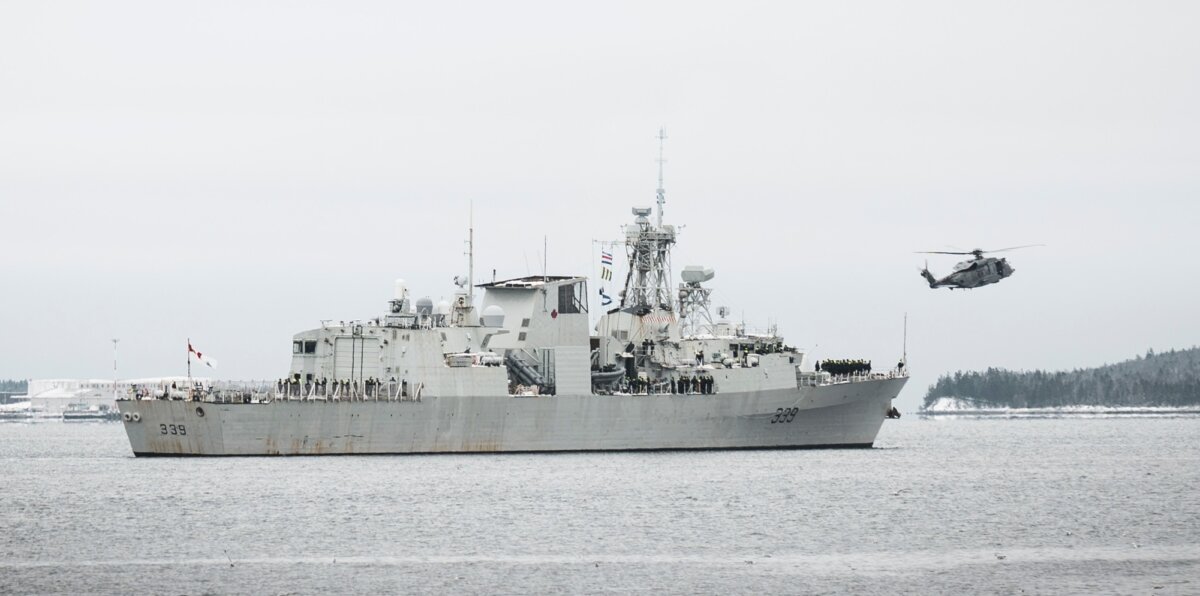
Royal Canadian Navy ship HMCS Charlottetown made the voyage last week, the Globe and Mail first reported on May 28.
Department of National Defence spokesperson Daniel Blouin confirmed the transit to The Epoch Times, saying the trip was “routine.”
“On May 22, 2026, HMCS Charlottetown conducted a routine transit through the Taiwan Strait, which was completed on May 23, 2026,” Blouin said in an email.
The transit in waters contested by China was the first by the Canadian Navy since September 2025. At that time, frigate HMCS Ville de Québec made the trip alongside Australian destroyer HMAS Brisbane. The Canadian military had said transiting the Taiwan Strait “supports a free, open Indo-Pacific.”
Taiwan had welcomed the move at the time, while China called it a “provocation.”
Taiwan’s office in Canada called the recent transit by HMCS Charlottetown “meaningful” in a May 28 X post. China’s foreign affairs ministry had no immediate public response.
The transit by a Canadian warship came a few days before Chinese Foreign Affairs Minister Wang Yi was set to arrive in Canada. Wang is in Canada from May 28 to May 30 as Ottawa seeks to deepen ties with Beijing.
The Chinese regime considers Taiwan a breakaway province and seeks to put the island nation under its control. Beijing views the Taiwan Strait as an internal waterway as opposed to international waters. Taiwan was never ruled by the Chinese Communist Party and became a refuge for the Nationalist Party after it lost the civil war in 1949.
Chinese Ambassador Wang Di said in an interview with The Globe and Mail in April that Canada should not be sending warships through the Taiwan Strait or parliamentarians to Taiwan, as it could damage bilateral relations. He said sending ships through the straight could be considered “harassment and even provocation” and “in violation of the One China principle” and of “China’s territorial integrity.”
Ottawa adheres to the “One China” principle by not officially recognizing Taiwan, but it still maintains economic ties with the island and parliamentarians regularly travel to Taipei to meet with Taiwanese officials.
Canada previously recognized Taipei as the proper seat of the government of China but changed its recognition to Beijing in 1970 under Prime Minister Pierre Trudeau, becoming one of the first Western countries to do.
Conservative MP Michael Chong visited Taiwan last week in defiance of Wang Di’s warning not to do so, and met Taiwanese President Lai Ching-te. Chong is sanctioned by China and technically cannot enter that country.
“We deeply value the House of Commons’ support for Taiwan’s international participation & look forward to even closer Taiwan-Canada ties,” Lai said in a May 20 post on X.
Chong said ahead of his trip that his visit served two purposes: to “show solidarity with a democracy at the front lines of intimidation” by the CCP, and to assert Canadian sovereignty.
“We do not take direction from a foreign government about where Canadian MPs can travel internationally, and where Royal Canadian Navy warships can transit in international waters,” he said in a statement.
Other Tory MPs visited Taiwan in January alongside Liberal MPs Helena Jaczek and Marie-France Lalonde. Jaczek and Lalonde were recalled to Ottawa mid-trip ahead of Carney’s visit to China the same month.
Carney is seeking closer ties with China as part of his strategy to diversify trade, amid tariffs imposed by the United States. After his Beijing trip Carney touted a “new strategic partnership” with China.
Ottawa and Taipei reached a trade cooperation agreement over a year ago but it has yet to come into force. Harry Tseng, Taiwan’s representative in Canada, previously suggested the delay is because the Carney government is prioritizing ties with Beijing.
Carney said in February that Canada is not “afraid” of having ties with Taiwan while adding his government is “focusing on strengthening our trade relations with China.”
Olivia Gomm contributed to this report.
 Friends Read Free
Copy
Facebook
Tweet
Friends Read Free
Copy
Facebook
Tweet