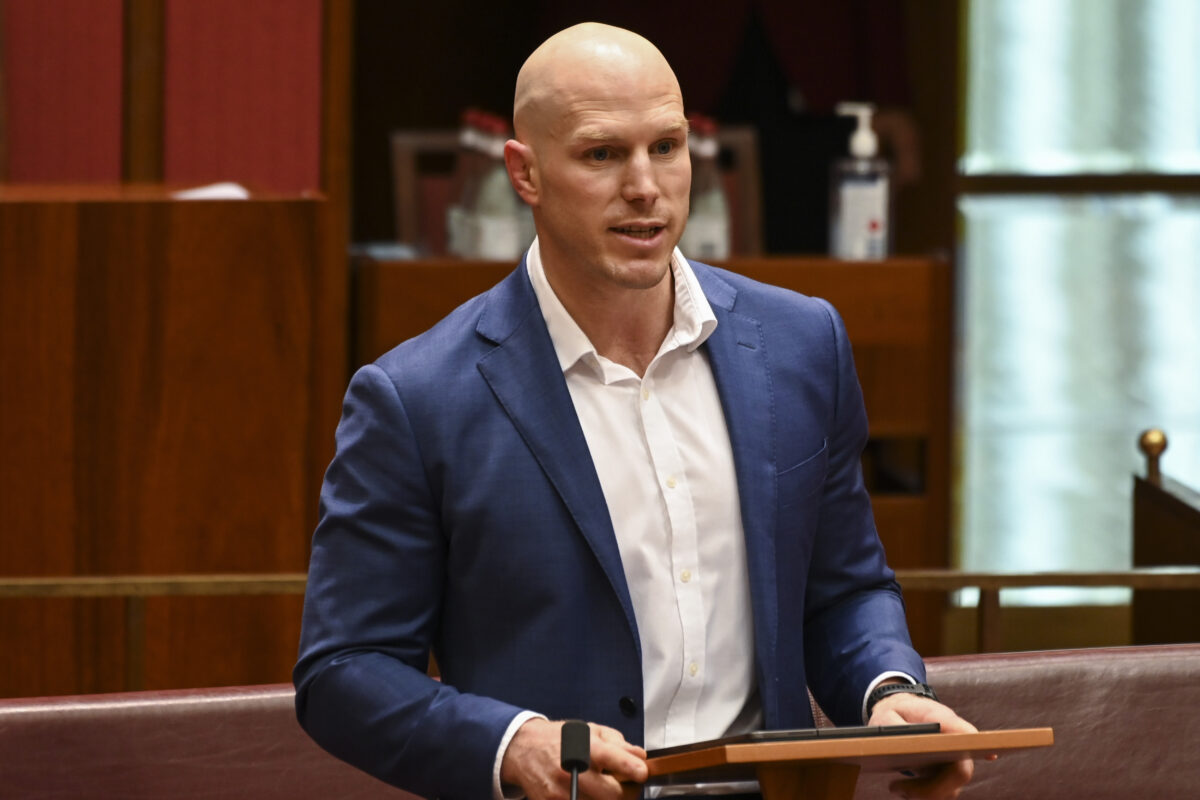

Canberra continues to lag well behind the rest of the country on bulk billing, with ACT Senator David Pocock warning that rising gap fees are hitting local patients harder than elsewhere as the territory’s bulk-billing rate remains just above 50 percent.
During Senate Community Affairs Legislation Committee estimates hearing on June 3, Pocock highlighted the gap between the ACT and the rest of the country, noting that New South Wales has a bulk-billing rate of 85.5 percent.
“For the rest of the country, the bulk billing rate is generally above 70 percent. Here in the ACT, we’re just over 50 percent,” he said.
Joe Rocher, Assistant Secretary for Medicare and Bulk Billing Clinics, told the hearing that 20 ACT clinics were participating in the bulk-billing practice incentive program as of May 27.
Department officials said they were working to improve access to bulk-billed services across the country.
“Particularly in the ACT, where we know that there is less choice,” officials said.
New Clinics Planned
Mark Ronnie, First Assistant Secretary of the Primary Care Division, confirmed new bulk-billing clinics would be opened as part of the government’s response.
“Three clinics will open this month,” Ronnie said.
He said Macquarie General Practice would establish a clinic in Gungahlin, Next Practice Deakin would open a service in South Tuggeranong, and Oka Health would establish a clinic in Molonglo by November 2026. Oka Health is currently operating an interim site in Woden.
The clinics are expected to employ around 30 full-time equivalent GPs, or roughly 10 per clinic.
Pocock questioned whether the new services would meaningfully shift the ACT’s low bulk-billing rate.
“And how do you expect the three clinics to affect our bulk billing rate? We are just clearly such an outlier nationally,” he asked.
Officials said the clinics were intended to recruit new general practitioners into the ACT, but could also include sessional doctors working part-time across services.
They said the providers involved had “substantial networks” in the GP sector and would be used to attract additional staff, including doctors not seeking full-time workloads.
However, they acknowledged recruitment could not be guaranteed, and said the rollout would need to be monitored.
“We will watch what happens here,” one official said. “We do have to watch how it rolls out.”
Access Remains a Concern
Finance Minister Katy Gallagher, who also represents the ACT in the Senate, said the government was effectively intervening in the market because bulk-billing rates had not responded to earlier measures.
“I think it’s the Central Coast and the Hunter region facing the same issues that we’re seeing here in the ACT. Where we’re seeing the bulk billing rate not respond, we are trying to intervene in the market,” she said.
While welcoming the investment, Pocock said many Canberrans still struggled to access bulk-billed appointments, even at clinics that advertise the service.
“One thing I’ve heard from a bunch of Canberrans is it’s basically impossible to get into these fully bulk-billing clinics because doctors have said we’re not taking on new patients,” he said.
Officials acknowledged they do not collect data on whether participating clinics have closed their books to new patients, but said the newly established clinics would be expected to take on additional patients.
 Friends Read Free
Copy
Facebook
Tweet
Friends Read Free
Copy
Facebook
Tweet