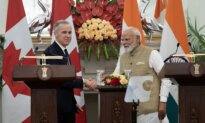

Canada has entered into a nine-year multi-billion dollar uranium supply agreement with India after Prime Minister Mark Carney met with his Indian counterpart Narendra Modi in New Delhi this week.
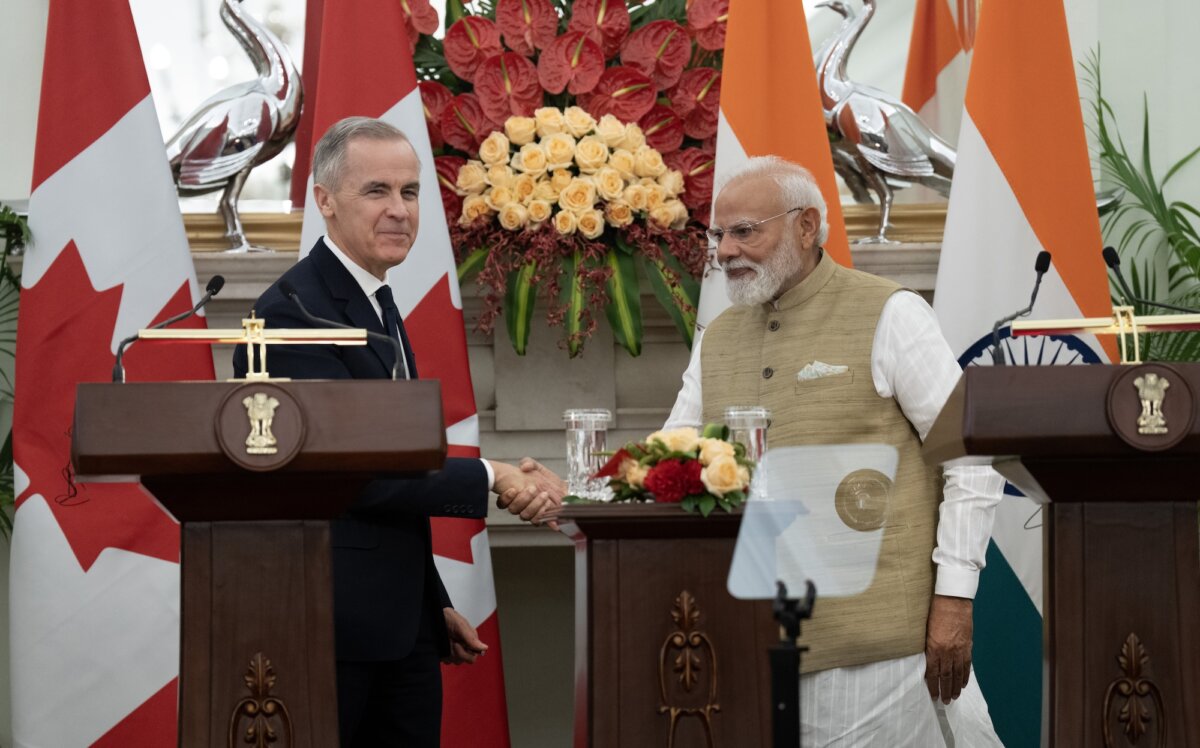
Carney held discussions with Modi on March 2 before the two leaders announced a series of agreements, including a $2.6 billion deal in which Canadian company Cameco would supply nearly 22 million pounds of uranium to India for use in the country’s fleet of nuclear reactors. Saskatoon-based Cameco, one of the largest global providers of the uranium fuel, said in a statement the deal will run from 2027 to 2035.
“This is not merely the renewal of a relationship,” Carney said in remarks after his meeting with Modi. “It is the expansion of a valued partnership with new ambition, focus, and foresight, a partnership between two confident countries charting our own course for the future.”
The two countries also agreed to expedite negotiations on a Comprehensive Economic Partnership Agreement (CEPA), with discussions set to wrap up by the end of 2026. Carney said the agreement aims to more than double bilateral trade to approximately $70 billion annually by 2030 and secure relief from high Indian tariffs on some Canadian exports.
Carney said earlier in his Asia trip that Canada and India were collaborating to finalize a comprehensive trade agreement by the year’s end. Carney has said this goal is part of his bid to diversify Canada’s trading relationships and reduce its dependence on the United States as its primary trading partner amid tariffs imposed by U.S. President Donald Trump.
As part of that initiative, the India visit also led to the signing of five memorandums of understanding with two dealing specifically with the areas of critical minerals, energy, and diversifying supply chains, a joint statement between the two leaders says.
The visit also led to 10 commercial agreements worth more than $5.5 billion, in addition to fostering exchanges between cultural institutions, and collaborating on artificial intelligence with Australia.
The majority of the agreements pertain to Canadian firms entering the Indian market and vice-versa; many of these deals were forged several months ago and had been previously announced.
One of the agreements valued in the hundreds of millions of dollars, will see B.C.-based coal producer Elk Valley Resources sell 1.2 million tonnes of metallurgical coal to India.
Foreign Affairs Minister Anita Anand also announced a new Canada-India strategy on talent and innovation earlier in the trip. It includes 13 new partnerships between Canadian and Indian universities.
The Carney-Modi meetings, which included a bilateral session with respective delegations followed by a 35-minute private one-on-one between the two leaders, ran late. During these discussions, the prime minister extended an invitation to Modi to visit Canada, which he accepted, Carney’s office said.
The extended meeting times resulted in the cancellation of the lunch meeting with additional staff as well as the cancellation of a press conference with Carney, the first time the prime minister was scheduled to respond to media questions since the trip started last week.
Relationship Reset
Carney arrived in India on Feb. 27, marking the first visit by a Canadian prime minister since diplomatic relations deteriorated more than two years ago when then-Prime Minister Justin Trudeau accused the Indian government of being responsible for the assassination of B.C. activist Hardeep Singh Nijjar. Nijjar, an advocate for an independent Sikh homeland and president of the Guru Nanak Sikh Gurdwara, was killed in Surrey, B.C., in June 2023.
India has denied any involvement in the death of Nijjar. Four Indian nationals have been charged with first-degree murder and conspiracy to commit murder in connection with his death.
The final report from a public inquiry into foreign interference published in 2025, identified India as among nations attempting to interfere in Canadian affairs. The report concluded that China was the primary actor behind foreign interference activities in Canada.
Carney’s administration has faced mounting pressure in recent days to clarify its position on India’s ongoing involvement in foreign interference after a federal official told reporters during a briefing last week that Ottawa has robust diplomatic engagement with India.
“And I think we can say we’re confident that that activity is not continuing, or we would not be having this type of discussion,” said the unnamed official, who was speaking on background.
In response to a followup question, the official said: “If we believed that the government of India was actively interfering in the Canadian democratic process, we probably would not be taking this trip, right?”
The remarks, which Carney has yet to respond to, have incited anger from leaders within the Canadian Sikh community, who say their pro-Khalistan activists are still being targeted. At least two members of Carney’s own cabinet have publicly opposed the official’s words.
Liberal MP Sukh Dhaliwal, who represents the riding where Nijjar was murdered, said on social media last week that he firmly denounced the federal official’s remarks to reporters.
A March 2 press release from the Prime Minister’s Office suggested Carney had brought up the topic of foreign interference during his meetings with Modi, saying Carney had “underscored that Canada will continue to take measures to combat transnational repression.”
The release also said the leaders had “agreed to advance bilateral cooperation on security and law enforcement,” on areas of “mutual concern” such as fentanyl trafficking and organized crime.
Carney did not address the foreign interference issue during his public remarks. Meanwhile, he did reference the countries’ decision to forge a defence partnership, through maritime collaboration in the Indo Pacific, a professional military exchange, and “practical coordination and cooperation on our shared security interests.”
The prime minister has been working on resetting Canada’s relationship with India since he was elected last spring. He invited Modi to the G7 summit hosted in Alberta last year and there have been multiple meetings between Canada and India at the ministerial level leading up to Carney’s current visit.
Carney is set to depart for Sydney, Australia on the evening of March 2. He is scheduled to meet with Australian Prime Minister Anthony Albanese to explore cooperation on defence, critical minerals, and trade and to deliver an address to both Houses of Australia’s Parliament.
Carney will then travel to Japan, where he is expected to meet with Japanese Prime Minister Sanae Takaichi to discuss collaborations in energy, advanced manufacturing, critical minerals, and food security, in addition to enhancing defence cooperation in the region.
The Canadian Press contributed to this report.
 Friends Read Free
Copy
Facebook
Tweet
Friends Read Free
Copy
Facebook
Tweet