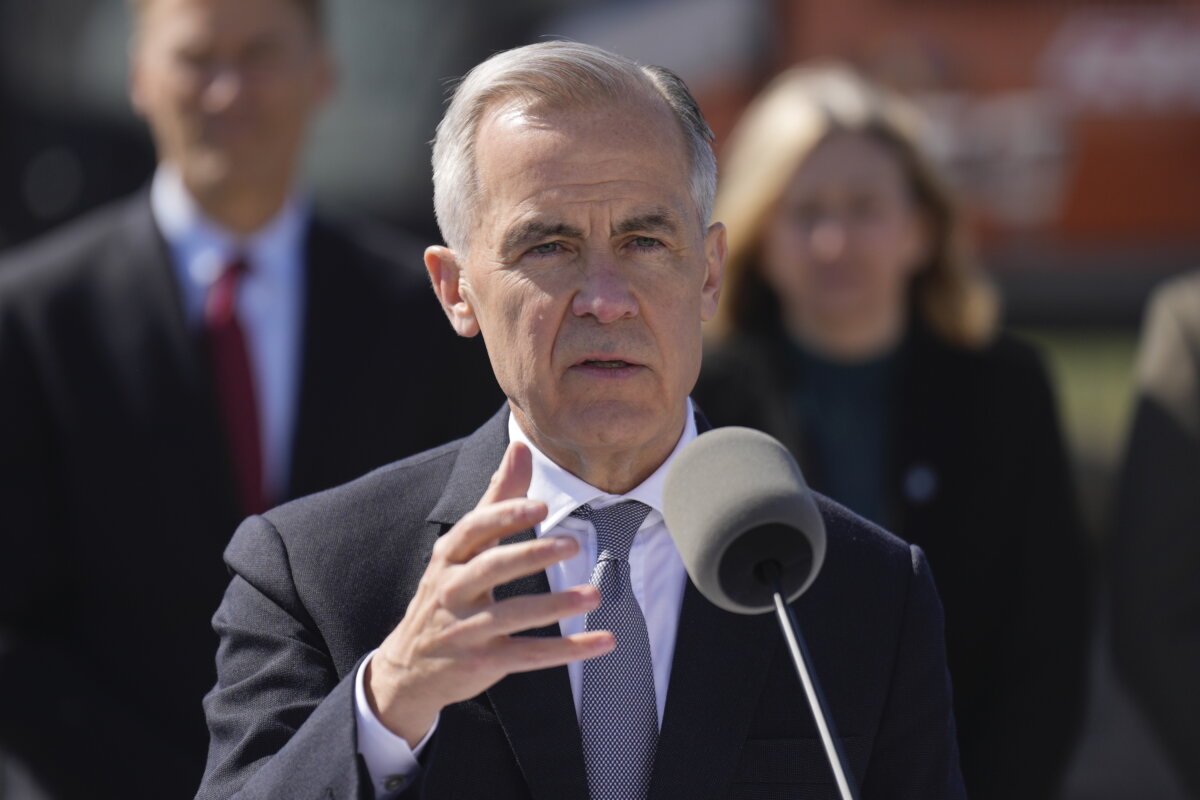

Prime Minister Mark Carney has announced plans to create a sovereign wealth fund that would back major projects deemed of national interest.
The federal government will contribute $25 billion to the “Strong Canada Fund,” and accept investment from the private sector and individual Canadians, he said. The fund will include projects in “clean and conventional energy, critical minerals, agriculture, and infrastructure.”
“The new Canada Strong Fund will give all Canadians a direct stake in building Canada strong,” Carney told reporters in Ottawa on April 27.
Since September, 15 projects have been referred to the government’s Major Projects Office and six broader investment strategies are under development. The Liberal government’s Bill C-5 was passed last summer, which aimed to speed up project approvals and allow cabinet to override some federal laws and environmental reviews during the process.
Carney said that over time, the fund will grow through “asset recycling and reinvestment” and create more opportunities for future generations. The prime minister said the federal government would also make it “easy” for Canadians to invest and share in the returns.
The fund will be managed by an arm’s-length independent Crown corporation, and its work will be guided by a CEO and an independent board of directors, according to the government.
Carney also said the major projects will be built by private companies with federal government support through loans and grants.
When Carney was asked by reporters where the $25 billion would come from, he responded that he did not want to “front run” Finance Minister François-Philippe Champagne’s tabling of the Spring Economic Update on April 28. But he said that document would show Canada’s finances are stronger than in November, when Ottawa projected a $78.3 billion deficit for the 2025-26 fiscal year.
When another reporter asked if the creation of the fund was a sign that Canada was lacking private sector investment, he responded it was the “exact opposite.” Carney said Canada has a “great” business climate, and the fund is ensuring that more Canadians can benefit from the country’s “economic transformation.”
Champagne was asked about the $25 billion in a press conference held later in the day. He replied that Canada is one of the few countries in the G7 with a ‘Triple A’ credit rating that allows it to borrow money at the lowest possible rates. Champagne also said the fund would take several months to set up.
Conservative Leader Pierre Poilievre criticized the newly announced fund, noting other countries that have similar funds in place, such as Norway and Saudi Arabia, run “big budget surpluses” to put into them, while Canada is running large deficits.
“Carney has no surplus, and therefore, no wealth to put in such a fund. He’s talking about a sovereign debt fund,” Poilievre told reporters in Ottawa on April 27. “He wants to put another $25 billion on the national credit card to gamble on a Liberal slush fund that will enrich Liberal insiders at the expense of hard-working Canadians.”
Norway has the largest sovereign wealth fund in the world, valued at US$2.2 trillion, which the country established in 1990 to invest surplus oil and gas revenues. Norway has a nominal debt-to-GDP ratio of 54.3 percent, while Canada’s is at 69.2 percent.
 Friends Read Free
Copy
Facebook
Tweet
Friends Read Free
Copy
Facebook
Tweet