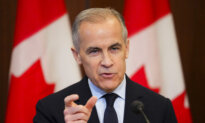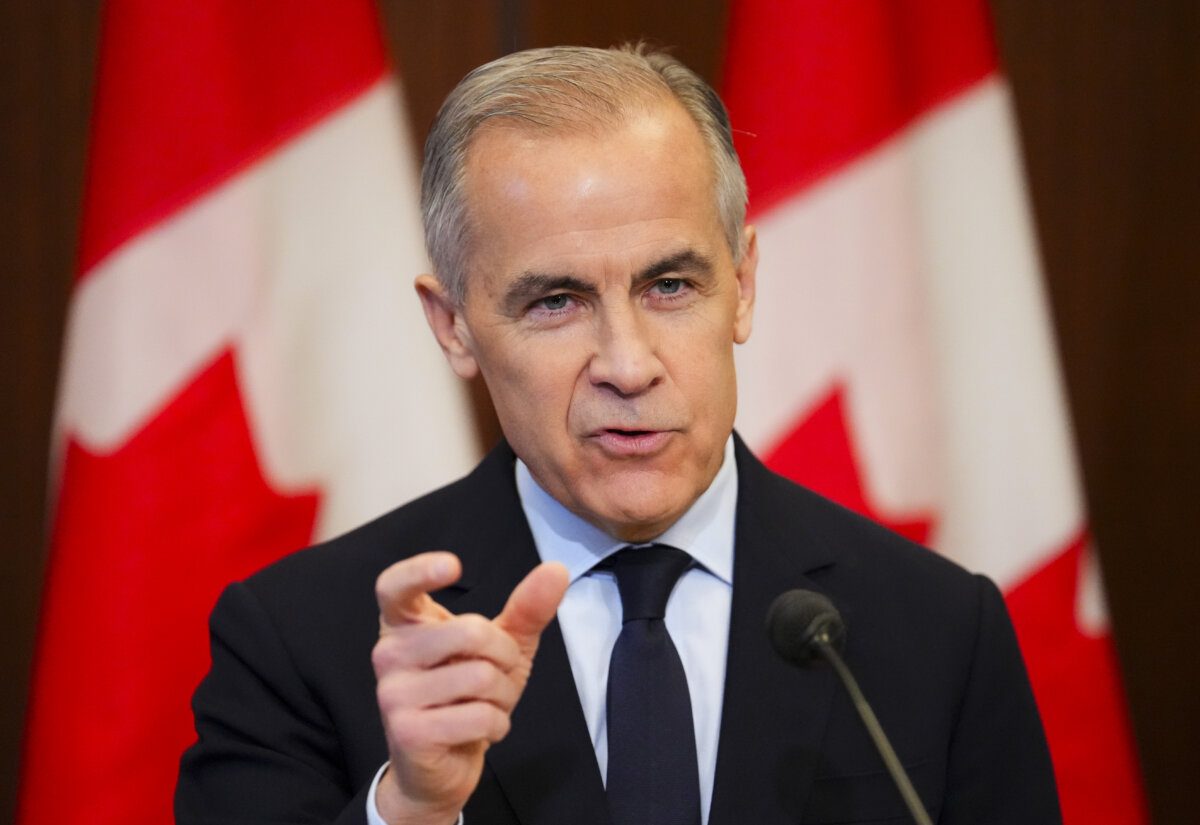

Prime Minister Mark Carney downplayed recent news that the United States has decided to pause its participation in the Canada–U.S. Permanent Joint Board on Defence, saying the two countries coordinate on defence in other ways.
“It has a long heritage, but I wouldn’t overplay the importance of this,” Carney told reporters in Quebec on May 19.
One day earlier, U.S. Under Secretary of War Elbridge Colby announced on social media that the United States was withdrawing from the board, which was formed in 1940. The board is made up of both military and civilian representatives from Canada and the United States, and serves as a forum for discussions on defence cooperation.
“A strong Canada that prioritizes hard power over rhetoric benefits us all. Unfortunately, Canada has failed to make credible progress on its defense commitments,” Colby said.
In his announcement, Colby linked to a speech that Carney gave at the World Economic Forum in Davos, Switzerland, on Jan. 20, where he called for middle powers to band together, and was critical of the United States.
“We can no longer avoid the gaps between rhetoric and reality. Real powers must sustain our rhetoric with shared defense and security responsibilities,” Colby said in his statement. He added that defending the continent of North America meant “recognizing our shared geography” and “investing in our own defense capabilities.”
Carney told reporters that the last time the board had met was in 2024, despite the fact it is supposed to meet biannually. During that meeting, the two countries discussed issues related to modernizing NORAD, securing the Arctic, and defence cooperation in other areas of the world.
The prime minister said Canada continues to have “many aspects of very close defence cooperation with the United States,” such as through NORAD. “There’s lots of cooperation. We will continue to do so, but we will also be cooperating with other partners and diversifying our defence cooperation,” he said.
Carney also said Canada will step up its support for Ukraine in its war against Russia. The prime minister said while Ukraine does not fall directly under NATO’s responsibilities, aiding its defence is “consistent with our values” and those of a “vast number of our partners.”
Canada has recently increased its defence spending to align with its NATO commitment of spending 2 percent of its GDP on defence, amid U.S. criticism over falling short for many years. Ottawa said in March that it had now met the 2 percent target and was working toward NATO’s new target of 5 percent by 2035.
The new target consists of 3.5 percent for core defence spending, and an additional 1.5 percent on broader defence-related investments, such as protecting critical infrastructure.
 Friends Read Free
Copy
Facebook
Tweet
Friends Read Free
Copy
Facebook
Tweet