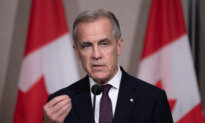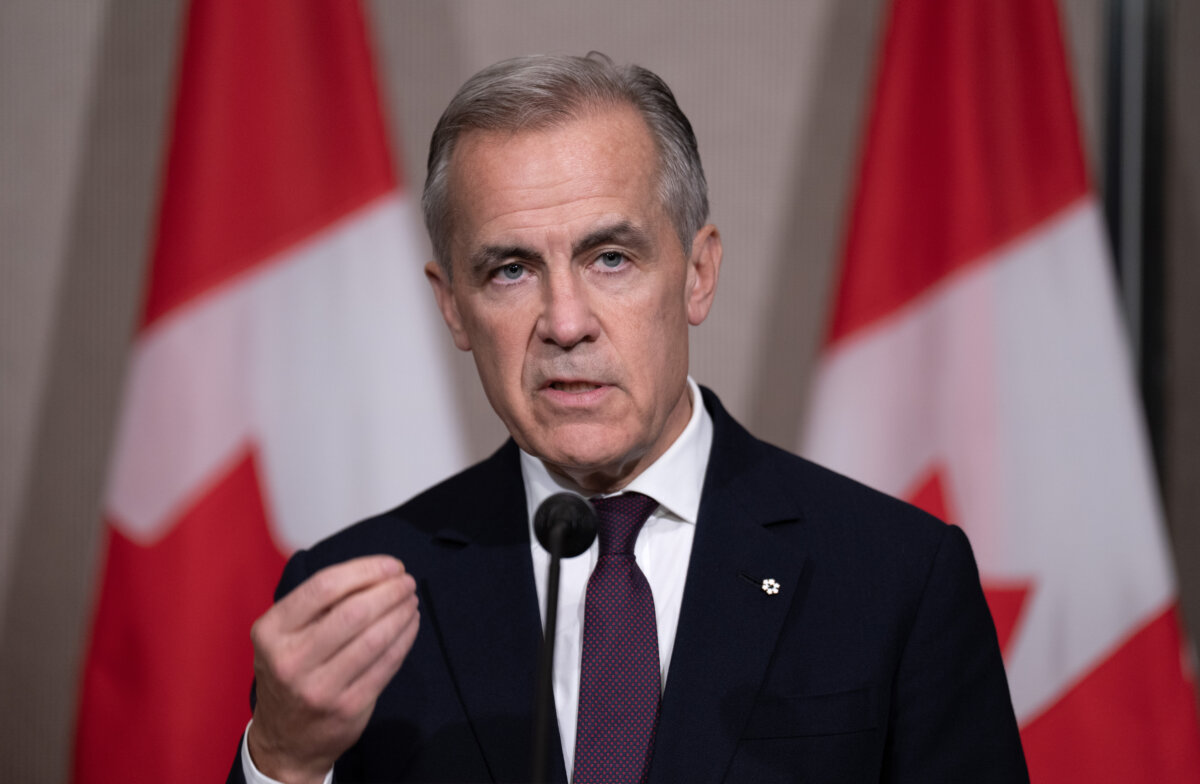
Prime Minister Mark Carney said it was an “obvious” choice not to launch an anti-tariff ad campaign in the United States, such as the one launched by Ontario.
Carney made the comments during a press conference in Malaysia on Oct. 27, when asked by reporters whether Ontario Premier Doug Ford has negatively impacted trade talks following fallout from the ad.
“We chose not to run ads in the United States, okay? It was a choice, it was obvious for us not to do that,” Carney said in French. He said Ford “took a decision which is different than the Canadian government’s, which is responsible for that relation.”
Carney emphasized that Ottawa is responsible for managing trade relationships with foreign countries.
In response to Ontario’s ad, U.S. President Donald Trump ended trade talks with Canada, threatened to increase the tariff rate by 10 percent, and said he doesn’t want to meet with Carney for some time.
The Epoch Times reached out to Ford’s office for comment but didn’t immediately hear back. Ford said in the Ontario legislature on Oct. 27 that he’s confident that Trump will not raise the tariff rate, and that his ad campaign was “the best ad that ever ran.”
Ford also told reporters that Carney and his chief of staff had seen Ontario’s ad before it launched.
Trump accused Canada of “egregious” behaviour for running a TV commercial in the United States using excerpts of a speech from former U.S. President Ronald Reagan.
The $75 million ad campaign, ran by the Ontario government, uses Reagan’s words from a 1987 radio address praising free trade to make a case for the lifting of U.S. tariffs on Canada.
The Ronald Reagan Presidential Foundation said the ad has misrepresented Reagan’s 1987 address. The speech makes the case for free trade, but it starts with Reagan explaining he was imposing tariffs on Japan because it was not respecting their trade agreement.
Ford previously said one purpose of the ad was to get “Reagan Republicans” to “fight” with “MAGA Republicans,” in reference to Trump’s “Make America Great Again” movement.
After speaking with Carney on Oct. 24, Ford said the ad campaign was being paused starting Oct. 27, but not before it could air during baseball World Series games over the weekend.
Trump commented on Ontario’s ad while aboard Air Force One on Oct. 27, calling it “dirty pool,” an expression to refer to unsportsmanlike behaviour. “You can’t do that and let me just tell you, they shouldn’t have done it,” Trump said.
“They’ve apologized, and they said we’re going to take the ad out,” he added. “Well, they did it, but they did it very late. They let it play for another two nights, and now they took that ad down, so I don’t know when it’s going to kick in,” Trump said of increasing tariffs on Canada by 10 percent.
Trump said it doesn’t matter that a provincial government was behind the TV ad, “because whether it’s provincial or Canada itself, they all knew exactly what the ad was.”
British Columbia is currently about to launch its own anti-tariff ad campaign in the United States, according to its Premier David Eby.
No Meeting
Trump also said he doesn’t want to meet with Carney at the Asia-Pacific Economic Cooperation (APEC) forum in South Korea starting Oct. 31. “I’m not going to be meeting with him for a while,” Trump said, adding he’s “very happy” with the trade deal currently in place with Canada, in reference to the United States-Mexico-Canada free trade agreement (USMCA).
Carney had previously said on Oct. 21 he would be seeing Trump at APEC and that it was “possible” a deal could be made in the sectors of steel, aluminum, and energy. Canada’s metals sector, which is closely integrated with the United States, has been particularly hit hard by Trump’s sectoral tariffs.
Before Trump terminated trade talks, there had been greater momentum coming out of his meeting with Carney at the White House on Oct. 7. Ottawa said the two leaders had directed their officials to “quickly” work on landing deals.
One senior White House official said the cancellation of talks was not just about Ontario’s Reagan ad.
U.S. National Economic Council Director Kevin Hassett said on Oct. 24 that the Canadians have been “very difficult to negotiate with” and that there’s “frustration that’s built up.”
Trump on Oct. 27 repeated some of his previous comments about Canada being “one of the most difficult countries to deal with.” He also said that Canada has had “a lot of bad representatives.”
When asked about Trump’s latest comments, Carney said he had not heard them yet but added he is “ready to sit down” with the United States, noting “considerable progress” made so far. Carney said he had not had contact with Trump since Oct. 23.
The prime minister said he doesn’t know when the increased tariff rate will kick in. He also said his government doesn’t intend to impose countermeasures, noting how only Canada and China had previously done so.
Carney is visiting Asia this week, seeking to expand trade opportunities amid tensions with the United States. He said his government wants to double non-U.S. exports over the next decade to generate $300 billion in trade. The prime minister heads to Singapore next and then South Korea.
The Canadian Press contributed to this report.
 Friends Read Free
Copy
Facebook
Tweet
Friends Read Free
Copy
Facebook
Tweet